Sometimes the hardest part of a long day is when things finally get quiet. Our minds do not always slow down just because the house does, and many of us lie awake or sit at the kitchen table feeling our worries grow louder. It can feel lonely, especially if you are caring for a loved one or managing health issues of your own, and home starts to feel like a place of work instead of rest.
If you are looking for hobbies that ease stress at home, the gentle answer is this: the “best” hobby is the one that lets your body settle, your breathing soften, and your thoughts have a safe place to land. For many people, relaxing home hobbies fall into a few friendly groups: calming movement (like stretching or chair yoga), quiet hand work (like knitting or drawing), soothing sound (like singing, gentle music, or audio stories), creative expression (like journaling or simple crafts), and comforting routines (like puzzles, baking, or tending to plants). You do not need special talent, fancy supplies, or a lot of space. You only need something small that feels kind to your nervous system and realistic for your energy level.
Stress relief at home works best when the activity is gentle on the body, simple to start, and kind to your current energy, not your “ideal” energy.
We will walk through practical hobbies that you can start in a small apartment, a shared family home, or a caregiver’s bedroom late at night, with many options that work while seated or with limited mobility. You can treat this as a menu and try one or two ideas at a time, rather than feeling pressure to change everything at once.
How To Choose A Calming Hobby That Actually Fits Your Life
Before we talk about specific hobbies, it helps to pause and ask: what does your real life look and feel like right now? Someone caring for a partner with dementia has a very different day than someone working from home with chronic back pain. The right hobby needs to fit into your actual routines, not a perfect version of your week that never really happens.
Here are some gentle questions that can guide your choice:
- How much physical energy do you usually have at the end of the day?
- Are you often interrupted (for example, by care needs, children, or phone calls)?
- Do you have pain, dizziness, or mobility limits that make standing or bending hard?
- Do you feel more soothed by quiet, or by background sound?
- Do you feel better when your hands are busy, or when you can simply listen and breathe?
- Do you prefer to be alone with your thoughts, or guided by a voice, book, or video?
Any hobby that shames you, exhausts you, or makes you feel “behind” is not a stress reliever, even if everyone else swears by it.
To make this easier, here is a simple way to think about different kinds of relaxing hobbies at home.
| Hobby Type | Good For | Energy Level | Space Needed |
|---|---|---|---|
| Gentle movement (stretching, chair yoga) | Body tension, worry, trouble sleeping | Low to medium | Small open floor or sturdy chair |
| Hand crafts (knitting, coloring, origami) | Racing thoughts, fidgeting, waiting times | Low | Lap space or small table |
| Sound-based (audiobooks, singing, music) | Loneliness, overthinking, eye strain | Low | Headphones or small speaker |
| Creative expression (journaling, drawing, poetry) | Emotional overload, grief, anxiety | Low to medium | Notebook or sketch pad |
| Calm focus (puzzles, model kits, Lego-type bricks) | Mental rest, focus training, screen break | Medium | Small clear surface |
| Soothing chores (baking, tidying one drawer) | Restless stress, feeling out of control | Medium | Kitchen or small corner of a room |
| Nature at home (houseplants, balcony garden) | Low mood, cabin fever, sense of meaning | Low to medium | Windowsill or small outdoor space |
We can now look at each group more closely, with ideas for different bodies, homes, and caregiving situations.
Gentle Movement Hobbies You Can Do In A Small Space
Our bodies often carry our stress long after our minds try to move on. Shoulders creep up, jaws clench, and backs tighten, especially among caregivers who do a lot of lifting or desk work. Gentle movement hobbies can be a quiet way to “wring out” some of that tension without going to a gym.
Movement for stress relief does not need to “burn calories” or feel like exercise. Its job is to tell your nervous system that, for this moment, you are safe enough to relax.
1. Chair Yoga Or Bedside Stretching
Chair yoga is a series of stretches you perform while seated in a sturdy chair, wheelchair, or on the edge of a bed. It can be adapted for many levels of mobility, which makes it practical for caregivers and for people living with disability, chronic illness, or fatigue.
Why it helps:
- Slows breathing and gently activates muscles without straining joints.
- Pairs movement with breath, which signals the body to shift out of “fight or flight.”
- Can be done in short 5 to 10 minute segments between other tasks.
Simple starting idea:
- Sit with feet flat on the floor, hands resting on your thighs.
- On a slow inhale, roll your shoulders up toward your ears.
- On a slow exhale, roll them back and down.
- Repeat 5 to 10 times, moving like thick honey, not in a rush.
If you like video support, many free chair yoga videos exist online. Look for phrases like “gentle chair yoga,” “seated stretching,” or “yoga for seniors” if you want very slow movement.
2. Walking Laps At Home
Not everyone has access to an outdoor path, and weather or safety issues can get in the way. Indoor walking laps can still give your body a sense of movement and rhythm.
You might:
- Walk slow laps from one end of the hallway to the other.
- Circle around your living room or kitchen table for 5 minutes.
- Time your laps with an audiobook chapter, a song, or a podcast segment.
For caregivers:
- Use gaps in the day that are already part of your pattern, such as while laundry is running or while a meal is in the oven.
- If you are worried about falls, keep your phone in a pocket and walk near sturdy surfaces you can hold for balance.
3. Gentle Tai Chi Or Qigong-Inspired Movement
Tai chi and qigong involve slow, flowing motions with mindful breathing. Many people think of them as “moving meditation.”
Benefits for stress relief:
- Shifts attention away from ruminating thoughts toward how your body feels in space.
- Support balance and joint mobility in a non-impact way.
- Movements can be done standing or seated.
You can start with a short, beginner-friendly video, or simply choose 3 or 4 slow arm motions you repeat while breathing deeply.
Quiet Hand Crafts That Calm A Busy Mind
For many of us, stress shows up as racing thoughts, nervous fidgeting, and the urge to check our phones again and again. Having something gentle for our hands to do can act like an anchor.
When the hands have a small, repeating task, the mind often finds a softer rhythm to follow.
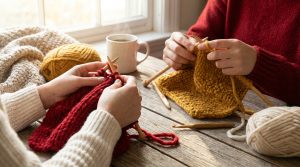
4. Knitting, Crocheting, Or Loom Work
Yarn crafts often look complicated from the outside, but basic skills can be learned in an afternoon. You can start with:
- A simple scarf in a single stitch.
- A basic square for a blanket.
- A round loom hat that requires only one repetitive motion.
Why yarn crafts help stress:
- Repetitive movement of the hands can reduce anxiety and lower heart rate for some people.
- You can stop and start easily when someone calls you or a care alarm goes off.
- Base materials (basic yarn and one hook or pair of needles) are inexpensive and do not take much space.
For people with joint pain, look for:
- Chunky yarn and bigger hooks or needles that are easier to hold.
- Ergonomic crochet hooks or knitting needles with thicker grips.
5. Coloring For Adults (Or With Children)
Coloring is not just for kids. Many adults find that filling shapes with color helps them shift out of worry and into a more present state.
Helpful tips:
- Choose simple designs at first, not very tiny, detailed mandalas that may cause eye strain.
- Keep a small pouch with a few colored pencils or markers by the place where you often sit.
- Color for 5 to 15 minutes during phone calls, while waiting on hold, or before bed.
If you are caring for children or a loved one with cognitive decline, coloring together can create a shared calm activity that does not rely on complex conversation.
6. Simple Paper Crafts: Origami, Card Making, Or Collage
Paper crafts travel well, do not make much mess, and can be done at a kitchen table, bedside tray, or small desk.
Ideas:
- Folding easy origami shapes like hearts, cranes, or boxes using online tutorials.
- Making simple greeting cards with colored paper and glue to send to friends or family.
- Creating collages from old magazines, mail flyers, or printed photos.
Stress relief aspect:
- The steps give your brain something structured but gentle to follow.
- Cutting and gluing can be very tactile and grounding.
If scissors are hard to use because of arthritis, look for craft punches or pre-cut shapes that you can arrange and glue.
Sound-Based Hobbies For Stress Relief At Home
Some days our eyes are too tired to read, our bodies are too weary to move much, and the couch or bed feels like the only home base we can handle. Sound-based hobbies are very friendly to low-energy days.
When vision, mobility, or fatigue limit what you can do, sound can still carry stories, comfort, and connection.
7. Audiobooks And Podcasts As A Gentle Escape
Listening to someone tell a story can be deeply soothing, especially at night or during caregiving tasks that do not need your full concentration.
Ideas for how to use them:
- Play calming fiction while you fold laundry, do dishes, or tidy one room.
- Listen to light, reassuring podcasts in bed when you cannot sleep.
- Use short episodes as timers for walking laps at home or stretching sessions.
Tips for stress relief:
- Choose content that feels gentle. Very heavy topics, true crime, or fast, intense discussions can raise stress instead of helping it.
- If your mind wanders, do not worry. You can replay, or simply let the voice be background comfort.
8. Gentle Music Or Soundscapes
Music has strong effects on mood and nervous system activity. You can create small playlists that match what you need at different times.
Ideas:
- Soft instrumental music for evening wind-down.
- Nature sounds like rain, ocean waves, or birdsong during the day.
- Slow piano or guitar tracks for times when you feel close to panic.
Use headphones if you share space with others, or small speakers at low volume. People with sensory sensitivity might prefer very soft, simple tracks rather than complex or loud music.
9. Singing Or Humming As A Nervous System Soother
You do not need to “sing well” to benefit from singing or humming. The vibration of your own voice affects your vagus nerve, which plays a role in calming.
Try:
- Humming one note on a long breath while sitting in bed.
- Singing along to one familiar song while cooking or showering.
- Softly humming lullabies, hymns, or childhood songs while caring for a loved one.
Many caregivers find that singing during personal care routines can ease their own stress and reassure the person they care for at the same time.
Creative Expression: Letting Feelings Move Somewhere Safe
Stress is not always about doing too much. Many times, it is about holding too much. Caregivers in particular carry unspoken grief, frustration, love, worry, and guilt. Creative hobbies can offer a quiet place for those feelings to land without judgment.
When feelings have a safe outlet, your body does not have to hold them quite so tightly.
10. Journaling For Release, Not Perfection
You do not need to keep a beautiful diary to benefit from writing. A plain notebook and a pen can become a small container for what you carry inside.
Helpful approaches:
- “Brain dump” pages: Set a timer for 5 to 10 minutes and write whatever comes to mind, without worrying about grammar or order.
- Gratitude lists: Once a day, list 3 small things you were thankful for, such as “The cup of tea was hot” or “The nurse was kind.”
- Letter writing: Write letters you never send, to people or situations that weigh on you.
If writing by hand is painful, you can type on a device or use voice-to-text apps.
11. Simple Drawing Or Sketching
Art can sound intimidating, but for stress relief, the goal is expression, not skill.
Start with:
- Drawing small objects on your table: a mug, a spoon, a plant.
- Doodling patterns such as lines, dots, or shapes that repeat.
- Using just one pen or pencil so color choices do not feel overwhelming.
You might try drawing while listening to music or a podcast. Let your hand move without overthinking.
12. Poetry Or Short Creative Writing
If you enjoy words, short poems or snippets of stories can help you process emotions in a compact way.
Ideas:
- Write a three-line poem (like a haiku) about one moment from your day.
- Describe a scene from your childhood that comforts you.
- Invent a tiny story about a person who handled a hard day kindly.
You do not need to show this writing to anyone. It can be just for you.
Hobbies With Calm Focus: Puzzles, Games, And Small Builds
Some people feel calmer when they can concentrate on a task that has clear rules and a visible end point. For others, this type of focus feels draining. It can help to experiment and see which group you fall into.
Many stressed caregivers long for one thing that is both controllable and finishable. Calm focus hobbies can offer that feeling in small pockets of time.
13. Jigsaw Puzzles (Physical Or Digital)
Jigsaw puzzles give your mind something to focus on without high stakes.
Practical tips:
- Choose puzzles with larger pieces if you have limited dexterity or vision challenges.
- Use a puzzle mat or board that you can roll up or move, so you do not lose the dining table.
- If space is tight, use tablet or phone puzzle apps; set a timer so you do not lose sleep.
Some caregivers like to leave a physical puzzle set up in a corner and add a few pieces whenever passing by. It can become a small, ongoing comfort.
14. Word Games And Brain Teasers
Crossword puzzles, word searches, and number puzzles can keep the mind engaged but calm.
Ideas:
- Clip word puzzles from newspapers, or buy a small puzzle book for your nightstand.
- Play phone games that involve letters or simple logic, choosing ones with quiet visuals and no flashing lights.
- Work on a single puzzle slowly across the day, rather than rushing to finish.
If you care for someone with early cognitive changes, simple word searches or matching games can be a shared activity that supports their brain while giving you a gentle focus.
15. Model Kits, Lego-Type Bricks, Or Simple Building Sets
Building something with your hands can give a sense of progress and control.
You might:
- Assemble a simple model car, airplane, or building kit.
- Work on a small set of interlocking bricks with calming instructions.
- Try simple wooden or cardboard models that pop out of sheets and slot together.
Consider:
- Start small. Large, complex kits can be frustrating when you are already stressed.
- Choose projects you can pause easily and store in a box between sessions.
Soothing Everyday Tasks As Hobbies
Many people think hobbies must be separate from daily life, yet some of the most calming activities are simple tasks we might already do. When we approach them gently, they can shift from “chore” into “ritual.”
Turning one small, daily task into a calming ritual can create a quiet island in a busy day.
16. Baking Or Simple Cooking As A Calming Ritual
Baking and cooking can be stressful when rushed, but very soothing when done at a slow, gentle pace.
Stress-relieving approach:
- Choose very simple recipes, such as banana bread, muffins, or a pot of soup.
- Focus on the sensory parts: the sound of chopping, the smell of spices, the warmth from the oven.
- Bake at predictable times, such as once a week, so it can become a small tradition.
For caregivers with limited time:
- Use pre-cut vegetables or mixes that reduce prep work.
- Cook larger batches and freeze portions, which can lower future stress around meals.
17. Gentle Tidying As A Stress Reliever
Full house cleaning can feel overwhelming, but very small organizing projects can feel calming instead of draining.
Examples:
- Sorting one drawer while listening to soft music.
- Folding a single basket of laundry in a mindful way.
- Clearing and wiping one surface, such as your bedside table.
The goal is not a perfect house. It is a small area that feels more peaceful to you.
18. Making Tea Or Coffee As A Mindful Practice
Many of us already drink tea or coffee, but we do it on autopilot. You can turn this into a hobby by slowing and paying full attention.
Try:
- Picking one or two favorite mugs that feel comforting in your hands.
- Standing or sitting quietly while the water heats and the drink steeps.
- Taking the first three sips with no screens nearby, just noticing taste and warmth.
For some caregivers, this becomes a small promise to themselves: “I will sit and drink this cup fully before I answer the next message.”
Bringing A Bit Of Nature Indoors
We are deeply affected by natural light, plants, fresh air, and the simple sense that life around us continues. When we cannot get outside often, bringing small pieces of nature indoors can help our nervous systems settle.
Even a single plant on a windowsill can remind us that growth is still possible in small, contained spaces.
19. Houseplants For Beginners
You do not need a “green thumb” to benefit from caring for one or two hardy plants.
Good starter plants:
- Snake plant
- Pothos
- Spider plant
- Succulents like jade or aloe (if your space has good light)
Stress-relief benefits:
- Creates a small living thing to care for that does not demand much from you.
- Gives you short, grounding tasks: water, trim brown leaves, turn the pot toward the light.
- Brings gentle color and life into rooms where you spend long hours.
If caring for plants feels like one more burden, skip this section without guilt. Stress relief should not feel like a test.
20. Balcony, Patio, Or Window Herb Gardening
If you have access to a balcony, patio, or wide window ledge, container gardening can combine sensory pleasure and small movement.
Ideas:
- Grow a pot with mixed herbs like basil, mint, or parsley for cooking.
- Plant a few flowers whose scent you enjoy, such as lavender or marigolds.
- Use lightweight containers and small watering cans if lifting is hard.
Short daily check-ins with the plants can become a restful part of morning or evening routines.
Social-At-Home Hobbies When You Feel Isolated
Stress grows larger when we feel alone with it. Many caregivers, people with limited mobility, or those living in rural areas feel cut off from friends and community. Hobbies can sometimes create soft, low-pressure lines of connection without leaving home.
You do not have to choose between solitude and noisy gatherings. Quiet, shared hobbies can offer a gentle middle path.
21. Online Groups For Shared Hobbies
Many creative hobbies have friendly online communities, from knitting forums to online book clubs.
You can:
- Join a small book group that meets by video call once a month.
- Share photos of your craft projects in a hobby group with clear rules and kind moderation.
- Take part in simple online “challenges,” such as doodling for 5 minutes a day.
Protecting your stress levels:
- Choose groups that feel welcoming and not competitive.
- Leave any space that makes you feel judged, rushed, or “not good enough.”
22. Letter Writing Or Card Sending
Writing and sending cards can be a quietly social hobby that also supports others.
Ideas:
- Send one short letter a week to a friend, relative, or neighbor.
- Write encouraging notes to other caregivers you know.
- Make simple homemade cards and keep a small stack ready.
This can be especially meaningful if you care for someone who enjoys receiving mail. You might help them write or decorate cards, too.
23. Games By Phone Or Video Chat
Connection does not always need deep conversation. Playing simple games together can create shared joy without much emotional heavy lifting.
You might:
- Play word games over the phone, like taking turns naming items in a category.
- Use free online board game sites with a friend, keeping the camera on or off as you prefer.
- Do a crossword puzzle “together,” reading clues aloud on a call.
This can be an easy way for long-distance family to participate in a loved one’s life from afar.
Adapting Hobbies For Different Bodies And Energy Levels
Not every hobby suits every body. Chronic pain, fatigue, cognitive changes, sensory differences, and mobility limits can all shape what feels possible and gentle. Rather than trying to “push through,” it helps to adapt hobbies so they fit your real capacities.
The kindest hobby is the one that meets your body where it is today, not where it was five years ago.
For People With Limited Mobility Or Wheelchair Users
Focus on:
- Seated activities like chair yoga, hand crafts, card games, drawing, and small table-top plants.
- Adjustable tables or lap trays that bring work surfaces to a comfortable height.
- Tools with grips or handles that reduce strain, such as ergonomic crochet hooks or light-weight watering cans.
Be mindful of:
- Maintaining circulation. Gentle arm and upper body movements during seated hobbies can support this.
- Pressure relief by changing position regularly and using cushions as needed.
For People With Chronic Pain Or Fatigue
Helpful principles:
- Short sessions: 5 to 10 minutes of a hobby can still be valuable.
- “Pacing”: Alternate more active hobbies (light stretching, tidying) with very restful ones (audiobooks, coloring).
- Comfort: Use supportive seating, cushions, and proper lighting to reduce strain.
Gentle hobby ideas:
- Audiobooks, podcasts, or music with eyes closed.
- Knitting, coloring, or small puzzles in bed or on the couch.
- Breathing exercises combined with simple, slow stretches.
For People With Cognitive Changes Or Brain Fog
Stress can increase forgetfulness and confusion, and many brain conditions or medications affect focus.
Supportive hobby choices:
- Repetitive tasks with clear visual cues, such as large-piece puzzles, simple coloring, or basic model kits.
- Activities that do not depend on memory across days, like daily doodles or one-page word searches.
- Music and singing from familiar decades or life stages.
If you are a caregiver:
- Involve your loved one at the level they can manage without feeling talked down to.
- Watch for signs of frustration and gently shift to a simpler activity when needed.
For People Sensitive To Noise Or Overstimulation
Some hobbies can unintentionally trigger sensory overload.
Gentle adjustments:
- Choose quiet, repetitive activities like knitting, journaling, or puzzles rather than loud video games or busy TV shows.
- Use soft lighting and reduce background noise where possible.
- Consider noise-cancelling headphones or calming soundscapes at low volume.
Building A Small, Realistic Hobby Routine
Choosing a hobby is one step. Making space for it in a busy, stressed life is another. Many people feel discouraged because they try to set large, daily goals that are too heavy to keep.
Even ten gentle minutes a few times a week can shift how your nervous system moves through the day.
Here are some grounded ways to weave hobbies into home life without adding pressure.
Start Smaller Than You Think You “Should”
If you feel you “should” stretch for 30 minutes, start with 3 minutes. If you want to journal every day, start with once a week.
You might:
- Dedicate 5 minutes after dinner to a single calming activity.
- Pick one day of the week as your “puzzle night” or “baking morning.”
- Keep one portable hobby (like a small knitting project) in a bag you carry around.
Pair Hobbies With Existing Routines
Attaching a new calming habit to something you already do can help.
Examples:
- Color while your morning coffee brews.
- Listen to an audiobook while you do dishes each evening.
- Stretch for five minutes after you brush your teeth at night.
This reduces the mental load of “fitting it in.”
Prepare A “Go-To” Calm Corner
If possible, create a tiny space at home that signals “this is where I go to exhale.”
Could be:
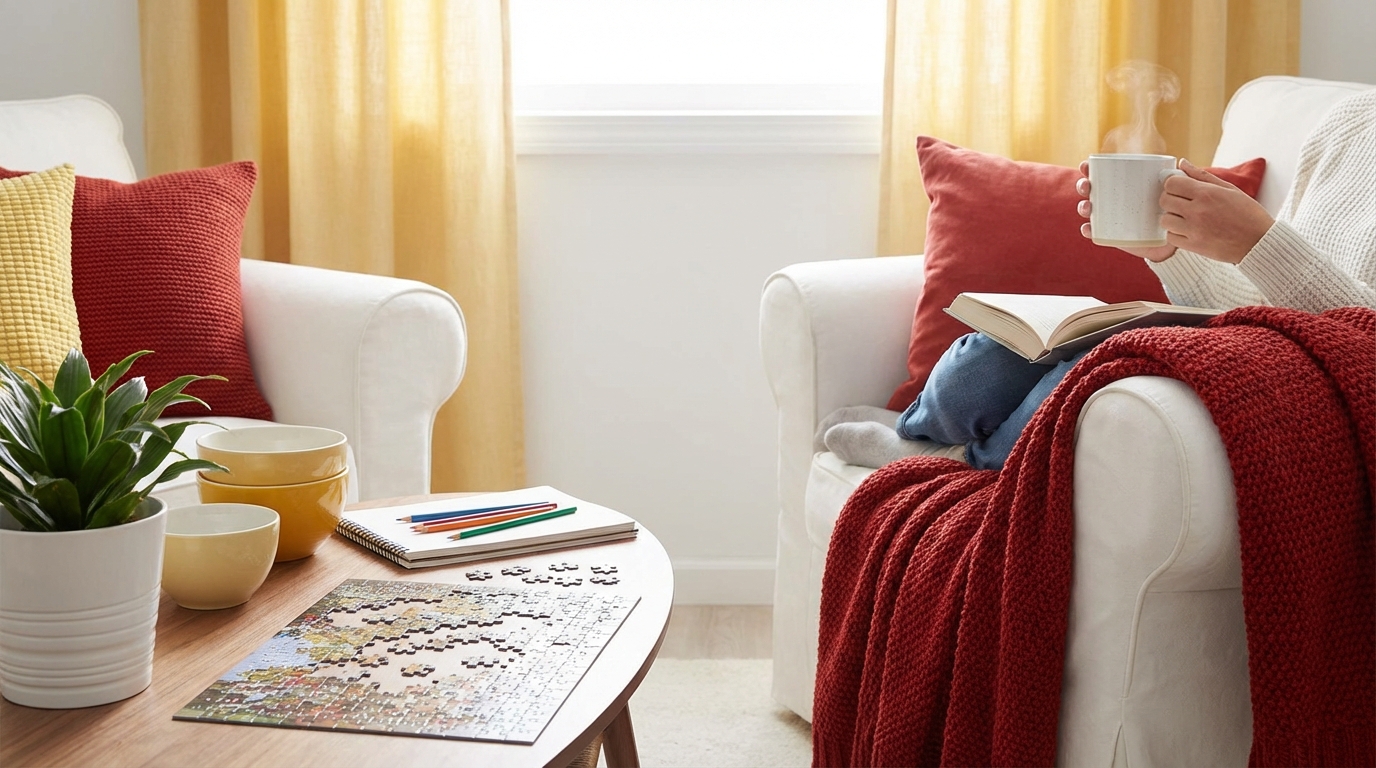
- A chair by a window with a small table beside it.
- A spot on the couch with a basket that holds your coloring book, pens, or yarn.
- Your bedside with a soft light, journal, and book.
You do not need to decorate or buy new items. The key is consistency, not perfection.
Let Go Of The Idea Of “Productivity”
Many of us carry an internal voice that asks “What did you accomplish?” at the end of the day. Stress relief hobbies do not always produce impressive results, and that is all right.
It is healthy to remind yourself:
- Your worth is not measured by how much you produce.
- Rest and calm are not rewards you must earn by working hard enough.
- A hobby can be meaningful even if nobody else sees the results.
For caregivers especially, time spent restoring your nervous system is part of care, not separate from it.
When A Hobby Increases Stress Instead Of Reducing It
Sometimes an activity that is supposed to be relaxing starts to feel heavy, comparison-filled, or draining. That is a signal to step back and adjust.
Warning signs:
- You feel dread when you think about your hobby projects.
- You find yourself scrolling and comparing your work to others and feeling worse.
- The hobby hurts your sleep because you stay up late trying to “just finish one more thing.”
- Your pain, fatigue, or stress feel worse after the activity.
Gentle responses:
- Pause that hobby for a while and try something lighter or shorter.
- Shift your goals from “make something beautiful” to “spend 10 minutes with my hands busy.”
- Unfollow online accounts that stir up shame or unrealistic expectations.
If almost everything feels stressful, it may be a sign that your nervous system is very overloaded. In that case, the most helpful “hobby” might be simply breathing exercises with soft music, or brief walks in your hallway, combined with support from a health or mental health professional if possible.
Choosing Your Next Gentle Step
If this list feels long, you do not need to remember it all. You can simply ask yourself one question:
“What is one small thing I could try this week that might help my body or mind feel 5 percent calmer at home?”
Perhaps it is:
- Five minutes of chair stretches in the evening.
- Coloring one page over several days.
- Listening to a soft audiobook while folding laundry.
- Watering one plant and then sitting near it for a quiet minute.
We do not need perfect routines or fancy hobbies to deserve rest. We need small, kind moments that remind us we are human, not machines, and that our homes can hold pieces of comfort even in hard seasons.