
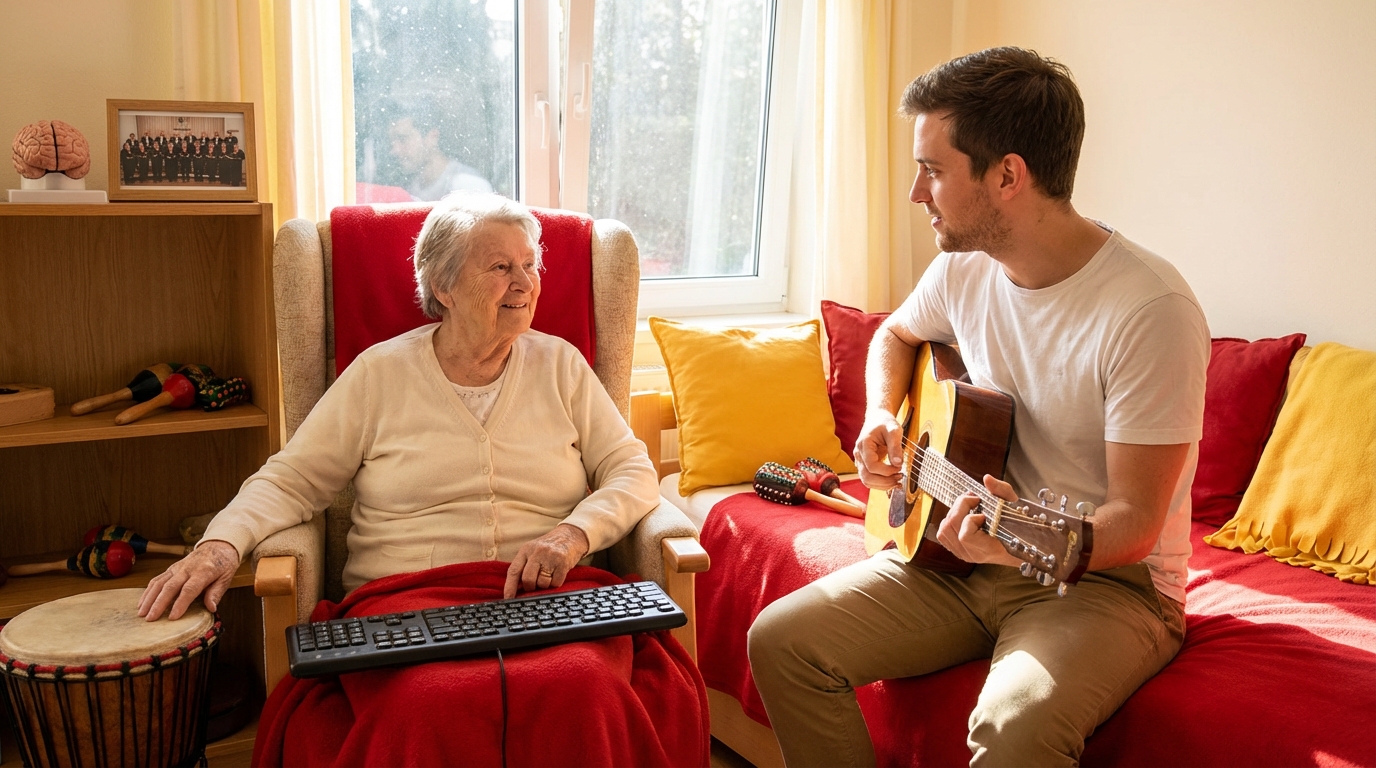
It is not easy to watch someone you love struggle to speak, move, or remember after a stroke. Many of us have sat by a hospital bed or a living room chair, wondering what else we can do beyond the exercises and medications. In those quiet, heavy moments, something as simple as a song can feel almost like a lifeline.
The short answer is that music therapy can be a gentle but powerful partner in stroke recovery. With the guidance of a trained music therapist, music can help the brain form new pathways, support speech and movement, lift mood, reduce anxiety, and give both the survivor and the caregiver moments of connection and hope. It does not replace medical treatment or physical therapy, but it can support them and sometimes make them more effective.
What Is Music Therapy, Really?
Many of us know that music can change how we feel. A favorite song can bring back memories. A calm melody can help us relax. In stroke recovery, music therapy takes this natural response and turns it into a structured, evidence-based approach that supports rehabilitation.
A board-certified music therapist is trained in both music and clinical care. They are not just “playing songs” for someone. They plan and guide sessions based on each person’s medical history, abilities, and goals.
Some ways music therapy is different from simply listening to music at home:
- It is goal-focused. For example, a therapist might use rhythm to support walking, or singing to encourage speech.
- It is adapted to medical needs. Someone with sensory overload, fatigue, or cognitive changes might need shorter, quieter sessions.
- It is coordinated with the rest of the rehab team. Music therapists often talk with physical, occupational, and speech therapists.
Music therapy is not about talent or performance. It is about connection, stimulation, and healing at a pace that feels safe and respectful for the survivor.
How Music Affects the Stroke-Affected Brain
A stroke can damage areas of the brain in ways that change how someone moves, speaks, understands, or feels. The hopeful side is that the brain can adapt and reorganize. This is called neuroplasticity. Music supports this process in several ways.
Music Lights Up Many Parts of the Brain
When we listen to or create music, the brain does not use only one “music area.” Instead, many regions work together:
| Brain Function | Role of Music |
|---|---|
| Movement | Beat and rhythm can cue stepping, reaching, and coordinated motion. |
| Language | Melody and lyrics can help rebuild speech patterns and word-finding. |
| Emotion | Music triggers emotional centers, which can improve mood and motivation. |
| Memory | Familiar songs can unlock long-term memories and identity. |
| Attention | Structured musical patterns can support focus and mental organization. |
Because so many systems are involved, music can sometimes “reach around” damaged areas by strengthening alternate pathways.
Rhythm and the Body: Why the Beat Matters
Many stroke survivors live with weakness, stiffness, or trouble planning movement. The brain may want the body to move, but the signals are slow or unclear.
Music therapists often use techniques such as rhythmic auditory stimulation (RAS). A steady beat is used to cue movement like walking or stepping.
A clear rhythm can act like an external “metronome” for the body, guiding steps and supporting a smoother, more even walking pattern.
For example, a therapist may:
- Play music with a tempo that matches the survivor’s current walking speed.
- Gradually increase the tempo over time to support faster, more confident steps.
- Use drums or clapping to guide lifting feet, shifting weight, or reaching.
This can support balance, reduce shuffling, and help rebuild trust in the body’s ability to move.
Melody and Language: Singing to Speak Again
Some strokes affect language centers, leaving a person with aphasia. They might know what they want to say but cannot get the words out. Interestingly, many people with aphasia can still sing familiar lyrics.
Music therapists may use techniques like melodic intonation therapy (MIT), where simple, spoken phrases are turned into short melodies. Over time, the melodic pattern can help the brain rebuild the rhythm and flow of speech.
For example:
| Speech Goal | Musical Strategy | Example |
|---|---|---|
| Simple phrases | Sing short, melodic sentences with rhythm | “I need help,” “I am thirsty,” “Call my daughter” |
| Word-finding | Pause in a song lyric to encourage the word | “You are my…” (pause) “sunshine” |
| Breath and voice | Use long, sustained tones | Humming on “mmm” or “ahh” to build vocal strength |
This work takes patience, and progress can be slow, but many families see meaningful changes over months of consistent practice.
Emotional Healing Through Music After a Stroke
A stroke is not only a physical event. It touches identity, independence, and relationships. Many survivors feel grief, frustration, or depression. Caregivers can feel worn down and anxious. In this emotional space, music can act like a gentle companion.
Creating Safe Emotional Space
Music therapists often choose songs that reflect, but do not overwhelm, the survivor’s feelings. For some people, soft calming music is comforting. For others, something more lively can spark hope.
Ways music therapy can support emotional health:
- Normalizing feelings like sadness or anger through song choice and open discussion.
- Offering non-verbal ways to express emotion, such as playing drum patterns that match mood.
- Using improvisation, where the survivor and therapist “talk” through music instead of words.
When words are hard or painful, a simple hum, a piano note, or a shared rhythm can say, “I am still here. You are not alone.”
Reducing Anxiety and Stress
Hospitals, appointments, and new limitations can create constant stress. Gentle music, especially at a slow tempo and lower volume, can help reduce anxiety.
Music therapists may:
- Guide slow breathing in sync with calming music.
- Use repetition of simple melodies to create predictability and safety.
- Help caregivers learn short musical routines to soothe agitation or restlessness at home.
This is especially helpful for survivors who feel overwhelmed by noise or sudden changes. A familiar musical routine can signal that it is time to rest, stretch, or prepare for sleep.
Rebuilding Identity and Joy
Many stroke survivors say, “I do not feel like myself anymore.” Activities they used to love might feel out of reach. Music can help reconnect with parts of identity that feel lost.
This can look like:
- Revisiting songs from childhood or early adult life to evoke positive memories.
- Adapting old musical hobbies, such as piano or singing, to current abilities.
- Creating new music together, which can feel empowering and creative.
A person is more than their stroke, and familiar music can remind everyone in the room who they still are at their core.
Physical Rehabilitation With Music
While music therapy often brings emotional relief, it can also support concrete physical goals that matter a great deal in daily life.
Walking and Balance
Using rhythm for walking is one of the most studied areas of music therapy in stroke care. Sessions may involve:
- Walking in time with a live or recorded beat.
- Stepping to musical cues such as “lift, step, lift, step.”
- Combining music with visual markers (like floor dots) for added safety.
Benefits that research often notes include:
| Walking Area | Possible Improvement |
|---|---|
| Speed | More steps per minute with better control. |
| Stride length | Longer, more even steps instead of shuffling. |
| Symmetry | More equal use of both legs. |
| Confidence | Reduced fear of falling during structured practice. |
Music makes the work feel more like a shared activity and less like a test. This can help with motivation and reduce the sense of being watched or judged.
Arm and Hand Function
Daily tasks like buttoning a shirt, holding utensils, or brushing teeth often need fine motor control. Therapists may use:
- Drumming or simple percussion to support arm movement and timing.
- Keyboard or xylophone exercises to practice finger isolation and strength.
- Call-and-response patterns to work on coordination and reaction time.
Exercises can be adapted for different levels of movement. Even if a survivor can move only a little, the sound response from a drum or chime can make that effort rewarding.
Breathing, Voice, and Swallowing Support
Breath control is closely tied to speech, swallowing safety, and overall endurance. Music therapy can help through:
- Sustained singing or humming to lengthen exhalation.
- Call-and-response phrases that coordinate breath and sound.
- Gentle vocal warmups that support clarity and loudness.
Music therapists often collaborate with speech-language pathologists to keep these activities safe and suited to each person.
Cognitive and Communication Gains Through Music
Many stroke survivors have hidden challenges in thinking, attention, or memory, even if speech and movement look fairly strong. Music can gently work these areas.
Attention and Concentration
Structured music gives the brain a clear pattern to follow. Therapists might use:
- Listening games such as “raise your hand when you hear the drum.”
- Call-and-response clapping or tapping patterns.
- Simple songs where the survivor must come in at just the right time.
These activities support:
| Cognitive Skill | How Music Helps |
|---|---|
| Sustained attention | Listening through the whole song or exercise. |
| Selective attention | Focusing on one sound in a mix of sounds. |
| Impulse control | Waiting for the right cue before responding. |
Memory and Sequencing
Many of us remember song lyrics from decades ago. That same power can support memory after a stroke. Therapists may:
- Use familiar songs to anchor daily routines, such as a “getting ready” song.
- Teach new information by setting it to a melody.
- Practice short musical sequences that must be repeated in order.
Families sometimes use favorite choruses as gentle prompts to help the survivor recall words or steps in a task.
Communication and Social Connection
Communication is not only about perfect sentences. It is also about connection, timing, and turn-taking. Group music therapy can be especially helpful here.
In a group, survivors may:
- Take turns playing instruments.
- Sing simple call-and-response songs.
- Share song choices that reflect their stories.
For those with aphasia, being part of a shared musical experience can reduce isolation and rebuild confidence in social situations.
Even a simple “la-la-la” sung together can feel like a real conversation when spoken words are limited.
What A Music Therapy Session Might Look Like
It is natural to wonder what actually happens during music therapy. Sessions are tailored, so there is no single pattern, but many share some common elements.
Assessment and Goal Setting
At the beginning, the music therapist will usually:
- Review medical history and therapy notes.
- Ask about musical likes, dislikes, and past experience.
- Observe how the survivor responds to different sounds and activities.
Together with the survivor and caregiver, they will set clear goals, such as:
| Area | Possible Goal |
|---|---|
| Physical | Increase walking speed with rhythm support. |
| Speech | Produce certain words or phrases through singing. |
| Emotional | Reduce visible anxiety during medical visits. |
| Cognitive | Improve attention span using structured listening. |
Typical Session Activities
A session might include a gentle structure like this:
- Warm-up: Simple listening, humming, or tapping to settle in.
- Goal-focused work: Targeted activities for walking, speech, or cognition.
- Emotional support: Time for favorite songs, reflection, or relaxation.
- Cool-down: Quiet music, breathing, and planning for home practice.
The therapist adjusts moment by moment based on fatigue, pain, or mood. If the survivor becomes overwhelmed, they may shift to calmer music or shorter tasks.
How Caregivers Are Included
Caregivers are not just bystanders. Many therapists welcome them into parts of the session, for example:
- Teaching them a simple song or rhythm to support home exercises.
- Involving them in shared singing to strengthen family connection.
- Giving guidance about safe volumes, timing, and song choices at home.
Music therapy can give caregivers practical tools and also moments of shared joy that are not centered only on illness.
Evidence and Limits: Being Realistic and Hopeful
There is growing research supporting music therapy in stroke care. Many studies show improvements in walking, arm movement, speech, mood, and quality of life when music therapy is part of a rehab plan.
At the same time, it is important for us to stay realistic:
- Music therapy is not a cure for stroke.
- Progress can be slow and sometimes uneven.
- Not every person responds strongly to every technique.
Families sometimes feel pressure to try every possible treatment. It is healthy to remember that rest, safety, and emotional comfort also matter. If music therapy adds stress or feels like “one more thing,” it may help to adjust frequency or approach, not push harder.
Who Might Benefit Most
Music therapy may be especially helpful for:
- People with aphasia who can still sing or hum.
- Survivors with movement on one side who are working on walking or arm use.
- Anyone experiencing depression, anxiety, or loss of motivation.
- Those who loved music before the stroke and feel drawn to it again.
That said, even those who never thought of themselves as “musical” can often respond well when the therapist finds the right kind of sound, tempo, and activity.
Bringing Music Therapy Principles Home
Not everyone has access to a certified music therapist nearby, or therapy might be limited by insurance and cost. While professional care brings skills that family cannot copy fully, there are ways to bring some of the benefits of music into the home in a gentle, safe way.
Creating a Supportive Sound Environment
You might find it helpful to:
- Make a playlist of soft, familiar songs for resting or nighttime.
- Choose a few more upbeat songs for exercise or movement practice, keeping volume moderate.
- Avoid harsh, chaotic sounds that can overwhelm, such as loud TV or several devices playing at once.
Try to match music to the survivor’s energy. If they are tense or agitated, a calmer song might help. If they are dull or disengaged, a slightly brighter piece may gently draw them out.
Using Rhythm for Daily Tasks
For survivors working on walking or coordinated movement, caregivers might:
- Clap or tap a steady beat during short walks at home.
- Play a song with a clear rhythm and encourage stepping in time.
- Use rhythmic counting (“1-2, 1-2”) while helping with transfers or sit-to-stand practice.
Safety comes first. If the beat seems to confuse or rush the survivor, slow it down or pause the activity.
Shared Singing and Connection
Even very simple musical moments can mean a lot:
- Sing or hum part of a favorite song together in the car or at the bedside.
- Use a “good morning” or “good night” song as a gentle routine.
- Let the survivor choose songs when possible, so they feel a sense of control.
If speech is limited, focus on sound, not words. Humming, “la-la,” or soft vowel sounds all count as shared music.
Finding a Qualified Music Therapist
If you decide that music therapy might be a good fit, it can help to look for someone who is properly trained and experienced in neurological conditions.
What To Look For
You might ask about:
- Certification through a recognized national or regional body.
- Experience with stroke, brain injury, or neurological rehab.
- How they coordinate with other members of the care team.
- Whether they offer home visits, clinic sessions, or telehealth support.
Some hospitals and rehab centers have music therapists on staff. Others may refer you to community-based therapists who can visit at home or work from private clinics.
Questions To Ask Before Starting
Practical questions can include:
- How will progress be measured and shared with us?
- How do you handle days when the survivor is very tired or not in the mood?
- What kinds of activities might be unsafe, and how will you avoid them?
- How can caregivers support the work between sessions without causing overwhelm?
It is reasonable to expect a music therapist to explain their approach clearly and to listen carefully to your concerns and observations.
Protecting Against Overstimulation and Fatigue
Stroke recovery is tiring. Too much sound, even pleasant music, can drain energy or increase confusion. A gentle, observant approach helps protect both the survivor and the caregiver from overload.
Watching for Signs of Overload
During music-related activities, pause if you notice:
- Increased tension in shoulders, hands, or face.
- Frowning, wincing, or turning away from the sound.
- Shorter attention span, irritability, or sudden quietness.
- Headache, dizziness, or complaint of “too much noise.”
Shorter, more frequent musical moments are often better than long sessions that leave the person worn out.
Choosing Music Thoughtfully
Some songs can bring back painful memories or feelings. While emotions are normal in grief and recovery, you might:
- Avoid songs linked to traumatic events, unless discussed with a therapist.
- Limit very intense or aggressive music if it appears to heighten agitation.
- Check in with the survivor about how a song feels, not only whether they “like” it.
It is alright to change plans. If a piece of music that once comforted now seems to upset, you can set it aside for a while.
Supporting Caregivers Through Music
Caregivers carry a quiet burden that is often overlooked. Music can also support their mental and emotional health.
Shared Music, Shared Healing
Some families find it soothing to:
- Choose one song that feels like “our strength song” to use during hard tasks.
- Listen to instrumental music together for a few minutes before appointments.
- Hold hands and breathe in time with a slow melody when stress feels high.
These small rituals can shift the focus from disease to connection, even if only briefly.
Private Music Time for the Caregiver
Caregivers need their own space. You might find it helpful to:
- Keep a personal playlist for walks, showers, or brief breaks.
- Sing, hum, or play an instrument alone, not only for the survivor.
- Use calming sounds to support your own sleep hygiene.
Taking this time is not selfish. It helps you show up with more patience and steadiness when you are needed.
Music that soothes the caregiver indirectly supports the survivor, because a calmer, more grounded caregiver can offer better care.
When Music Therapy Might Not Be the Right Fit
It is also honest to say that music therapy is not perfect for every person in every season of recovery.
Some situations where extra care or a different approach might be needed:
- Sensory processing issues where any sound feels painful or disorienting.
- Severe cognitive changes that cause distress with even simple musical cues.
- Strong personal or cultural dislikes regarding certain kinds of music.
- Limited energy where additional appointments cause more harm than benefit.
In these circumstances, gentle background music or very short, simple sessions might still help, but only if guided carefully. A skilled therapist will respect limits, not push the survivor “for their own good” when it is clearly too much.
If a therapist or program does not feel like a good fit, it is acceptable to say so and to look for another professional or another type of support. Your sense of safety and respect matters.
Holding On To Hope, One Song At A Time
Stroke recovery is often a long, uneven road, with steps forward and steps back. Music therapy does not erase that reality, but it can soften it. It gives us ways to move, speak, feel, and connect that do not depend only on willpower or words.
When a foot lifts in time with a drum, when a single word emerges on a melody, when a tired caregiver and survivor find themselves quietly humming the same tune, something gentle and real is happening. New pathways are forming. Grief has a place to breathe. Hope has a small but steady voice.
No single song will fix everything. But many small, thoughtful musical moments, guided by caring professionals and supported at home, can add up to meaningful change in how recovery feels, day by day.