
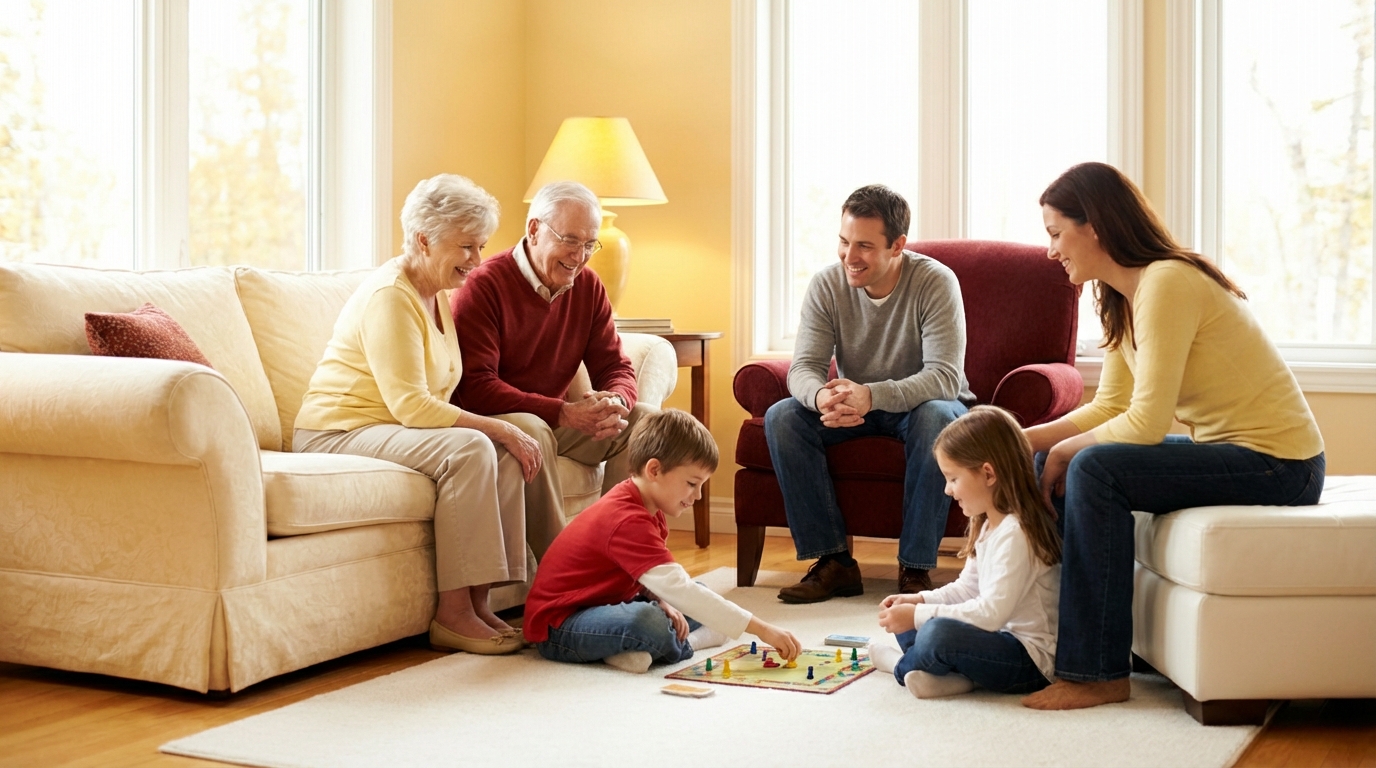
It is not easy to admit that we cannot do everything on our own, especially when it comes to caring for children, aging parents, or family members with health needs. Many of us reach a point where the traditional picture of a small, separate household starts to feel lonely, stretched, or simply not realistic anymore. When that happens, the idea of several generations living together under one roof can feel both comforting and frightening at the same time.
The short answer is that multi-generational households are returning because families need more support, housing is expensive, caregiving is demanding, and many of us want stronger connections between grandparents, parents, and children. Living together can bring real emotional and financial relief, but it also brings new conflicts, privacy challenges, and questions about boundaries. With thoughtful planning, clear communication, and a focus on accessibility and respect, a multi-generational home can feel like a shared village rather than a crowded space.
Why Multi-Generational Households Are Growing Again
For many families, moving toward a multi-generational setup is not just a lifestyle choice. It is a response to pressure, worry, and sometimes crisis. When we name those pressures honestly, it becomes easier to see why this pattern of living is returning.
- Rising housing costs and limited affordable options
- Growing need for hands-on caregiving for both children and older adults
- Cultural traditions that honor elders and collective living
- Desire for emotional support and less isolation
- Health concerns that make living alone less safe
Economic Pressure And Shared Costs
Many families are finding that separate homes for parents, adult children, and grandparents are simply out of reach. Mortgages, rent, property taxes, and utilities can swallow a large share of a family’s income. When two or three generations share one property, monthly costs can be divided, which takes some weight off everyone.
At the same time, moving in together can prevent other major expenses:
| Shared living | Separate living |
|---|---|
| One set of utilities, internet, and property costs | Multiple sets of household bills for each home |
| Built-in childcare or elder care support | Paid daycare, babysitters, or home care aides |
| Shared food, supplies, and transportation | Duplicate purchases, separate grocery runs, more driving |
| Possibility of one adult working less to care for others | More pressure to earn enough to cover outside services |
For caregivers, this shared approach can mean having more breathing room. There might be space to reduce work hours slightly, or to afford a part-time aide, because the whole family is sharing the base costs of the home.
Caregiving Needs Across The Generations
Many of us are part of what people sometimes call the “sandwich generation”: caring for aging parents while still raising children or supporting young adults. That constant pull in two directions is exhausting, both physically and emotionally.
Moving toward a multi-generational household can:
- Shorten commute times between homes
- Make it easier to respond to emergencies
- Allow care tasks to be shared across siblings, spouses, and grandparents
- Give older adults more consistent contact and less loneliness
When care happens under one roof, small daily check-ins can replace frantic rushed visits and middle-of-the-night drives across town.
Of course, this closeness can also be draining if boundaries are not clear. That is why emotional preparation is just as important as financial planning.
Culture, Tradition, And Belonging
For many families, having several generations live together is not a new idea returning; it is a familiar pattern continuing. In many cultures, grandparents, adult children, and grandchildren share one home or one compound as a sign of respect and duty.
In those homes, older adults are not seen as “burdens” but as elders with wisdom and authority. Adult children expect, from a young age, that they will one day welcome their parents into their own home. Children grow up watching care in both directions: parents caring for grandparents, and grandparents guiding and comforting grandchildren.
Multi-generational living in these families can feel more natural, but it still needs thoughtful planning when it comes to accessibility, health needs, and privacy. Tradition alone does not solve conflict, and it does not remove the strain that serious illness or dementia can place on a household.
The Emotional Landscape Of A Multi-Generational Home
Before we talk about layouts, ramps, and grab bars, it helps to pause and name the emotions many families move through when they consider bringing generations together.
- Relief at having more help and support
- Fear about conflicts, criticism, or old family patterns returning
- Grief at seeing parents needing care, or adult children struggling financially
- Hope that grandchildren will have closer bonds with grandparents
- Worry about loss of privacy and independence for everyone
A multi-generational home is not only a change in address; it is a change in identity for each person in the house.
For Caregivers
If you are the primary caregiver, you might feel pulled between wanting help and wanting control. You may think, “If we all live together, I will have backup,” but also, “Will I ever have time alone again?”
Caregivers in multi-generational homes often:
- Carry unspoken expectations to manage everyone else’s needs
- Fear judgment from parents or in-laws about parenting or care decisions
- Struggle to rest because there is always “one more thing” to do
- Feel guilty for needing personal space or time away
It can be grounding to say out loud, before the move, “We are doing this to share the load, not to place everything on one person.”
For Aging Parents Or Grandparents
Older adults who move in with their children or grandchildren often walk through a mix of gratitude and loss. They may appreciate the safety and companionship, but still miss having their own front door, their own routines, and their own way of doing things.
Common feelings for older adults include:
- Fear of being a burden
- Embarrassment about needing help with personal care
- Sadness about leaving a longtime home or town
- Frustration with new household rules or parenting styles
- Comfort in being close to grandchildren and daily family life
When we invite an elder into our home, we are not only adding a new resident; we are inviting their history, their habits, and their sense of dignity.
Honoring that dignity might mean allowing them to make small choices every day: what to wear, what to eat, when to go outside, where to sit. It might also mean asking for their advice and perspective, not just their medical history.
For Children And Teens
Children often adjust quickly, but they pick up on stress. They may feel protective of their grandparents or resentful about new rules and less privacy.
Some common changes for kids and teens:
- Sharing bedrooms or losing a playroom or game room
- Being asked to help more with chores and caregiving
- Hearing adult conversations about health, money, or death
- Gaining another trusted adult to listen, read, or play
It can help to include children in age-appropriate conversations before and after the move. Ask them what they worry about and what they look forward to. Invite them to help set up a room for their grandparent, so they feel part of the welcome.
Planning The Multi-Generational Home: Space, Privacy, Accessibility
Once the emotional side is acknowledged, families can begin shaping the physical space in a way that supports everyone. The building itself can either raise tension or ease it.
Thinking About Zones Instead Of Just Rooms
A helpful way to picture a multi-generational home is to think in “zones”:
| Zone | Purpose | Examples |
|---|---|---|
| Private zones | Rest, privacy, personal belongings | Bedrooms, personal bathrooms, small sitting area |
| Shared daily zones | Family connection and routines | Kitchen, dining area, living room |
| Quiet zones | Work, study, decompression | Office corner, reading nook, outdoor bench |
| Care zones | Medical tasks, personal care, equipment | Accessible bathroom, bedside area, storage for supplies |
When every person knows, “This is my space,” and “This is our space,” daily life flows with less friction and more respect.
Privacy For Everyone, Not Just One Generation
In many families, attention goes to the privacy of the younger adults and children, and elders are expected to accept a corner or a spare room. That can quickly feel dehumanizing.
Helpful practices include:
- Giving older adults a room that is easy to reach and large enough for a bed, a chair, and personal items
- Creating at least one space where teens can be with friends or talk privately
- Agreeing that bedrooms are “knock first” zones, no matter whose room it is
- Setting quiet hours so light sleepers can rest
If space allows, a small sitting area or den next to the elder’s bedroom can make a big difference. That space can be used for visitors, phone calls, or watching shows without disturbing others.
Accessibility: Making The Home Safer And More Comfortable
Accessibility adjustments do not only help older adults; they help anyone with an injury, chronic condition, pregnancy, or temporary limitations. Many changes are small but make daily life much safer.
Key areas to review:
- Entrances: Step-free or low-step entry, good lighting, secure handrails
- Floors: Non-slip surfaces, clear pathways, secure rugs or no rugs
- Stairs: Sturdy handrails on both sides, contrasting color on edges, stairlift if needed
- Bathroom: Grab bars, raised toilet seat, walk-in shower with seat, handheld shower head
- Bedroom: Bed at a safe height, clear space around the bed for mobility aids, reachable light switches
For older adults with dementia or memory issues, you might also:
- Label drawers and doors with simple words or pictures
- Use night lights in halls and bathrooms
- Store cleaning products and medications in locked cabinets
- Consider door alarms or simple monitoring devices for safety
Money, Care Schedules, And Shared Responsibility
Money and time are two of the most sensitive areas in any household, and multi-generational living brings those questions out into the open. Families who talk about these topics early and clearly tend to experience fewer resentments later.
Talking Openly About Finances
It can feel uncomfortable to discuss who pays what, especially when parents and adult children are involved. Avoiding the conversation, though, often leads to quiet frustration and misunderstandings.
Key questions to discuss together:
- Who owns or rents the home now?
- Will that change when another generation moves in?
- How will mortgage, rent, or property taxes be divided?
- Who pays for groceries, utilities, internet, and home maintenance?
- How will medical costs and caregiving supplies be covered?
A written family agreement about money is not a sign of mistrust; it is a tool that protects relationships when memories differ or stress rises.
Families can put these choices into a simple document, even if it is not legally binding, so everyone has the same understanding.
Sharing Caregiving Duties Realistically
In many multi-generational homes, one person carries the bulk of caregiving, often without full agreement from the rest of the family. That person may be the one who works from home, the one closest emotionally, or the one who “has always handled things.” Over time, that can lead to burnout.
Instead of waiting for burnout, it helps to treat caregiving like a shared project, with clear roles:
| Type of support | Examples | Who might do it |
|---|---|---|
| Hands-on care | Bathing, dressing, toileting, transfers, feeding | Primary caregiver, home health aide |
| Household tasks | Cooking, laundry, cleaning, shopping | Teens, adults, rotating schedule |
| Administrative | Appointments, insurance, medications, paperwork | Organized family member, sometimes with power of attorney |
| Emotional support | Companionship, listening, outings, spiritual care | Grandchildren, friends, faith community |
It can help to create a weekly schedule that lists each person’s responsibilities and days off from caregiving tasks. Rest is not selfish; it is necessary for long-term care.
Setting Boundaries And House Rules With Kindness
Many of us enter a multi-generational setup with long histories: stories of childhood, old arguments, unspoken hurts. These memories come with us into the shared kitchen and living room. That is why boundaries and clear expectations matter.
Household “Agreements” Instead Of Unspoken Rules
Rather than assuming everyone knows what is acceptable, families can write a short set of house agreements. This is especially helpful when adults from more than one background or family system are living together.
Topics to cover can include:
- Quiet hours for sleep
- When guests are allowed and where they can stay
- Shared spaces that need tidying after use
- Who cooks on which days
- How parenting decisions are handled
For example, you might agree:
“In this home, the parents make final decisions about the children, and grandparents offer advice privately, not in front of the kids.”
Writing that down may feel formal, but it gives everyone something to point to when tensions rise.
Respecting Different Generations And Roles
Respect in a multi-generational home flows in many directions:
- Young adults showing respect for elders’ experiences and needs
- Elders respecting adult children’s authority as parents
- All adults respecting teenagers’ privacy and growing independence
Sometimes, people assume that respect only moves one way, from younger to older. In a shared home, fairness and kindness across generations helps everyone feel valued.
There can be gentle conversations about:
- How often advice is given
- Comments about parenting, work choices, or finances
- Body autonomy and consent for hugging, touching, or entering rooms
If you feel yourself becoming the “referee” for every conflict, it may help to bring in a neutral third person, like a counselor, faith leader, or social worker, to guide one or two family meetings.
Support For Caregivers Within Multi-Generational Homes
Caregivers sometimes expect that bringing everyone under one roof will automatically relieve the burden. While there can be more hands available, there can also be more needs to coordinate. Support from outside the home remains important.
Bringing In Outside Help
Some families feel that hiring help is a sign that they are not doing enough. In reality, arranging outside support often protects the health of everyone in the household.
Possible supports include:
- Home health aides for bathing, transfers, or respite
- Visiting nurses for wound care, medications, and monitoring
- Adult day programs for socialization and supervision
- Respite care stays in a facility, so family can rest or travel
- Housecleaning help once or twice a month
Local Area Agencies on Aging, disability resource centers, or community care organizations can guide you toward programs, grants, and low-cost services.
Emotional And Mental Health Support
Living in close quarters can make it hard for anyone to find space to cry, worry, or process. Over time, that can affect physical health and relationships.
Caregivers and other family members might find it helpful to:
- Attend a caregiver support group, online or in person
- Schedule counseling sessions by phone or video
- Set aside a personal “quiet hour” each week, protected by other adults
- Use a journal to release feelings that are hard to share
When we care for our own mental health, we are not stepping away from our family; we are strengthening our ability to stay present with them.
Design Ideas For Different Multi-Generational Setups
Every home and family is different, but certain patterns appear often. Looking at a few common layouts can spark ideas.
Shared Home With A Private Suite
In this setup, grandparents or an elder relative have a bedroom, small sitting area, and possibly a bathroom that is somewhat separate from the main family spaces. This might be a finished basement, an over-garage apartment, or a section of the main floor.
Strengths:
- Good balance between privacy and closeness
- Easier to visit without being constantly “on top” of each other
- Can be made more accessible than upper floors
Challenges:
- May require construction or remodeling
- Basements must be checked for moisture, cold, and safe exits
Converted Main Floor Bedroom And Bath
In some homes, a dining room or den is converted into a main-floor bedroom for an elder, with a nearby bathroom adapted for accessibility.
Strengths:
- No need for regular stair use
- Close to kitchen and family spaces
- Often less costly than creating a separate suite
Challenges:
- Less privacy due to noise and foot traffic
- Families may need to adjust how they host guests or parties
Two Homes On One Property Or Side-By-Side Units
Some families share a duplex, side-by-side townhomes, or a main house with a small accessory dwelling unit (sometimes called an in-law apartment) on the same lot.
Strengths:
- Highest level of privacy and autonomy for each generation
- Short distance for caregiving and daily check-ins
Challenges:
- Requires significant financial resources or an existing property
- More total space to maintain
Children, Learning, And Intergenerational Connection
One of the quiet gifts of a multi-generational home is what children learn by watching care happen every day. They learn that aging is part of life, that bodies and minds change, and that responding with patience and respect matters.
Helping Children Understand New Roles
Children do not need every detail about medical conditions or finances, but they do benefit from simple, honest explanations.
For example:
- “Grandpa’s memory is changing, so he may ask the same question many times. We can answer gently, even when we feel tired.”
- “Grandma’s legs are not as strong, so she uses a walker. We keep the floors clear so she will not fall.”
- “We all help with chores because this is our shared home now.”
Encourage them to share their own feelings, such as:
- “I feel scared when the ambulance comes.”
- “I miss having my own room.”
- “I love reading with Nana at night.”
Acknowledge those feelings without rushing to fix them. Children can hold both love and frustration, just like adults.
Creating Rituals That Strengthen Bonds
Small, repeated activities can give everyone something to look forward to:
- A weekly story night where grandparents tell memories from their childhood
- A simple shared meal, like Sunday breakfast or Friday soup night
- A short walk or porch sit each afternoon, if mobility allows
- Seasonal projects, such as planting a small garden or sorting family photos
Rituals can turn a house full of individuals into a home with shared rhythms and memories.
These routines do not have to be elaborate. Regular, gentle contact has more power than big, rare events.
When Multi-Generational Living Is Not Working
It is honest to say that not every multi-generational home feels safe or sustainable. Some situations involve conflict, abuse, or ongoing disrespect. Others are simply too intense for anyone to rest or heal.
Signs that the current arrangement may need serious adjustment:
- One person is carrying almost all care tasks with no change in sight
- Verbal or physical aggression becomes a pattern
- Children express fear of being at home
- Health needs outgrow what family can realistically provide, even with help
- Substance use, untreated mental health issues, or financial abuse appear
If you see these patterns, it does not mean you have failed. It may mean that the level of care needed requires a different setting, or that some relatives need to live separately for safety and peace.
Seeking help from:
- Social workers or case managers
- Faith or community leaders
- Counselors or family therapists
- Legal advisors, if necessary
can open doors to safer arrangements, housing options, or protective steps. Protecting children and vulnerable adults must always come first, even when that means changing the original plan.
Questions To Ask Before Moving Toward A Multi-Generational Home
Before boxes are packed and rooms rearranged, it can help to sit down, perhaps more than once, with these questions. Honest answers can guide next steps.
Practical And Health Questions
- What health conditions and care needs exist now? How might they change in the next few years?
- Is our current home physically safe and accessible for everyone?
- What changes would be needed for bathing, toileting, mobility, and emergency access?
- Who will be present at home during the day and night?
Emotional And Relationship Questions
- What past conflicts may resurface when we share space again?
- Are there boundaries that need to be named before living together?
- What does each person fear most about this move?
- What does each person hope to gain from it?
Support And Backup Plan Questions
- What outside resources are available in our community?
- Are we willing to adjust the arrangement if health needs or conflicts grow?
- How will we know that the current setup is no longer working?
- Who can we call for support if there is a crisis?
It can help to write down answers, so they can be revisited later. Families grow and change, and so do needs and capacities.
Seeing The Return Of Multi-Generational Living As A Community Shift
When we look beyond individual households, the rise of multi-generational homes points to something larger. Many people feel that caring for children, elders, and disabled family members should not rest on one isolated person or one small nuclear unit.
In that sense, the return of multi-generational living is a quiet statement: care is shared, and lives are intertwined. Grandparents help raise grandchildren. Adult children care for parents. Siblings, cousins, and extended relatives step in where they can.
We are rediscovering that care is not a private burden to hide, but a shared human work that connects generations.
At the same time, communities, workplaces, and public policies need to adapt. Multi-generational homes benefit from:
- Flexible work schedules and remote options for caregivers
- Accessible public spaces and transportation
- Affordable home modification programs
- Caregiver training and respite services
- Respectful public conversation about aging, disability, and dependence
As families open their homes to multiple generations, they should not be left to manage everything alone. Support from neighbors, faith communities, local groups, and social services can turn a stressed household into a supported one.
The return of the multi-generational household is not just about saving money or sharing a kitchen. It is about how we choose to live with one another when life gets harder, when our bodies change, and when we need more help than we once did. With care, clear communication, and attention to accessibility and respect, that shared home can become a place where everyone, at every age, has room to breathe, contribute, and belong.