Some days our minds feel so full that even sitting still can feel tiring. Other days, the quiet of the house feels too heavy, and our thoughts seem louder than we would like. Many of us who care for others, or who live with health challenges or loneliness, know that feeling very well. We want something gentle that calms the mind, steadies the heart, and gives our hands something kind to do.
If you are wondering whether knitting or crochet can really help you feel calmer, more centered, and less alone, the short answer is yes. These crafts can work like a soft kind of meditation: your hands move in a steady rhythm, your breath slows down, and, bit by bit, your mind has a kinder place to rest. The yarn does not judge you, the stitches do not rush you, and you can pick them up for five minutes or an hour, depending on what you are living through that day.
How Knitting and Crochet Work Like Meditation
When we hear the word “meditation,” many of us think of sitting cross-legged in silence with an empty mind. For caregivers, people in pain, or anyone under stress, that picture can feel far away. Knitting and crochet offer another path to a similar calm, but with yarn in our hands and something soft growing in our lap.
- The hands repeat small, simple motions.
- The eyes follow a gentle pattern.
- The mind starts to rest inside that rhythm.
Over time, many people begin to notice that they feel more grounded while crafting and sometimes for a while afterward. The project becomes a place of refuge that you can carry with you.
The Rhythm That Soothes the Nervous System
Our bodies respond strongly to rhythm. Rocking a baby, hearing a slow heartbeat, or listening to waves all tend to quiet us. Knitting and crochet have a similar effect.
Each stitch is like a tiny, repeated gesture:
- Insert hook or needle
- Wrap yarn
- Pull through
- Repeat
This steady pattern helps the nervous system move away from “high alert” and into a calmer state.
The gentle repetition of stitches can give your body the signal that, for this moment, you are safe enough to breathe more slowly.
Many crafters find that:
| Before crafting | After 15-30 minutes of crafting |
|---|---|
| Heart racing or heavy chest | Heart rate feels more steady |
| Racing thoughts | Thoughts move more slowly |
| Restless hands | Hands feel occupied and calmer |
| Sense of “too much” | Sense of “I am handling this moment” |
Even if you do not think of it as meditation, your body often responds in similar ways.
Why Focused Hands Free the Mind
Our minds often loop on worries: health results, money, a loved one struggling, a future we cannot control. When we pick up knitting or crochet, we give the brain a small, clear job:
- Count these stitches.
- Follow this row.
- Feel the yarn and watch the pattern appear.
This gentle focus can quiet the noise in the background. It is not that your problems vanish. They simply do not take up all the space for a little while.
Knitting and crochet do not erase stress, but they can turn down the volume enough for you to hear yourself again.
Over time, this practice of returning your attention to the next stitch works very much like mindfulness. You notice when your mind wanders, and you bring it back kindly, without scolding yourself.
Emotional Comfort: Holding Something Soft When Life Feels Hard
When we care for others or manage chronic illness, grief, or anxiety, we need small, steady comforts that do not depend on anyone else’s mood or schedule. Yarn crafts can become that kind of refuge.
The Quiet Companionship of Yarn
There is something deeply comforting about feeling yarn in your hands. The softness, the weight of the growing project, the slow progress; all of it speaks to a part of us that longs for gentleness.
For many people:
- The yarn becomes a quiet companion during lonely evenings.
- The project becomes a place to “put” your feelings when words are hard.
- The work creates structure on long days with little outside contact.
When life feels unpredictable, a simple pattern with clear rows can give you something steady to hold on to.
Even on days when you do not have the energy to talk or solve problems, you can usually manage one more row. That small “yes” to yourself can feel very tender and strong at the same time.
Turning Anxiety into Something You Can See and Touch
Worry can feel very shapeless. It moves around in the chest and mind without form. When you knit or crochet, some of that restless energy flows into your hands and becomes something real.
For example:
| Feeling | How crafting can respond |
|---|---|
| Fear about the future | Commit to this row only, and watch a small piece of fabric appear. |
| Anger or frustration | Choose a sturdier yarn and a simple stitch, and pour that energy into firm, strong rows. |
| Grief or sadness | Work with a soft, gentle yarn, giving yourself permission to stitch slowly and rest often. |
| Loneliness | Create something that you plan to give to someone, connecting you to them in advance. |
The act of turning a tangled ball of yarn into something structured often brings a small sense of order when the heart feels messy.
Benefits For Caregivers and People Living With Illness or Disability
Many readers in our community care for loved ones, manage chronic pain, or live with limited mobility or energy. Knitting and crochet can fit into these lives in very gentle ways.
Portable, Flexible, and Easy to Pause
For caregivers, schedules often get broken, and your needs are interrupted. Knitting and crochet fit this reality because:
- You can work for five minutes or fifty, and the project will simply wait for you.
- You can put the work down in an instant if a loved one calls or needs help.
- You can carry small projects in a bag for appointments or long waits.
Crafting does not demand large blocks of time; it welcomes scraps of time and turns them into something warm and steady.
This makes it kinder for lives shaped by care tasks, fatigue, or frequent medical visits.
Gentle Activity For Bodies With Limits
Many people worry that their hands, joints, or energy levels are not “good enough” for yarn crafts. That is a very human fear, but it is often softer in reality than we imagine.
Knitting and crochet can support:
- Mental focus without heavy physical effort.
- Hand movement that can sometimes help stiffness, if done with care.
- A sense of purpose, even from bed or a chair.
If you live with arthritis, neuropathy, or tremors, you can still participate, though you may need some adjustments:
| Challenge | Possible adjustment |
|---|---|
| Hand or wrist pain | Use larger hooks/needles, thicker yarn, and ergonomic handles. Take frequent breaks. |
| Limited grip strength | Look for lightweight tools and soft yarn. Try looser tension. |
| Vision changes | Choose lighter yarn colors, good lighting, and simpler patterns. |
| Fatigue | Focus on very small goals, such as a few stitches or one row at a time. |
If pain increases while you work, it is wise to slow down, change tools, or ask an occupational therapist or hand specialist for guidance. We want the craft to comfort, not to harm.
Social Connection and a Sense of Contribution
Loneliness can be heavy, especially for those who spend much of their time at home. Yarn crafts open quiet doors into connection and meaning, even when travel or long outings are hard.
Stitching With Others, Near or Far
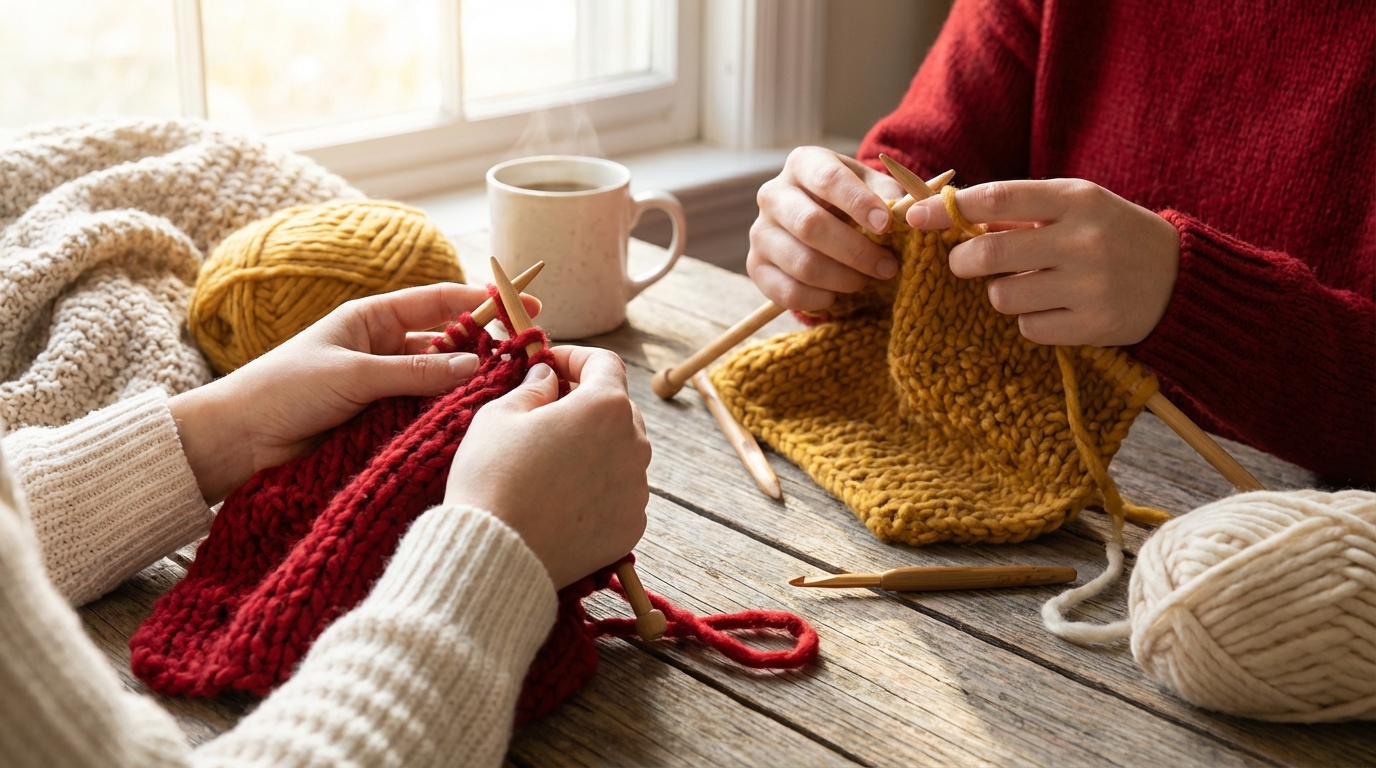
Knitting and crochet circles have long offered gentle places to sit together with a shared purpose. The focus on hands and yarn often makes conversation easier, especially for introverts or people going through difficult times.
Ways people connect through these crafts:
- Local knitting or crochet groups at libraries, community centers, or faith communities.
- Online video meetups where people stitch together from home.
- Message boards or social networks dedicated to sharing patterns and projects.
When we stitch beside others, in person or on a screen, silence does not feel empty; it feels shared.
If getting out of the house is hard, even just posting a photo of a project in progress can bring kind comments and a feeling of belonging.
Giving Handmade Comfort to Others
Many caregivers and people with health challenges long to feel useful and generous, not only like they are the ones who need help. Knitting and crochet offer many small ways to give:
- Hats, blankets, or shawls for friends going through treatment or grief.
- Baby items or lap blankets for local hospitals or care homes (if they accept them).
- Prayer shawls or comfort wraps for community or faith groups.
Creating something soft for another person can steady your own heart:
With each stitch, you are saying, “I cannot fix everything, but I can wrap you in warmth.”
This sense of contribution can ease feelings of helplessness and remind you that you still hold much to give.
Simple Ways To Bring More Mindfulness Into Your Craft
You do not need to change your whole style of knitting or crochet to enjoy the meditative side. Small shifts in how you approach your work can deepen the calming effect.
Setting a Gentle Intention
Before you pick up your yarn, you might pause for a few breaths and quietly choose a simple intention, such as:
- “For the next ten minutes, I will let this be my only task.”
- “With these stitches, I will be kind to my body.”
- “I will think of the person who will receive this and send them warmth.”
You do not have to be spiritual to benefit from this. You are simply giving your mind a soft focus to return to when it wanders.
Finding a Rhythm That Suits You
Everyone’s nervous system responds differently. Some people relax with very simple, repetitive patterns. Others prefer just enough challenge to hold their focus.
You might find it helpful to notice:
| Pattern style | How it might feel |
|---|---|
| Very simple (garter stitch, basic granny square) | Almost automatic, like rocking gently; good for anxious or tired days. |
| Moderate pattern (simple cables, stripes, shells) | A little more focus; worry thoughts have less room to wander. |
| Complex lace or colorwork | High focus; for some, this is absorbing and refreshing, for others, stressful. |
There is no right level. The best choice is what feels kind to your mind on that particular day.
Choosing Projects That Support Mental and Emotional Health
Not every project will feel calm. Very tight deadlines, very complex patterns, or harsh yarn can actually raise stress. It is wise to choose projects that match your emotional needs.
Comfort Projects for Anxious or Overwhelmed Days
On days when you feel frazzled, simple is often best. You might look for:
- Rectangles and squares: scarves, dishcloths, simple blankets.
- Patterns you already know by heart.
- Soft, pleasant yarn that feels gentle in the hands.
When your heart feels tangled, let your project be straightforward and forgiving.
Try not to pressure yourself to “finish” quickly. On these days, the process is the point.
Projects for Focus and Gentle Challenge
On days when your mind feels foggy, a small challenge can wake it in a kind way. You might choose:
- A new, but not too intricate, stitch pattern.
- A small item like a hat or pair of mitts with simple shaping.
- A color change pattern that keeps your attention.
This can be especially helpful for people who feel mentally dull from depression, medication side effects, or long stress. The brain gets a safe puzzle, and the sense of “I learned something new” can feel very grounding.
Supporting Sleep and Easing Evening Worries
Many people find that their worries grow louder at night, just when they would like to rest. Knitting or crochet can become part of a calming evening ritual.
Building a Gentle Nighttime Routine
You might find it soothing to:
- Dim bright screens and lights.
- Make a warm, non-caffeinated drink.
- Sit in a comfortable chair or in bed with pillows supporting your back.
- Work a very simple, familiar pattern for 10 to 30 minutes.
This repeated pattern, over many nights, can teach your body that it is time to slow down. The familiar movements give your mind something to rest on, instead of looping through the day’s worries.
If you notice that certain projects make you feel more alert or frustrated in the evening, save those for daytime and choose the most soothing work at night.
Supporting People With Dementia, Anxiety, or Depression
For caregivers supporting someone with dementia or mental health challenges, yarn crafts can sometimes offer gentle help. This is not a replacement for medical care, but it can be part of a supportive environment.
Crafting With Someone Living With Dementia
Some people with dementia or memory loss once loved to knit or crochet. They may still enjoy:
- Feeling yarn and holding tools, even if they no longer follow full patterns.
- Very simple motions, such as making chains in crochet.
- Watching you knit or crochet beside them and talking about old projects.
Safety is very important:
| Concern | Possible approach |
|---|---|
| Sharp points | Use blunt-tip needles or larger plastic hooks. |
| Frustration | Offer simple, repetitive steps rather than full patterns. |
| Attention span | Keep sessions short and gentle, following their mood and energy. |
The goal is not a finished scarf; the goal is a few shared minutes of calm and connection.
If frustration rises, it may help to switch from stitching to simply touching the yarn together or looking at finished pieces.
Supporting Someone With Anxiety or Depression
For people living with anxiety or depression, starting anything can feel heavy. You might gently offer:
- A small, simple kit with yarn, hook or needles, and a very clear pattern.
- To sit and stitch beside them without pressure to talk.
- Short, reachable goals such as “Let us do three rows together.”
The key is to keep expectations low and kindness high. If they stop, or if it does not feel helpful at this time, that is all right. You can try again another day, or accept that other forms of comfort suit them better.
Adapting Knitting and Crochet for Accessibility
Everyone deserves access to the calming benefits of yarn crafts, including those with physical or sensory challenges. With some creativity, many barriers can soften.
Tools and Setups That Reduce Strain
If hand or body pain is a concern, you might look at:
- Ergonomic hooks and needles with larger, shaped handles.
- Lightweight circular needles that hold the weight of the project on your lap.
- Lap desks or cushions to support arms and wrists.
- Chair and pillow setups that keep shoulders and back relaxed.
Consider setting a gentle timer, such as 10 to 15 minutes, to remind yourself to stretch, drink water, or rest your hands. Many of us push through pain; here, we can practice kinder listening.
Supporting Low Vision or Sensory Needs
For people with vision changes, autism, ADHD, or sensory processing differences, small choices can make the craft more comfortable:
| Need | Possible supports |
|---|---|
| Low vision | Bright, even lighting; high-contrast yarn and background; bold, large-print patterns; simple stitches. |
| Light sensitivity | Softer, indirect light; darker yarn balanced with clear contrast against clothing or lap cloth. |
| Sensory comfort | Yarns with textures that feel good to touch; avoiding fibers that itch or squeak. |
| Attention challenges | Short pattern repeats; stitch markers; small projects for a faster sense of progress. |
Crafting should feel like a safe nest for your senses, not a strain to endure.
Adjusting tools and materials until the craft feels kind to your body is a sign of wisdom, not weakness.
Healthy Boundaries: When Crafting Stops Being Calming
Sometimes, what begins as a soothing practice can slip into something that adds stress. It helps to be honest about that and gently reset.
Warning Signs That the Balance Has Shifted
You might notice that:
- You feel tense or irritable while working.
- You push yourself to finish even when your body hurts.
- You feel guilty or “behind” on projects for others.
- You start comparing your work harshly to others.
If this happens, it can help to pause and ask:
- “What did I hope to feel when I began this project?”
- “What is this making me feel right now?”
- “What could I change so this feels kinder?”
Sometimes the answer is as simple as putting aside one stressful project and picking up an older, simpler one that you know by heart.
Letting Go of Perfection
Perfectionism can quietly drain the comfort out of crafting. A missed stitch, a slightly uneven row, or a color you wish you had chosen differently can feel huge in the moment.
Here are some gentle reminders:
- Most people who receive handmade items do not see small mistakes; they see care.
- Every project is also a record of where you were in life: tired, learning, grieving, healing.
- Fixing every tiny error is not always necessary for warmth and beauty.
The small flaws in your work can be a quiet reminder that you are human, worthy of kindness, and still creating warmth in an imperfect world.
If a mistake troubles you, and you have the energy, you can fix it. If not, it is all right to leave it and keep moving. Either choice can be wise, depending on the day.
Getting Started Gently: A Kind Path for Beginners
If you are new to knitting or crochet, it might feel intimidating at first. Many people worry they will not “get it” or that their hands are too slow. Those fears are common, but learning can still be gentle.
Choosing Between Knitting and Crochet
Both crafts can be meditative. The best choice is often the one that feels more natural in your hands.
Here are a few differences:
| Knitting | Crochet |
|---|---|
| Uses two needles. | Uses one hook. |
| All stitches stay “live” on the needle. | Usually only one active loop on the hook. |
| Fabric often stretches more, good for garments. | Fabric can be thicker; great for blankets, toys, and textured items. |
| Dropping a stitch can be confusing at first. | Easier for some people to see and correct mistakes. |
You might try a short beginner video for each and notice which movements feel calmer to you.
Starting With Kind Expectations
When you begin, you may feel clumsy. Many of us do. This does not mean you are failing; it means you are learning.
You might find it helpful to:
- Plan that your first projects are for practice, not for gifts.
- Choose thick yarn and larger tools so you can see and feel the stitches more clearly.
- Keep sessions short so your hands and mind do not tire too quickly.
With time, your hands will find their own rhythm. The meditative quality grows as the motions become more familiar, so you do not need to rush that process.
Weaving These Crafts Into Daily Life
Knitting and crochet can become small anchors in the day, especially for those caring for others, managing disabilities, or living with long-term stress.
You might gently weave them into:
- Morning: A few rows with your first cup of tea or coffee, to set a calm tone.
- Afternoon: A short break after a difficult phone call or medical task.
- Evening: A soothing ritual before sleep, away from news and bright screens.
Over months and years, these small pockets of calm can add up. The projects that grow in your lap will quietly hold the story of your perseverance, your care, and your hope.
Each stitch is a small vote for your own well-being, a gentle reminder that your needs matter too.
For many in our caregiving and home health community, knitting and crochet are more than hobbies. They are soft, steady companions that walk beside us through worry, waiting rooms, night shifts, and quiet afternoons, offering a place for our minds to rest and our hearts to soften, one stitch at a time.