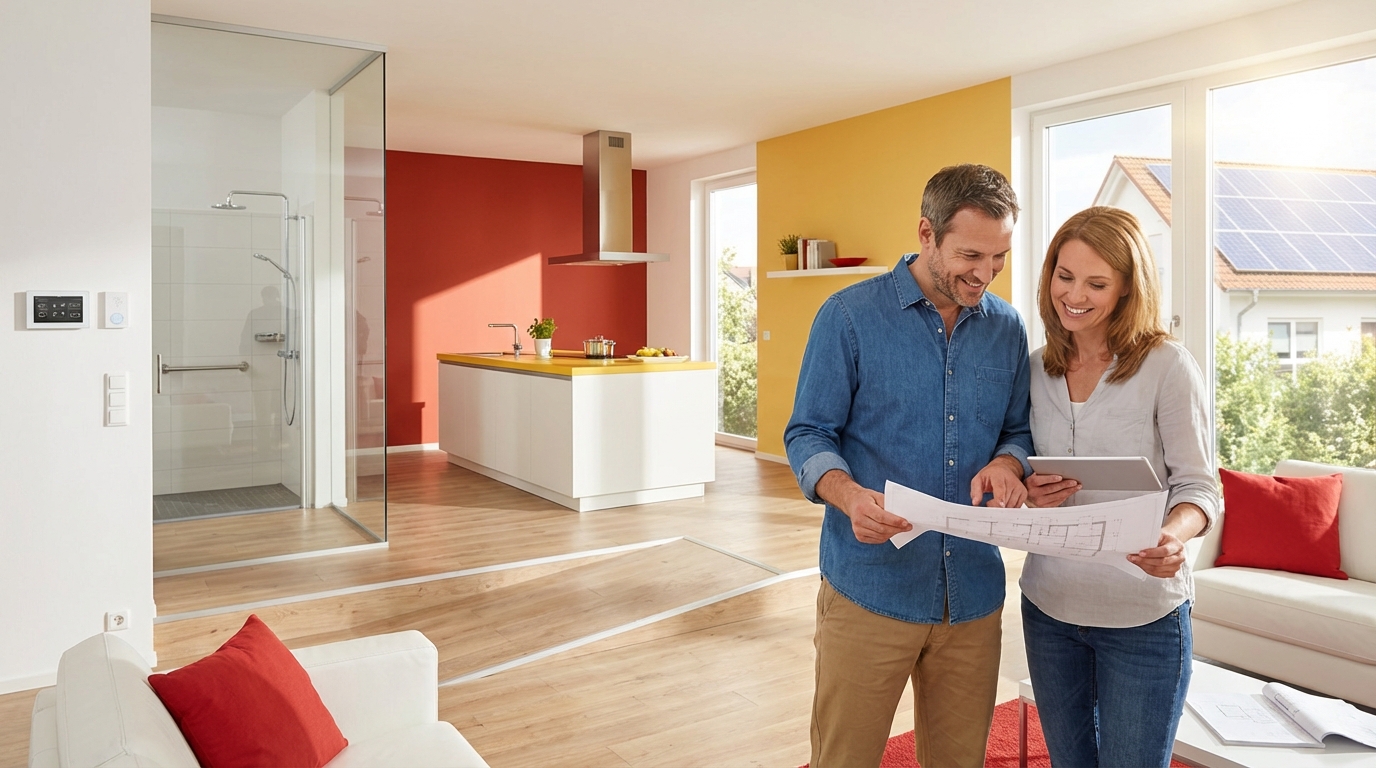
It is not easy to look around the home you love and quietly admit, “One day I might not move through this space as easily as I do now.” Many of us avoid that thought, because it can feel like planning for illness or decline. But what I have seen, again and again, is that planning early is really an act of care: care for yourself, your partner, and anyone who may one day help you.
The short version is this: In your 40s, it helps to start with the “bones” of the house. Create at least one step-free way in, one bathroom that is safe and easy to use if your mobility changes, wide doorways and hallways, good lighting, and spaces that can shift from kids and guests to caregiving and recovery if needed. When we make these changes early, they blend into a comfortable, beautiful home, and they cost less and feel less stressful than rushed renovations after a fall, surgery, or diagnosis.
Future-proofing your home in your 40s is less about expecting the worst and more about giving your future self choices, comfort, and dignity.
We can walk through each part of the home together, focusing on what tends to help most as bodies, families, and needs change over time.
Why Your 40s Are The Right Time To Plan Ahead
By our 40s, many of us are in a very particular season of life. We may be helping aging parents, raising teenagers, juggling work, and feeling the first signs that our own bodies are not quite the same as at 25. A stiff knee after a long day. New glasses. A back that complains when we carry laundry up the stairs.
All of that can feel discouraging. At the same time, it also gives us a chance to see what older age might realistically look like. We have watched parents or grandparents manage stairs, bathroom hazards, and clutter. We have seen what helped them stay independent, and what made life harder.
Several things tend to be true in our 40s:
- We are more likely to have some savings or home equity to work with.
- We often have more say in household decisions than we did in our 20s or 30s.
- We can still recover from disruption, construction, and change more easily.
- We can make choices calmly, before a medical crisis forces rushed decisions.
When we plan home renovations in this season, we can fold accessibility and future needs into projects we may already be doing: updating a bathroom, replacing flooring, finishing a basement, or remodeling a kitchen. The changes look like thoughtful design, not “medical equipment everywhere.”
When we build future needs into ordinary updates, the house quietly becomes a supportive partner instead of another thing to worry about.
Start With The Big Picture: Can You Age In This House At All?
Before thinking about grab bars or ramps, it helps to ask a simple, honest question: “Is this house one that someone with limited mobility could live in safely?”
Three main areas guide this:
| Area | What to look at |
|---|---|
| Layout | Is there a path to live mostly on one level if needed? |
| Structure | Are doors, halls, stairs, and bathrooms safe and modifiable? |
| Location | Is the slope, driveway, and neighborhood manageable as you age? |
One-Level Living: The Goal to Aim For
The single most helpful feature for aging is the ability to live on one level. That does not mean the home must be a ranch. It means that, at minimum, one level of the home can eventually contain:
- A bedroom or room that can become a bedroom.
- A full bathroom or a bathroom that can be renovated to include a shower.
- A kitchen or kitchenette.
- Easy access to the outdoors.
If your main living level already has these, you are in a strong position. If not, it may be worth asking:
- Could a dining room, office, or den become a future bedroom?
- Could a half-bath be enlarged into a full accessible bathroom?
- Could a basement with a walk-out entrance become a main living area later?
A “future bedroom” does not have to look like one now. It can stay a sunny office, playroom, or guest room until the day you need it to change roles.
Know When the House Itself Is Fighting You
There are homes where aging in place would require large amounts of money and construction:
- Very steep driveways or long exterior stair runs with no room for a ramp.
- Split-level or tri-level layouts with short but constant stairs between all spaces.
- Narrow, load-bearing hallways that cannot be widened without heavy structural work.
- Upper-floor condos with no elevator access.
If your home has several of these features, it is kind to at least consider a quiet “Plan B.” That does not mean you must move any time soon. It simply means you keep in mind that there may come a day when shifting to a more accessible home is the healthier choice than forcing this structure to work.
Sometimes, the most caring renovation is not in the current house at all, but in the decision to eventually choose a different one.
Create A Safe, Step-Free Entrance
When we support older adults, we see quickly how powerful one safe entry can be. Emergency services, home health, grocery deliveries, and visiting family all benefit. So do you, if you ever recover from an injury or surgery.
Look For Your Easiest Potential Entrance
Walk around your home and look for the entry that already asks the least of the body:
- A door from the garage with only one or two steps.
- A back or side door with a gentle slope.
- A front door with a wide landing and space to add a ramp.
Once you pick the “best candidate,” you can plan improvements such as:
- Replacing 3 or 4 steps with a gently sloped ramp.
- Adding sturdy handrails on both sides of stairs.
- Extending landings so there is room to stand safely while unlocking doors.
- Adding a roof or awning so surfaces stay dry in rain and snow.
Building these changes while you are still healthy gives you time to shape them in a way that matches your home and taste, instead of rushing in a crisis.
Doorways, Thresholds, and Hardware
While you are looking at entrances, notice three things:
| Feature | What helps long-term |
|---|---|
| Door width | At least 36 inches is easier for walkers and wheelchairs. |
| Threshold | Flat or very low, beveled threshold to reduce tripping and rolling resistance. |
| Handle type | Lever handles rather than knobs, easier for painful or weak hands. |
If you are replacing doors anyway, you can choose wider ones now. It rarely costs much more during a remodel, but it is very expensive later if walls must be opened again.
Lever handles look like a style choice today, but they quietly become a lifeline for arthritic hands tomorrow.
Re-Thinking Stairs: Safety, Support, And Future Options
Stairs are often the first feature that limits where someone can live. Many middle-aged adults tell themselves, “Stairs keep me fit,” which can be true for a while. Then one knee surgery, or one dizzy spell, turns those same stairs into a barrier.
Make Current Stairs Safer Right Away
Even before thinking about lifts or major changes, there are safety upgrades that help at any age:
- Install secure handrails on both sides of all staircases.
- Ensure steps are of consistent height and depth, with no odd shallow or over-deep treads.
- Add clear, even lighting at the top and bottom of each run.
- Use non-slip surfaces or treads, especially on bare wood or tile.
- Remove loose rugs or runners that can shift underfoot.
These small-seeming changes are often what prevent falls, long before a person might use a walker or cane.
Think Ahead to Future Stair Solutions
If you are remodeling or building now, it may help to quietly plan for:
- Stair width that can fit a future stair lift if you choose one later.
- Open wall space near stairs that could hold a lift rail or support posts.
- Electrical outlets positioned where a stair lift motor might go.
Some families eventually decide on a home elevator, especially in multi-story homes they plan to stay in for decades. Elevators can be expensive, but if you are already doing major structural work, asking a contractor where a small future shaft could go costs nothing and preserves options.
Bathrooms: The Heart Of Safety And Dignity
In caregiving work, we often say that the bathroom is where independence is either protected or lost. A person can manage many things with help, but being able to safely use the toilet and shower with as little assistance as possible carries a deep emotional weight.
Your 40s are the perfect time to build one bathroom that can serve you throughout your later years.
Choose One “Forever Bathroom”
Many homes have several bathrooms, but not all are good candidates for accessibility. Look for the one that:
- Is on or near the level where you may sleep one day.
- Has, or could have, at least a 5-foot turning radius for a walker or wheelchair.
- Shares walls with a closet or another room, so it can be expanded slightly if needed.
If you will remodel only one bathroom with accessibility in mind, let it be this one.
Key Features For An Accessible Bathroom
We can break key features into layout, bathing, toilet, and safety details.
| Area | Helpful features |
|---|---|
| Layout | Wide doorway, clear floor space, no tight corners. |
| Shower/Bath | Curbless shower, bench, hand-held showerhead. |
| Toilet | Comfort-height toilet, space for grab bars on both sides. |
| Safety | Non-slip flooring, blocking for future grab bars, good lighting. |
Here is what that looks like in practice.
Curbless, Walk-In Shower
Instead of a high tub wall or a shower with a lip, a curbless shower floor is level with the bathroom floor, sloping gently to the drain. For future use with a walker, wheelchair, or shower chair, this is much safer than stepping over an edge.
Helpful touches:
- Built-in bench or a stable, sturdy fold-down seat.
- Hand-held showerhead with a slide bar, so height can change with need.
- Clear opening at least 36 inches wide.
- Niches or shelves at reachable height, no bending to find soap.
You can have a curbless shower that looks like a spa feature today, and quietly serves you very well later.
Toilet Height And Placement
A “comfort height” toilet is slightly taller, usually 17 to 19 inches from floor to seat. This small difference can make sitting and standing far easier for stiff knees and hips.
Leave enough space:
- On at least one side for a grab bar close to the body.
- Behind the toilet wall for sturdy blocking during construction, so that future grab bars can be mounted safely.
It is far easier to add the hidden support (blocking) in the walls now, while they are open, than to open them years later.
Vanity, Sink, And Storage
Think in terms of reach and knee space:
- Choose a sink with open space under at least part of the counter, so a stool or wheelchair could pull in if needed.
- Place drawers and shelves where you do not need to bend fully down to the floor or reach far above your shoulders.
- Use lever-style faucets, easier for painful hands to manage.
Lighting, Mirrors, And Non-Slip Surfaces
Many falls happen because someone cannot quite see where water has splashed, or shadows hide a step. So you might:
- Add bright, even overhead lighting plus gentle night lights.
- Use non-glare surfaces where possible, to reduce visual confusion.
- Choose tile or flooring materials rated as non-slip, even when wet.
When a bathroom is safe, calm, and easy to move in, both caregivers and the person receiving care feel less anxious and more respected.
Kitchen Changes That Support Changing Bodies
The kitchen is where we stand the longest, lift heavy items, and reach up to high shelves. Small changes you make now can prevent strain later and make it easier for you, or someone helping you, to prepare food safely.
Think In “Zones” And Reach
Try to picture an older version of yourself, or a loved one using a walker, moving through the kitchen. What would make that easier?
Helpful features:
- Clear paths at least 42 inches wide between counters and islands.
- Work surfaces at varied heights, one slightly lower for seated work.
- Frequently used items stored between shoulder and knee height.
If you are renovating:
- Consider drawers instead of deep lower cabinets so you can pull contents toward you.
- Keep the microwave at counter height, not above the stove, to avoid lifting hot items overhead.
- Add pull-out shelves in pantries to reduce kneeling and bending.
Appliances With Future Needs In Mind
When appliances reach the end of their life, choosing with the future in mind often costs the same but helps far more.
You might look for:
- Side-by-side or French door refrigerators to reduce heavy doors and deep reaching.
- Wall ovens at elbow height, instead of bending to the floor.
- Cooktops with controls in front or on top, not in the back where you must reach over hot pans.
- Induction cooktops that stay cooler to the touch, helpful for safety and comfort.
Flooring And Lighting In The Kitchen
Standing for long periods on hard tile can be painful on joints and back.
Gentler choices include:
- Vinyl plank or cork, which have some “give” underfoot.
- Well-secured anti-fatigue mats in front of sinks or prep areas.
Lighting, again, is a quiet safety feature. Under-cabinet lighting, task lighting above work areas, and dimmers that reduce glare help eyes that tire more easily.
Make Every Day Movement Easier: Doors, Halls, And Floors
We do not usually think about hallways or door swings when we are young. But for a person using a walker, wheelchair, or cane, these are the main routes of life.
Widening Doorways Where Possible
If you are already updating trim or replacing doors, this is a natural time to widen openings. Typical interior doors are 28 to 30 inches wide, which can be very tight for mobility aids. A 32 or 36 inch opening is much more forgiving.
Focus first on:
- Bedroom doors.
- Bathroom doors.
- Kitchen entrance.
- Laundry or utility room, if you will use it often.
Pocket doors can be helpful where swing space is limited, but they need quality hardware. Otherwise they can be hard to move for someone with weak hands. Solid, easy-to-glide pocket doors with sturdy pulls are best.
Flooring That Loves Tired Feet And Mobility Aids
What helps later usually helps now too:
- Level transitions between rooms, no high thresholds.
- Hard surfaces that allow walkers and wheelchairs to roll easily.
- Area rugs only if they are low-pile, non-slip, and firmly anchored.
Carpet may feel soft, but thick or high-pile carpet makes walking and rolling harder. If you have the chance to replace it, lower-pile, dense carpet or hard surface flooring is kinder to aging joints and mobility aids.
Lighting, Controls, And Smart Home Tools With A Gentle Touch
Eyes, ears, and hands change as we age. The good news is that many modern features that look like convenience today quietly become accessibility tools tomorrow.
Lighting The Home Like A Safe Path
Good lighting means someone can see surfaces, edges, and obstacles clearly without strain.
You can:
- Install bright but soft overhead lighting in main areas.
- Add night lights in bedrooms, halls, and bathrooms to guide night-time trips.
- Use motion-activated lights in closets, entryways, and stairwells.
This can cut down on falls, reduce confusion for a person with memory changes, and create less anxiety about moving around after dark.
Switches, Outlets, And Thermostats
Think about reach and hand strength:
- Rockers or large paddle switches are easier than small toggles.
- Switches placed at a comfortable height for someone who may be seated.
- Outlets higher off the floor, so you are not always bending to plug things in.
- Thermostats that are easy to read and adjust, with clear displays.
If you have ever watched an older loved one struggle with a tiny, confusing thermostat or hard-to-press switch, you know how draining that can be.
Gentle Use Of Smart Home Technology
Many people in their 40s already have some “smart” devices. The key is to choose ones that reduce strain, not add complexity.
Examples that often help caregivers and older adults:
- Smart lights controlled by voice or simple routines, so you do not have to cross a dark room to find a switch.
- Video doorbells that let you see who is at the door without rushing.
- Smart locks that limit the need to fumble with keys.
- Voice assistants that can call a family member or emergency contact quickly.
Technology works best when it supports basic safety and comfort, not when it adds more to learn and manage.
If you try smart tools now, you have time to decide what actually helps you, long before you might depend on them in a medical situation.
Bedrooms And Flexible Spaces For Future Care
Bedrooms are where many people recover from surgery, manage long-term illness, or spend more time as mobility changes. A bit of planning in your 40s can turn a bedroom into a space that adapts gracefully if you ever need help.
Choose A Future Main Bedroom On An Accessible Level
Ask yourself:
- Is there a bedroom on the same level as an accessible bathroom and kitchen?
- If the current primary bedroom is upstairs, could a downstairs room become the primary later?
- Is there room for a larger bed, a chair, and maybe a small recliner or medical equipment if needed?
You might keep the upstairs bedroom as your primary for now, while quietly preparing another room to be the future main bedroom if stairs become too hard.
Simple Features That Make A Big Difference
In any bedroom that might one day support care:
- Plan for at least one wall outlet near the bed on each side for lamps, chargers, and possible medical devices.
- Use doors and layouts that allow a bed to be shifted for caregiver access on both sides if needed.
- Choose window treatments that block light for rest but are easy to lift and lower with limited strength.
- Make sure there is space to move around the bed with a walker or cane.
Flexible Spaces For A Caregiver Or Family Helper
Many families eventually need a place where a family caregiver, aide, or adult child can stay overnight. As you renovate, you may wish to:
- Keep one room free of built-in features so it can flex between guest room, office, or caregiver space.
- Place that room near the possible main bedroom but with some privacy.
- Ensure it has easy night-time access to a bathroom.
Preparing these spaces in your 40s does not mean you are expecting illness. It simply keeps future support from feeling like an invasion. Everyone has a place.
Storage, Clutter, And Fall Prevention
Most households slowly gather more belongings over the years. When someone begins to use a cane or walker, that same cozy fullness can suddenly become a maze.
Build Storage That Reduces Reaching And Bending
While renovating, you might:
- Add built-in shelves that keep often used items between knee and shoulder height.
- Design closets with adjustable rods and shelves to adapt over time.
- Use slide-out trays in base cabinets for pots, pans, and cleaning supplies.
This helps aging joints and backs. It also makes life easier for caregivers who may be smaller, older, or dealing with their own pain.
Make Clear Pathways A Priority
When you plan furniture placement and storage, picture a walker or wheelchair moving through each room:
- Leave at least 36 inches of clear path through main routes.
- Avoid furniture with sharp, low corners in tight spaces.
- Keep cords, small tables, and baskets out of walking paths.
It often helps to choose fewer, more solid pieces of furniture instead of many small pieces. This reduces visual clutter and tripping hazards.
Every object you move out of a walkway today is one less thing that can trip you or someone you love on a tired or distracted evening.
Noise, Acoustics, And Sensory Comfort
Hearing, balance, and sensory tolerance can change over time. Hard surfaces that echo, or very noisy spaces, can be overwhelming for older adults and people with dementia or brain injuries.
Soften Sound While Keeping Clear Speech
You might:
- Use curtains, fabric furniture, and soft furnishings to absorb sharp echoes.
- Place rugs with non-slip backing in very echoing rooms, checking they do not create tripping hazards.
- Choose quiet appliances when replacing dishwashers, fans, and HVAC systems.
This creates a calmer environment that is kinder to anyone who experiences ringing in the ears, hearing loss, or sensory overload.
Safety Systems And Emergency Planning
No one likes to picture emergencies, but in caregiving, we see how much calmer people feel when their home is ready for sudden needs.
Make Emergency Access Easier
Several simple steps support both daily life and crisis moments:
- Clearly visible house numbers that can be read from the street.
- A lockbox or smart lock system that trusted people can use if you cannot reach the door.
- Smoke and carbon monoxide detectors on each level, ideally interconnected.
- Fire extinguishers in kitchen, garage, and near bedrooms.
When you live alone or spend time alone during the day, these can make a real difference.
Plan For Power Outages
As people age, power loss can do more than spoil food. It can stop oxygen machines, CPAP devices, lifts, and elevators. Planning in your 40s might include:
- Choosing a home generator if your budget allows.
- At least adding extra outlets and safe outdoor hookups so a portable generator can be used later.
- Placing flashlights or lanterns in known spots on every level.
These steps support both your future needs and anyone you may care for at home.
Balancing Style, Pride, And Accessibility
One quiet barrier to future-proofing is pride. Many of us do not want our homes to look like medical facilities. This worry is understandable and very human.
The good news is that accessible design has grown gentler and more attractive. There are:
- Grab bars that look like towel racks or sleek railings.
- Curbless showers that look like luxury spa features.
- Ramps that blend with landscaping and front porches.
You have every right to protect your sense of home and beauty. At the same time, it helps not to reject safety features just because they feel “old.” A simple way to hold both needs is:
Ask, “How can we make this safe enough for my future body and still feel like my home, not a hospital?”
Designers, occupational therapists, and home accessibility specialists can often suggest materials and layouts that meet both goals.
Financial And Emotional Planning Around Renovations
Money, time, and emotional energy are limited. It can feel overwhelming to think of everything at once. You do not have to.
Set Priorities Instead Of Doing Everything
Most families find it helpful to start with the renovations that protect safety and basic access:
- One step-free entrance or safer stair access.
- One fully accessible bathroom.
- Doorway and hallway adjustments for main living areas.
- Lighting and flooring that reduce fall risks.
Then, when you have the chance to do other projects, you layer accessibility into them. Over ten or fifteen years, small thoughtful choices add up to a very supportive home.
Talk Openly With Family
Sometimes, a partner or relative may resist these ideas, saying, “We are not that old.” You might gently explain:
- You are planning so that if anything happens to either of you, the home will help, not hinder.
- These changes often help guests, children, and even pets today.
- Renovations are easier and less expensive before a crisis, when you can choose your own pace and style.
If someone in the family has already faced mobility challenges, you might invite them to share what helped and what did not. That lived experience can guide choices better than any brochure.
Getting Help From The Right Professionals
You do not have to figure everything out alone. In fact, one of the kindest things you can do for yourself is ask people who work in this area every day.
Helpful resources include:
- Occupational therapists (OTs): They look at your daily activities and suggest home changes that fit your specific body and routines.
- Certified aging-in-place specialists: Contractors or designers with extra training in home accessibility.
- Local aging services organizations: They may know about grants, loans, or programs that support accessibility renovations.
Bringing an OT in before a remodel can prevent costly missteps, like putting grab bars in places that are hard to reach, or choosing fixtures that look nice but are hard to use.
Asking for guidance is not a sign of weakness. It is an act of care that saves you stress, money, and regret later on.
Seeing Your Home As A Future Care Partner
When you step back and look at all of this, it can help to stop thinking of renovations as “getting ready to get old,” and instead as shaping a partner for your future self.
A future-proofed home:
- Makes daily life gentler on your body in every decade.
- Reduces the risk of sudden loss of independence after an injury or illness.
- Supports caregiving, so loved ones are not exhausted by stairs, narrow doors, and unsafe bathrooms.
- Gives you more choices: to stay longer, to bring help in, or to recover at home.
You do not have to do everything this year. Even one project, done with future needs in mind, is a gift to the older person you will one day be, and to the people who may stand beside you.