
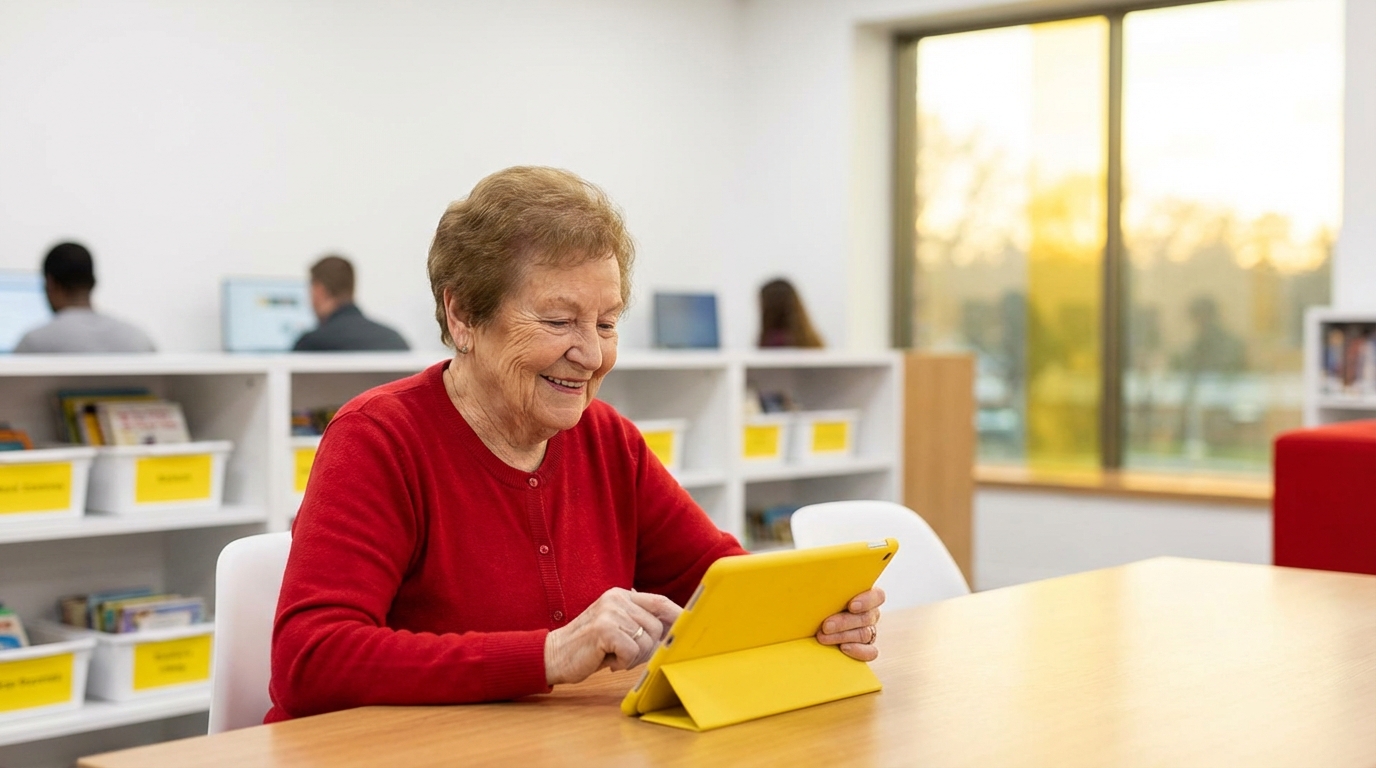
It is not always easy to admit that we or someone we love needs more support, more connection, or simply more to look forward to during the week. Many of us picture a library as a quiet room full of books, and we miss how much comfort, companionship, and practical help it can quietly hold for older adults and their caregivers.
The short answer is that libraries can be a gentle lifeline for older adults: a place for free large‑print books and audiobooks, home delivery for those who cannot get out, friendly technology help, social programs, memory cafes, health information, space for caregivers to breathe, and even equipment like magnifiers or tablets to borrow. With a simple library card, many elders gain not only reading material, but connection, classes, entertainment, and support that can ease both loneliness and daily challenges.
How Libraries Support Aging With Dignity
For older adults and caregivers, the hardest part is often the feeling of doing everything alone. A good library can become part of our circle, a steady place where staff learn names, notice when someone has not been in for a while, and quietly offer help that respects independence.
Here are some of the most common ways libraries already support older patrons, even if they do not always advertise these services loudly:
- Accessible formats: large‑print books, audiobooks, e‑books with adjustable text, and magnifiers.
- Technology support: one‑on‑one device help, basic computer classes, and free Wi‑Fi.
- Social connection: book clubs, craft groups, movie times, and memory‑friendly programs.
- Homebound services: book delivery by mail or volunteer for those who cannot visit.
- Health and caregiving information: trusted resources, workshops, and referrals.
- Quiet, safe space: a warm place to sit, read, think, and feel part of community life.
Libraries can help older adults stay mentally active, emotionally connected, and practically supported, without adding new costs to an already stretched budget.
For caregivers who feel worn thin, knowing that a loved one has a safe place to go for a few hours, or that books and movies can come to the home without any extra fees, can offer real relief.
Accessible Reading: Large Print, Audiobooks, And More
Large‑Print Books And High‑Contrast Materials
Many elders quietly stop reading not because they lose interest, but because reading becomes physically tiring. Words blur, eyes ache, and what used to feel like pleasure now feels like work. Libraries often respond with whole sections of large‑print titles.
These books are designed with:
- Bigger, clearer fonts that are easier to read with aging eyes.
- More spacing between lines to reduce eye strain.
- High‑contrast printing, which helps with certain kinds of low vision.
Some libraries also keep:
- High‑contrast keyboards (black and yellow) for public computers.
- Printed information in large type, including program schedules and notices.
If your loved one is embarrassed to ask, you might gently speak with a librarian ahead of time and explain the vision concern. Many staff members are very comfortable guiding someone quietly to the large‑print area and offering suggestions.
Audiobooks, Playaways, And Talking Books
Listening can be easier than reading for many elders, especially those with vision loss, arthritis in the hands, or trouble sitting upright for long periods. Libraries carry audiobooks in several forms:
- CDs and MP3 discs for use in players or some computers.
- Playaway devices, which are small, preloaded players that only require headphones.
- Downloadable audiobooks through apps like Libby or Hoopla.
For seniors who qualify as print disabled because of vision or a physical condition, there are also special “talking book” programs.
Every state in the United States has a talking book service through the National Library Service for the Blind and Print Disabled, offering free audiobooks and players by mail.
A public librarian can often help you:
- Get an application for the talking book program.
- Find a medical or educational professional who can sign the form.
- Mail it in and explain what to expect next.
This can be life changing for someone who used to love books and feels that part of life has quietly closed.
E‑Books With Adjustable Text
Some older adults are comfortable with tablets or e‑readers. Others simply have never had anyone sit down and walk them through how these devices work.
Borrowed e‑books can help because:
- Text size can be made quite large.
- Brightness and contrast can be adjusted.
- Some apps include built‑in read‑aloud features.
Many libraries also lend e‑readers or tablets that are preloaded with books. This can be useful for someone who has never owned a device and does not want to invest money before trying it.
If technology feels intimidating, it can help to remember that the first few tries often feel clumsy, and that is completely normal for any age.
Patient library staff or volunteers can repeat the same lesson more than once, at a pace that feels comfortable.
Technology Help For Staying Connected
Basic Computer And Device Classes
For many elders, connection to family, medical portals, and services now passes through screens. Without help, this change can feel like a locked door. Libraries try to soften this with gentle technology support.
Common offerings include:
- Introductory computer classes covering the mouse, keyboard, and simple internet skills.
- Smartphone classes that explain basic navigation, calls, texts, and photos.
- Tablet or e‑reader workshops.
- Drop‑in “tech help” hours for individual questions.
These are usually free, and staff are used to questions that older adults may feel shy asking, such as:
- “How do I open my email again?”
- “What is a password manager?”
- “How do I start a video call with my granddaughter?”
Libraries often keep written step‑by‑step handouts with screenshots. You can bring those home and practice slowly between visits.
Internet Access For Those On Fixed Incomes
Home internet can be expensive on a limited budget. For older adults who do not have Wi‑Fi at home, the local library often serves as a connection point.
Many libraries provide:
- Free public Wi‑Fi in the building and sometimes in the parking lot.
- Public computers with time slots that can be extended if no one is waiting.
- Printing at low or waived cost, especially for health or government forms.
- Hotspots to borrow for home use, which offer temporary internet access.
Table: Common Tech Supports At Libraries
| Service | How It Helps Older Adults | What To Ask The Librarian |
|---|---|---|
| Basic tech classes | Builds confidence using devices and the internet. | “Do you have beginner classes for computers or phones?” |
| One‑on‑one tech help | Addresses personal questions without time pressure. | “Can I schedule individual help with my device?” |
| Public Wi‑Fi and computers | Connects older adults to email, telehealth, and services. | “What is the schedule for using computers or Wi‑Fi?” |
| Borrowable hotspots | Temporary home internet for telehealth or family calls. | “Do you lend Wi‑Fi hotspots, and how long can I keep one?” |
| Printing and scanning | Helps with forms, IDs, and medical documents. | “Can you help me print or scan health forms?” |
A calm hour at the library, with someone sitting next to an elder and walking through a video visit or an online form, can prevent many missed appointments and frustrations.
Homebound And Outreach Services
Book‑By‑Mail And Home Delivery
When an older adult can no longer drive or walk safely to the library, it is easy to feel that the library is simply off limits. Many library systems quietly run services that bring materials directly to people at home, especially elders and people with disabilities.
These services may have different names:
- “Homebound delivery”
- “Library by mail”
- “Outreach services”
Here is how they often work:
- You or your loved one fills out a short form about reading interests and abilities.
- Materials are mailed in a special bag with a return label or delivered by a staff member or volunteer.
- Loan periods are longer, and fines are usually forgiven for homebound patrons.
Sometimes a librarian will call ahead and talk through what the person enjoyed last time, then choose new books or movies to match. For people who feel isolated, that regular phone call can bring as much comfort as the books themselves.
Visits To Senior Centers And Care Homes
Many libraries also “go out” into the community:
- Bookmobile visits to senior housing complexes.
- Librarians visiting assisted living or nursing homes with carts of books and audiobooks.
- Simple programs such as read‑aloud sessions, trivia, or poetry hours.
If you are a caregiver working in a group home or facility, it might be helpful to:
- Contact the local library and ask about outreach services.
- Offer a room and a regular time when residents can gather.
- Share information about residents’ general interests and abilities.
Even modest visits from library staff can break up the routine and remind residents that they are still part of a broader community.
Programs That Support Memory, Mood, And Social Life
Book Clubs, Craft Groups, And Gentle Activities
For elders who feel lonely, structured but low‑pressure programs can offer a reason to get up, get dressed, and be around others. Libraries have slowly built a range of activities that are welcoming to older adults.
Common examples include:
- Daytime book clubs with large‑print copies available.
- Drop‑in knitting or craft circles where people can talk while their hands are busy.
- Chair yoga or gentle movement classes led by trained instructors.
- Music hours, movie screenings, or discussion groups.
These events are often free, and some libraries provide transportation information or partner with senior centers to help people get there.
The goal is not to fill a schedule with obligations, but to offer simple, enjoyable anchors in the week that keep someone connected to others.
For someone who is shy, starting with a quieter event, like a small craft group, can feel easier than joining a large book discussion.
Memory Cafes And Dementia‑Friendly Programs
More libraries are now working with Alzheimer’s groups and memory care specialists to offer “memory cafes” and dementia‑friendly programs. These are designed for people living with memory loss and for their care partners, together.
These programs may include:
- Short, themed conversations supported with pictures or music.
- Simple art projects or sensory activities.
- Reminiscence sessions about topics like school days, holidays, or favorite foods.
Staff and volunteers who help with these gatherings are usually trained to speak calmly, repeat information without annoyance, and create a space where no one is judged for forgetting.
For caregivers, memory cafes can:
- Offer a place to see others facing similar challenges.
- Provide a shared activity that is not focused on medical tasks.
- Give ideas for activities to repeat at home on quieter days.
Health And Wellness Workshops
Libraries often host health talks, not as medical clinics, but as safe places to learn and ask questions. These might cover:
- Chronic disease management (diabetes, heart disease, arthritis).
- Nutrition for older adults on tight budgets.
- Sleep, stress, and mental health.
- Fall prevention and home safety.
- Caregiver stress and burnout.
These sessions are usually led by nurses, social workers, or health educators from local hospitals and agencies. The benefit is not only the information, but also the chance to meet people who can guide you toward other resources.
Caregiver Support And Respite Through The Library
Information And Resource Guides
Caregivers often spend long hours trying to find reliable answers to questions about benefits, home care, equipment, or respite. Librarians may not know every detail, but they are trained to find trustworthy information and connect people with the right agencies.
Libraries may offer:
- Caregiving book collections, including memoirs, guides, and manuals.
- Local resource binders with contact information for senior services.
- Access to online health databases that summarize research in plain language.
- Printed brochures from aging and disability agencies.
You might walk up to the reference desk and say something like:
“I am caring for my mother who has dementia, and I feel very lost. Do you have information on local support services or groups?”
A good librarian will take time to listen, ask a few gentle questions, and then walk you through possible next steps.
Support Groups And Quiet Corners
Some libraries host support groups for caregivers in partnership with health systems or nonprofit agencies. These groups may meet monthly and provide:
- A confidential space to talk about the emotional side of caregiving.
- Practical tips from others in similar situations.
- Ideas for managing stress and protecting your own health.
Even if the library does not host a group itself, staff can often help you find nearby meetings or virtual support options.
The building itself can also be part of caregiver support. For a family member who cares for an elder at home:
- The library can be a place to take a short break while a friend or aide is with your loved one.
- Sitting quietly with a magazine for half an hour can offer a kind of simple rest that caregivers rarely claim for themselves.
Accessibility: Physical, Sensory, And Cognitive
Building Features That Make Visits Easier
Older bodies move differently. Balance, endurance, and pain change how simple outings feel. Many libraries redesign their spaces to ease these challenges.
Common accessibility features:
- Ramps and automatic doors.
- Elevators or stair lifts between floors.
- Accessible restrooms with grab bars and wide stalls.
- Seating throughout the building so people can rest.
- Clear, large‑print signs to show where things are.
If your loved one uses a walker or wheelchair, you might want to:
- Call ahead and ask what routes are easiest.
- Visit once on your own to see where the accessible parking and bathrooms are.
- Ask staff if there are quieter corners that tend to be less crowded.
Sensory Aids And Assistive Technology
Libraries are also starting to provide simple devices that help people with hearing or vision loss use library spaces more comfortably.
These may include:
- Portable magnifiers or CCTV video magnifiers for reading small print.
- Screen‑reading software on public computers.
- Hearing loop systems or microphones in meeting rooms.
- Captioned videos for programs and movie nights.
Some libraries even lend out magnifiers, adaptive keyboards, or tablets equipped with accessibility apps.
Table: Sample Accessibility Supports
| Support Type | Example | Benefit For Older Adults |
|---|---|---|
| Physical | Ramps, elevators, wide aisles | Makes visits safer for people using canes, walkers, or wheelchairs. |
| Visual | Large‑print signs, magnifiers | Reduces strain and confusion for those with low vision. |
| Hearing | Hearing loops, microphones, subtitles | Helps people follow programs and discussions. |
| Cognitive | Clear layouts, calm spaces | Supports those with memory challenges or dementia. |
A brief conversation with a librarian about your loved one’s hearing, vision, or mobility can lead to small adjustments that make visits much calmer.
Dementia‑Friendly Design And Staff Training
Some library systems work with dementia specialists to become more welcoming for people living with cognitive changes. You may notice:
- Clear, simple signs that use both words and symbols.
- Programs that avoid loud, sudden noises or crowded, confusing layouts.
- Staff who speak slowly, offer choices, and respond kindly to repeated questions.
If you worry that your loved one may say or do something “inappropriate” because of dementia, you might share those worries with a librarian in private. Many staff members have experience with these situations and can suggest the best times of day to visit and the programs that fit well.
More Than Books: Things To Borrow And Explore
Movies, Music, And Games
Not every elder enjoys reading, and some no longer have the concentration for long texts. Libraries lend many other items that can comfort and entertain.
These often include:
- DVDs and Blu‑ray movies, including classics and TV series.
- Music CDs from many decades and styles.
- Board games and card games that families can share across generations.
For those living with memory loss, familiar music or movies from youth can trigger pleasant memories and help with mood. A librarian can help you find materials by decade or genre.
Activity Kits And Memory Bins
To support caregivers and elders together, some libraries curate themed kits that can be borrowed for a few weeks at a time. These might contain:
- Simple puzzles and matching games.
- Reminiscence cards with questions to prompt conversation.
- Short picture books or photo collections.
- Fidget items or textured objects to hold.
For caregivers, having a “ready box” of gentle activities can ease long afternoons and give both parties something shared to focus on.
Devices And Tools
Libraries increasingly lend practical items beyond reading materials. Not every system can offer all of these, but some possibilities are:
- Tablets or e‑readers.
- Wi‑Fi hotspots.
- Blood pressure cuffs or health kits created with local hospitals.
- Light therapy lamps for seasonal mood changes.
- Magnifying glasses or handheld video magnifiers.
Borrowing rather than buying can help families try tools before choosing what to purchase, which is especially helpful when money is tight.
How To Start: Gentle Steps For Elders And Caregivers
Finding Out What Your Library Offers
Each library system is unique. Some have extensive programs for seniors, while others are just beginning. A few simple steps can help you discover what is available:
- Look up the library website and search for sections labeled “Adults,” “Seniors,” or “Outreach.”
- Call the main phone number and say you are asking about services for older adults or caregivers.
- Ask if there is a librarian who focuses on outreach or adult services who can speak with you.
- Request printed schedules or brochures to be mailed if travel is hard.
When you speak with a librarian, you might share:
- Age range and general abilities (for example, “My father is 82 and has trouble with vision and memory”).
- Transportation limits.
- Interests (mystery novels, gardening, music, crafts, history, and so on).
Honest details help the librarian picture what might fit and what might feel overwhelming, so they can suggest options that honor your loved one’s dignity.
Helping A Shy Or Reluctant Elder
Many older adults say “I do not want to be a burden” or “Those programs are not for me.” Pushing too hard can backfire, but gentle encouragement sometimes works when we focus on enjoyment rather than “services.”
You might try:
- Starting with a brief visit: “Let us just go for 15 minutes, and if you are tired, we will leave.”
- Framing it around a clear interest: “They have large‑print westerns,” or “They are showing an old movie you used to love.”
- Letting the elder help you: “I am looking for a good cookbook; will you help me choose one?”
If visits are not possible, you can still bring the library to them:
- Sign them up for homebound services.
- Borrow audiobooks or movies on your card and bring them over.
- Print out large‑print puzzles or activity sheets available through the library’s online resources.
Protecting Energy As A Caregiver
Caregivers sometimes see all these options and feel pressure to do “one more thing” when they already feel exhausted. That can turn what could be a source of help into another obligation.
It may help to remember:
- You do not need to use every library service at once.
- Even one regular book delivery or one gentle class might be enough for now.
- Your energy is limited, and choosing small, sustainable steps is not selfish; it is wise.
You might pick one focus for this month, such as:
- Setting up homebound delivery for your loved one.
- Attending one caregiver support talk at the library.
- Scheduling one technology help session to set up video calls with family.
Over time, you can add or adjust as you see what fits your family’s real life.
Questions To Ask Your Librarian
Sometimes the hardest part is knowing how to start the conversation. Here are sample questions you might bring, in your own words:
- “Do you have any services for older adults who cannot get to the library often?”
- “My mother has trouble seeing small print. What options do you have for her?”
- “Is there someone who can help my father learn to use his new tablet?”
- “Are there programs that might be good for someone with early dementia and for me as a caregiver?”
- “Can I get a library card for my loved one if I am the one who will pick everything up?”
Librarians are used to questions that mix practical needs and deep emotions. You do not have to have perfect words. You just have to begin.
Many libraries now see older adults and caregivers as a central part of the community they serve. When we reach out, we give them the chance to live that mission fully, and we give ourselves new allies in the ongoing work of caring.