
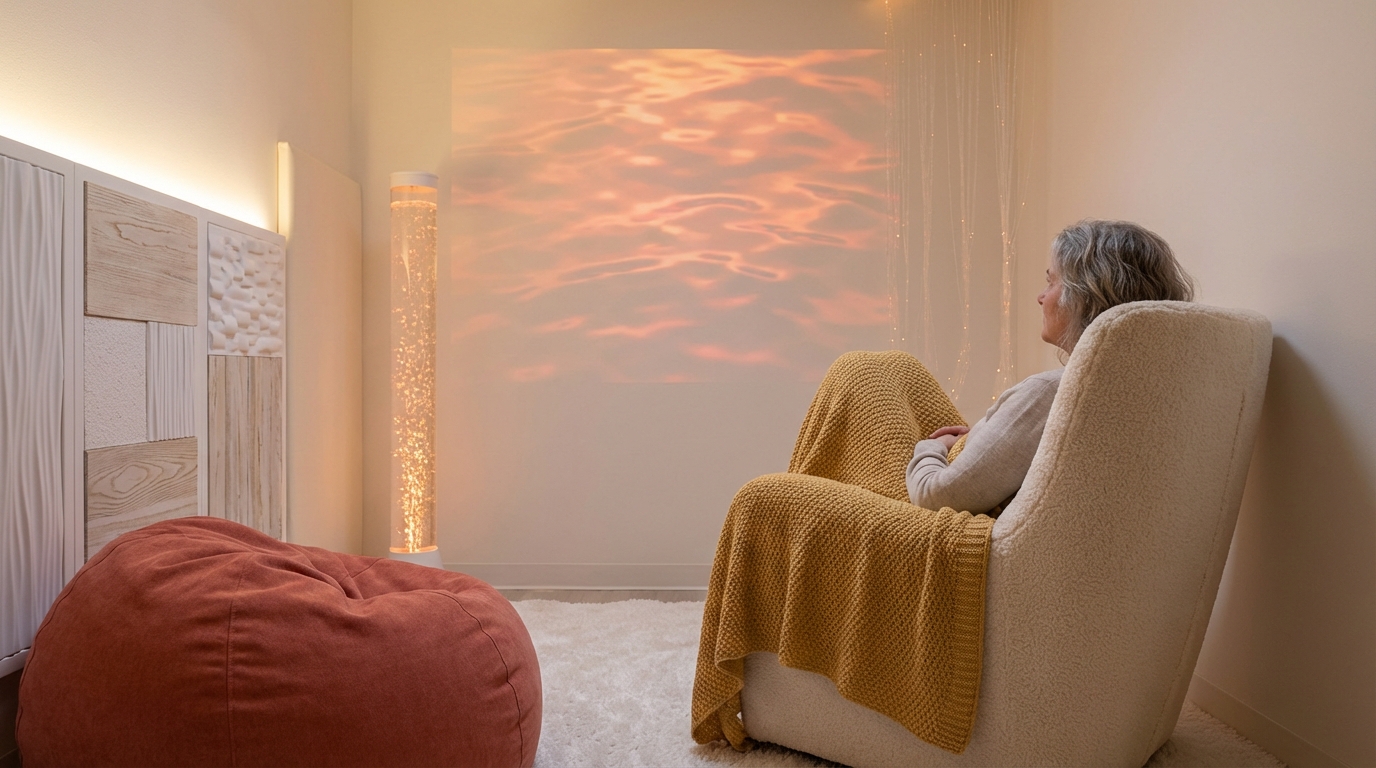
It is not easy to watch someone you love feel overwhelmed by noise, light, or confusion in their own home. Many of us have seen a child with autism shut down after a noisy day at school, or a parent with dementia grow anxious because the world suddenly feels too loud, too fast, and too unfamiliar. We wish we could press a pause button for them, and give them a place where everything feels a little softer and more manageable.
The short answer is that a sensory room, or even a small sensory corner, can offer that pause. A calm, thoughtfully designed space can lower stress, reduce meltdowns or agitation, and give both the person with autism or dementia and the caregiver a place to reset. It does not have to be perfect or expensive. Starting small, paying attention to what comforts the person, and keeping the space predictable and gentle will already make a difference.
What Is a Sensory Room and Who Can It Help?
A sensory room is a quiet, controlled space that uses light, sound, touch, movement, and sometimes scent to calm or gently engage the senses. It is carefully arranged so that nothing comes as a surprise, and so that the person using it can feel safe and supported.
- For autistic children and adults: sensory rooms can help with sensory overload, meltdowns, anxiety, and sleep struggles, and can support focus and self-regulation.
- For people living with dementia: these spaces can reduce agitation, sundowning behaviors, and confusion, and can encourage soothing memories and a sense of security.
- For caregivers: a sensory room can become a predictable tool when days are hard, offering a place to rest together instead of always fighting through distress.
A sensory room is not about fixing a person. It is about shaping the environment so their nervous system does not have to fight so hard all the time.
Some families picture a fancy clinic room full of equipment and feel discouraged. In practice, many of the most helpful spaces are simple: a corner with soft light, one or two comforting textures, and familiar objects that feel safe.
How Autism and Dementia Affect Sensory Experiences
Before choosing colors, chairs, or gadgets, it helps to pause and remember what the world can feel like through autistic or dementia-affected senses. When we understand that, our design choices become kinder and more effective.
Autism and Sensory Overload
For many autistic people, the senses do not filter input in the same way as non-autistic people. Sounds, lights, smells, and movement can come in too strong, too fast, or too mixed together.
Common experiences include:
- Sound: background noises (fans, fridges, neighbors, traffic) feel as loud as the person speaking right in front of them.
- Light: bright or flickering lights feel painful or distracting; fluorescent bulbs can trigger headaches or overload.
- Touch: some fabrics or seams feel scratchy, while firm, steady pressure may feel calming.
- Movement: some people seek movement (rocking, spinning), while others feel dizzy or unsteady easily.
- Predictability: sudden changes in the environment can feel frightening or out of control.
Meltdowns or shutdowns are not a choice or misbehavior. They are often the nervous system saying, “Too much” or “I cannot sort this out anymore.”
A good sensory room for autism offers both refuge from overload and chances to meet sensory needs in safe, predictable ways.
Dementia and Sensory Confusion
Dementia often changes how the brain makes sense of what the eyes, ears, and body feel. The world may start to feel unfamiliar, even in a long-time home.
Common experiences include:
- Visual changes: trouble judging depth, contrast, and patterns; dark rugs may look like holes, and glossy floors may look wet or slippery.
- Hearing: difficulty sorting sounds; crowded or noisy spaces can feel confusing and frightening.
- Touch and body awareness: less sure of where their body is in space, which can increase falls or restlessness.
- Memory and orientation: everyday items may look unfamiliar; shadows or clutter can be mis-read as threats.
For people living with dementia, a sensory room focuses less on strong stimulation and more on gentle reminders of safety, familiarity, and comfort.
For dementia, a calming sensory space is like a quiet, familiar sitting room where the world slows down and feels understandable again.
Core Principles for Designing a Calm Sensory Space
Regardless of diagnosis, certain guiding ideas help us create spaces that feel kind to the nervous system.
Start With the Person, Not the Products
Instead of asking, “What equipment should I buy?” it can help to ask, “What comforts this person? What tends to upset them?” You might notice patterns:
- Do they seek deep pressure (like hugs, weighted blankets) or avoid touch?
- Do they like dim light, or do they seem safer with brighter, but soft, lighting?
- Do they calm with music, or does music irritate them?
- Do they enjoy movement (rocking chairs, swings) or prefer stillness?
A short table can help you think through needs:
| Area | For Autism | For Dementia |
|---|---|---|
| Goal | Regulate sensory input, prevent overload, support focus. | Reduce agitation, support orientation, evoke comfort and memories. |
| Light | Soft, dimmable; avoid flicker and glare. | Gentle, even lighting; good contrast to reduce falls and confusion. |
| Sound | Sound control, possible white noise or calm sounds. | Quiet, familiar music; lower background noise. |
| Touch | Chosen textures, pressure tools, fidgets. | Comfortable fabrics, familiar household textures. |
| Movement | Rocking, swinging, bouncing (if enjoyed). | Slow, safe movement; rocker or recliner. |
When in doubt, ask the person and observe. Their responses will teach you more than any catalog or checklist.
Keep It Predictable and Simple
A common mistake is to add too much. Walls of lights, many sounds at once, and cluttered shelves can quickly overwhelm.
You might find it helpful to:
- Limit the number of items out at one time.
- Keep favorite items in the same place so they are easy to find.
- Use clear storage bins or simple labels for quick access.
- Choose a small number of calming colors and repeat them.
For dementia, predictable layout and familiar-looking furniture can matter more than new sensory tools. A favorite blanket on a familiar chair can be more soothing than a brand new gadget.
Think Safety First, Calm Second
Safety allows relaxation. When we know someone will not trip or get hurt, we can both breathe easier.
Helpful safety checks:
- Remove loose rugs or secure them with non-slip backing.
- Push cords away from walkways or cover them.
- Anchor tall furniture to the wall.
- Choose shatter-resistant items and avoid glass when possible.
- For dementia, avoid sharp corners near walking paths.
For some autistic people who seek strong movement or deep pressure, make sure heavier items (like weighted blankets) are used under supervision at first, until you know their comfort level and any medical needs.
Choosing the Right Space: Room, Corner, or Nook
Not every home has a spare room, and that is alright. Many families create very helpful sensory spaces in bedrooms, living room corners, or even large closets with good airflow.
Questions to Ask When Picking a Spot
- Noise level: Can you reduce outside noise here? Is it away from the loudest parts of the home?
- Light control: Can you dim the lights, close curtains, or use lamps instead of overhead fixtures?
- Access: Is it easy to reach quickly during a meltdown or episode of agitation?
- Privacy: Can this space feel separate, even if it is just a curtained corner?
- Safety: Is there enough room to move without bumping into sharp edges or clutter?
Examples of Realistic Home Setups
| Home Situation | Possible Sensory Space |
|---|---|
| Small apartment | Corner of the bedroom with a room divider, soft lamp, beanbag, small shelf of sensory objects. |
| Shared bedroom | Canopy over bed, blackout curtain around a corner, weighted blanket, wireless headphones. |
| House with spare room | Full sensory room with comfy seating, dimmable lights, storage for sensory tools, quiet sound system. |
| Outdoor option | Shaded corner of a yard with a hammock or swing, simple wind chimes, soft outdoor cushions. |
A sensory space does not need walls to be “real.” What matters is that the person knows, “When I go here, I can calm and no one will rush me.”
Designing Sensory Rooms for Autism
When we focus on autism, we usually think about balancing two needs: reducing overload and offering safe sensory input that helps the nervous system settle.
Light and Color Choices
For many autistic people, bright or flickering lights can trigger headaches, eye strain, or meltdowns.
You might find it helpful to:
- Use floor or table lamps with soft, warm bulbs instead of overhead lights.
- Use dimmers if possible, so the person can choose the level of light.
- Avoid strong flicker, such as some older fluorescent bulbs.
- Choose soft, muted wall colors like gentle blues, greens, or creams.
- Limit bold patterns that move or clash; keep the visual field simple.
Some autistic individuals enjoy colored lights, fiber optic lamps, or bubble tubes. If you try these, introduce them slowly and one at a time to see whether they feel soothing or overstimulating.
Sound Environment
Sound is one of the most common triggers for overload.
Supportive ideas:
- Add soft materials that absorb noise, such as rugs, curtains, and cushions.
- Use a white noise machine or fan to mask sudden outside sounds, if the person finds that calming.
- Create a “quiet rule” for the space, where others speak softly and keep devices on low volume or outside the room.
- Keep noise-making toys out of the room unless they are truly calming for that person.
Some autistic people find certain music or ambient sounds very helpful. Others cannot tolerate music at all. Follow their lead and be willing to adjust.
Touch, Deep Pressure, and Comfort Items
Many autistic people use tactile input and deep pressure to regulate themselves. This can be one of the most powerful parts of a sensory room.
Possible items include:
- Weighted blanket or lap pad, sized to the person and used with guidance from a health professional if there are medical concerns.
- Body pillow or large stuffed animals to hug or lean against.
- Soft rugs, faux fur throws, or smooth cotton sheets.
- Fidget tools: stress balls, textured rings, chew-safe jewelry (for those who seek oral input).
- Beanbag chair or crash pad for deep pressure when sitting or lying down.
For some, messy textures like slime or sand can be enjoyable, but for others they are very distressing. Keep messy play in a separate tray or box so that the person can choose it rather than feel surprised by it.
Movement and Body Awareness
Movement can help many autistic people organize their senses. At the same time, too much or unsafe movement can increase risk.
Some ideas:
- Rocking chair or glider for gentle back-and-forth movement.
- Small indoor trampoline with handlebar, if it can be safely supervised.
- Hammock chair or therapy swing, anchored by a professional, for those who enjoy swinging.
- Exercise ball for gentle bouncing or rolling over.
If movement often gets intense, you might set limits in a calm way, such as “Jumping is for 5 minutes, then we rest,” using timers or visual supports.
Visual Supports and Predictability
For many autistic people, clear visual cues lower anxiety.
Helpful supports:
- A simple picture schedule showing “Go to sensory room, quiet time, then snack” or similar.
- Visual timer that shows how long they will spend in the room.
- Labels or pictures on bins showing what is inside (e.g., “fidgets,” “blankets”).
- A posted “rules” card with pictures: “Soft voices, gentle hands, take turns.”
This can turn the room into a tool for self-regulation, not only a place for crisis.
Autism Sensory Room Starter Kit (Low-Cost)
For many families, budget is tight. The list below focuses on realistic items you might build up gradually:
- One comfortable seat (beanbag, padded chair, or many pillows).
- One soft lamp with warm bulb, possibly with a dimmer or three-level switch.
- One or two blankets with pleasant textures.
- A small basket of preferred fidgets or sensory toys.
- Noise reduction: simple curtains, rug, and if possible, a white noise option.
- Optional: a homemade weighted lap pad filled with rice or beans, sewn securely.
You can add items over time as you learn what truly gets used.
Designing Sensory Rooms for Dementia
For dementia, the goal shifts slightly. The sensory room should feel familiar, not childish or clinical, and should support orientation in time, place, and self.
Visual Calm and Safety
Visual confusion can cause fear and falls. A well-planned sensory space helps the person see clearly, without strain.
You might find it helpful to:
- Use steady, glare-free lighting, such as shaded lamps and daylight bulbs.
- Keep floors one consistent color; avoid strong patterns that look like steps or holes.
- Place a comfortable chair where they can easily see the door and a window.
- Keep pathways clear of clutter and low furniture.
- Use color contrast to highlight important items, such as a darker chair against a light wall.
Mirrors can sometimes upset a person who does not recognize themselves. If mirror reflections cause distress, cover or remove mirrors from the sensory space.
Comforting Sounds and Music
Sound can bring back memories and comfort, but can also confuse if too complex.
Helpful sound choices:
- Soft, familiar music from the person’s younger adult years.
- Nature sounds at low volume, such as gentle rain or birds.
- Quiet; sometimes silence is the greatest gift in a day full of noise.
It can help to create short playlists for different times of day: one calming list for evening, one slightly more upbeat but still gentle list for morning, and so on. Keep the volume low enough that conversation is still easy.
Touch, Memory, and Comfort Objects
For dementia, tactile items are helpful when they are linked to memory and identity.
Ideas include:
- A favorite knitted blanket or quilt from home.
- Textured “fidget blankets” or lap quilts with zippers, buttons, and ribbons, if safe.
- Smooth stones, wooden items, or fabric swatches that feel pleasant to handle.
- Photo books with clear, large pictures of family, past homes, and favorite places.
Think about what this person would have found comforting at 40 or 50, not what a child would enjoy. Dignity must stay at the center.
Avoid items with small parts that could be swallowed, and be cautious with anything that can be mistaken for food.
Scents and Taste
Scents can stir strong memories and emotions. For some people with dementia, this is helpful; for others, too many smells can confuse or upset.
Gentle choices:
- Scented hand lotion or oil with light lavender, vanilla, or citrus.
- A small sachet of dried lavender or herbs, if they enjoy it.
- Fresh coffee or baked goods nearby, if that was part of their life and routine.
Strong air fresheners or multiple competing scents often cause discomfort, so it is best to keep scent very simple and optional.
Supporting Orientation and Security
Confusion often raises anxiety. A sensory space for dementia can offer cues that quietly say, “You are safe, and this is your place.”
Helpful supports:
- A large face clock with clear numbers.
- A simple calendar where the date is changed daily.
- A sign on the door saying “Quiet Room” or “Mary’s Room,” depending on preference.
- Photos on the wall with names and short captions.
You might also keep a small “comfort bag” in the room with the person’s glasses, favorite lotion, tissues, and other personal items, so you are not always searching when they are distressed.
Dementia Sensory Room Starter Kit (Low-Cost)
For a gentle, realistic setup:
- One sturdy, comfortable chair with arms, easy to get in and out of.
- Soft, indirect lighting with one or two lamps.
- Favorite blanket or shawl, washed in a familiar scent if tolerated.
- Small music player with pre-set playlists the caregiver can control.
- Photo book or small bulletin board of labeled family pictures.
- A small basket with one or two fidget items or textiles.
Adapting One Sensory Space for Both Autism and Dementia
Some families care for both an autistic person and a person with dementia. This can feel overwhelming, yet a shared sensory room is still possible with clear structure.
Shared Core Features
There are many overlapping needs:
- Soft, adjustable lighting.
- Reduced noise and gentle sound options.
- Comfortable, supportive seating.
- Limited visual clutter.
- Predictable layout and storage.
The main differences often show up in how strong the sensory input is and how playful or mature the items look.
Creating “Zones” Within One Room
You might divide the room into distinct areas:
- Calm sitting area: shared; includes comfortable chairs, soft light, and quiet music option.
- Autism sensory zone: basket of fidgets, weighted items, possible movement tools, more playful colors.
- Dementia comfort zone: memory items, photo book, familiar blanket, more neutral and home-like decor.
A simple rug or bookshelf can mark the boundaries between zones. Clear rules, such as “Grandma’s photo book stays on this table,” can help protect important items.
Managing Conflicting Needs
At times, their needs may clash. For example, an autistic teenager may want colored lights and music, while a person with dementia may feel overwhelmed by both.
You might handle this by:
- Scheduling use, so they use the room at different times when their needs are most intense.
- Making some items portable, such as fidget baskets or lights, so they can be moved to a bedroom when needed.
- Keeping the shared core space very calm and simple, while adding more intense tools only for short, supervised periods.
This can require trial and error, and it is alright if you do not get it right the first time. Observing and adjusting is part of the process.
Setting Gentle Rules and Routines for the Sensory Room
A sensory room often works best when it is treated as a special tool, not just another playroom or sitting room.
Creating a Sense of Ritual
Many people feel safer when they know what to expect. You can build a simple entry routine, such as:
- Turn down the main light and turn on the soft lamp.
- Choose one or two items from a basket.
- Sit or lie down in the same favorite spot.
- Listen to one song or set a 10 minute timer for quiet time.
For dementia, the caregiver may gently guide these steps. For an autistic child, you might use a small picture card showing the order.
Clear, Respectful Guidelines
Sensory rooms are not free-for-all spaces. Calm rules help everyone use the room safely.
Possible guidelines:
- Soft voices only.
- No running, except on designated equipment with supervision.
- Sensory tools stay in the room (or in their basket).
- Caretaker checks in regularly, especially with dementia.
You might post these rules with simple words and pictures. The tone should be gentle and matter-of-fact, not scolding.
Choosing and Managing Sensory Equipment Wisely
It can be tempting to buy every sensory product you see online. In many homes, these items end up unused, broken, or overwhelming.
Try Before You Invest Heavily
When possible, you might:
- Visit a local clinic, therapy center, or school with a sensory room to see what your loved one uses.
- Borrow items from other families, support groups, or lending libraries.
- Start with one new item at a time and watch their reaction for a week or two.
If a piece of equipment causes distress or is ignored, that is useful information. There is no need to force it to “pay off.”
High-Impact, Lower-Cost Items
Some of the most frequently used and calming items for both autism and dementia are:
- Soft lamp with dimmable warm light.
- Weighted or heavy blankets and lap pads (with safety in mind).
- Comfortable seating with good support.
- Small collection of hand-sized, soothing objects.
- Simple speaker or music player with pre-chosen playlists.
High-priced specialty lights or interactive walls may look impressive, but they are not always more helpful than these basics.
Maintenance and Safety Checks
Over time, sensory equipment can wear down. It helps to:
- Check seams on weighted items to prevent leaks.
- Inspect swings and anchors, if used, every month.
- Replace bulbs and batteries before they fail, so routines stay steady.
- Clean textiles regularly with detergents that do not irritate skin or overwhelm with scent.
This quiet maintenance work keeps the room reliable, which is part of why it feels safe.
Working With Professionals and Including the Person’s Voice
Caregivers do not have to design sensory rooms alone. Many professionals can offer guidance that respects the person’s unique needs.
Who Can Help
- Occupational therapists (OTs): often trained in sensory processing and can suggest tailored tools and routines.
- Speech and language therapists: can advise on visual supports and communication aids in the room.
- Physical therapists: can guide safe movement, especially with swings or exercise balls.
- Geriatric care professionals: can help plan dementia-friendly lighting and safety features.
You might ask them to review a simple drawing or photos of your planned space and suggest adjustments.
Listening to the Person Themselves
Whenever possible, the person using the room should help shape it. This includes:
- Choosing colors from a short list.
- Selecting which blanket or chair feels best.
- Picking some of the music or sounds.
- Saying, or showing, which items they do not want.
For people with limited speech, you can offer choices with pictures or by showing two items and watching which they reach for or avoid.
The most successful sensory rooms feel like the person’s own retreat, not a project done “to” them.
Using the Sensory Room in Daily Life
Creating the room is only the start. The real value comes from how it fits into routines and relationships.
As a Prevention Tool, Not Only a Crisis Tool
Many caregivers first think of the sensory room when behaviors escalate. Over time, you may see more benefit by using it earlier.
Ideas:
- Short, regular visits at predictable times (for example, after school or before evening tasks).
- Using the room before known stressors, such as family visits or medical appointments.
- Inviting the person to go there when you see early signs of overload or agitation.
For dementia, a short visit to the sensory room during late afternoon can sometimes ease sundowning symptoms.
Sharing the Space With Respect
Some people want to be alone in that room, others feel safer if a trusted person stays nearby. You can:
- Ask whether they want company, and respect the answer when safety allows.
- Use the room together during reading time, quiet conversation, or prayer if that fits your family.
- Model calm behavior yourself: slow voice, slow movements, gentle presence.
The room can become a place where both caregiver and care recipient recover a sense of calm, even if for a few minutes.
Watching for Change Over Time
Needs change. For autistic children, sensory preferences often shift with age. For people with dementia, abilities and sensitivities may change throughout the illness.
You might keep a small notebook or digital log where you record:
- Which items they are using often.
- Which items they ignore or dislike.
- Times of day when the room seems most helpful.
- Any safety concerns or new behaviors in the space.
Every few months, review and adjust. Remove clutter, add one new item, or change the layout to better meet current needs.
Taking Care of Yourself While You Create Calm for Others
Designing a sensory room often comes from a place of love, but it can also stir grief and fatigue. You may feel sad that your child or parent needs such a space at all, or guilty that you did not create one sooner.
Those feelings are valid. Many caregivers carry similar weight.
You might find it helpful to:
- Set realistic goals, such as “This month we will fix the lighting” instead of “We must build a perfect room.”
- Ask for help from family, friends, or community groups with painting, shopping, or assembling furniture.
- Remember that simple changes, like turning down the lights and sitting quietly together, already support nervous system health.
- Use the room yourself for a few minutes when it is free, allowing your own body to slow down.
Every small step toward a calmer space is an act of care, both for your loved one and for yourself.