It is not easy to relax in the bath when you are quietly worrying about one wrong step sending you or someone you love to the emergency room. Many of us have had that moment where our foot slides on wet tile, our heart jumps, and we think, “That was close.” Bathrooms are small spaces, but the fear of a fall can feel very large.
The short answer is that the safest slip-resistant bathroom floors are usually textured porcelain or ceramic tile with a good slip rating, quality slip-resistant vinyl, rubber flooring, or well-installed walk-in shower bases made from textured acrylic or fiberglass. These materials, when paired with proper installation, drainage, and simple extras like grab bars and bath mats, can greatly lower fall risk and make the bathroom feel calmer and more secure for everyone.
Why Bathroom Flooring Matters So Much For Safety
Many of us think of a bathroom fall as a “small accident,” but for an older adult, a person using a walker, or anyone with joint or balance issues, that fall can change daily life overnight. Even a younger caregiver can be badly hurt if they slip while helping someone in and out of the tub.
Bathrooms are riskier than other rooms for a few reasons:
- Water is everywhere: on the floor, on our feet, on grab bars, on shower curtains.
- Soaps, shampoos, and lotions make surfaces even more slick.
- We often stand, turn, and step in tight spaces.
- People are tired, weak, or dizzy in the bath or after a shower.
- There are many hard edges: tubs, counters, toilets, and towel bars.
A fall in the bathroom is not just “clumsy.” It is a serious safety issue that we can gently reduce with better flooring and a few thoughtful changes.
When we look at bathroom flooring, safety comes down to three main ideas:
| Safety Factor | What It Means |
|---|---|
| Traction | How well the floor grips the foot, even when wet or soapy. |
| Water handling | How well the floor deals with water, splashes, and puddles. |
| Comfort & stability | How steady it feels to stand and walk, and how forgiving it is in case of a fall. |
If we keep those three in mind, it becomes easier to compare flooring choices without getting lost in marketing or trends.
How To Judge Slip-Resistance In Bathroom Flooring
Before we look at each material, it helps to know how slip-resistance is measured and what to look for when reading product labels or talking with contractors.
Understanding slip ratings: COF, DCOF, and “wet” ratings
On many floor products you will see numbers or phrases related to grip. The main ones include:
- COF (Coefficient of Friction): A number that shows how much “grab” there is between the floor and a foot or shoe. Higher numbers mean more grip.
- DCOF (Dynamic Coefficient of Friction): A newer, more realistic test that looks at slip resistance while someone is already moving.
- Wet vs dry ratings: Some tiles only list a rating for when the surface is dry, which is not very helpful for a bathroom.
As a gentle guide:
| Slip Rating | Meaning for Bathroom Use |
|---|---|
| DCOF around 0.42 or higher (wet) | Considered safe for level floors that may get wet in many building codes. For home bathrooms, we often prefer higher if possible. |
| Extra textured or “R” rated tiles (common in Europe) | Higher “R” value usually means more traction on slopes or in very wet areas like showers. |
You might find it helpful to ask for:
“Slip-resistant flooring that is rated for wet areas, with the highest wet DCOF or traction rating that is reasonably available.”
If a product does not list a wet slip rating at all, that is usually a sign to be careful or to look for more information.
Texture, joints, and grout: the hidden helpers
Grip is not only about the surface coating. These details matter:
- Texture: Slight bumps, patterns, or matte finishes give the foot more to “hold onto” compared with a shiny smooth floor.
- Size of tiles: Smaller tiles have more grout lines, and grout lines can actually improve traction in showers.
- Grout type: Some grouts are more textured than others and can help with grip, especially on slopes toward a drain.
A smooth, glossy tile with a “good” paper rating can still feel slippery when soap and conditioner run over it, while a more textured surface with many grout joints can feel much more secure.
The Safest Slip-Resistant Flooring Materials For Bathrooms
Now we can look calmly, one by one, at the main flooring types that tend to work well for bathroom safety. For each one, we will consider safety, comfort, maintenance, and cost in simple terms.
1. Textured porcelain or ceramic tile
For many families and care settings, textured porcelain or ceramic tile is the most practical long-term choice. It is familiar, easy to clean, and if we make thoughtful choices, it can be kind to unsteady feet.
Safety and traction
Porcelain and ceramic tile can be very safe if:
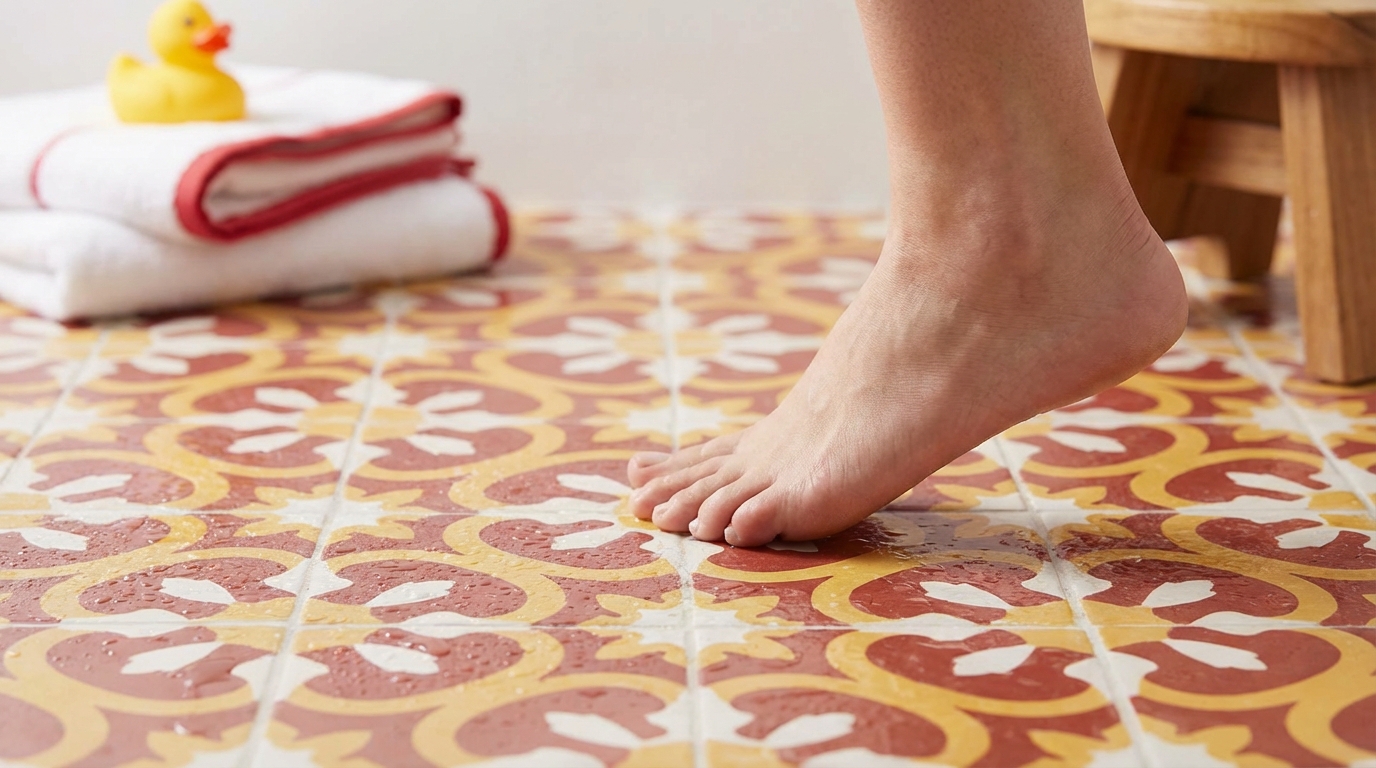
- You choose a non-glossy, textured finish (often called “matte” or “structured”).
- You look for a good wet slip rating (DCOF around 0.42 or higher, and preferably higher for shower floors).
- You use smaller tiles in shower areas, such as 2×2 or mosaic, to add more grout lines for grip.
For a walk-in shower, many occupational therapists prefer smaller textured tiles on the floor, because the grout joints act almost like extra treads on a ramp.
Comfort underfoot
Tile itself is hard and cool. That can be a mixed blessing:
- The hardness means it does not dent or compress under a walker or wheelchair.
- The coolness can be uncomfortable, especially for someone with circulation problems or neuropathy.
Some families add a bath rug near the sink or toilet for warmth, but those rugs must be non-slip and very secure. Loose rugs can be more dangerous than a bare floor.
Maintenance and cleaning
Textured tile often hides dirt and water spots better than shiny tile, which can be a relief for busy caregivers. Most porcelain and ceramic surfaces handle bathroom cleaners well, but grout lines may need extra care or sealing to resist mold.
Cost and durability
Tile ranges from budget friendly to very expensive, depending on style, brand, and labor rates. Once installed well, it usually lasts many years, which can make it a steady choice for long-term bathroom safety.
2. Slip-resistant vinyl flooring (sheet, planks, or tiles)
Vinyl flooring has changed a lot over the years. While not every product is suited for a bathroom, there are vinyl floors designed for wet areas that can offer gentle cushioning and strong traction.
Safety and traction
Vinyl can be very safe if you select the right type:
- Slip-resistant vinyl: Some products have special textured or grippy surfaces designed for wet rooms and even for shoes with moisture on them.
- Water resistance: Many sheet vinyl products and certain luxury vinyl planks or tiles are rated for bathrooms.
- Fewer seams: Sheet vinyl has very few seams, which can lower the risk of water getting underneath.
If you are choosing vinyl, ask specifically for a bathroom-safe, slip-resistant product designed for wet conditions, not just “water resistant.”
Comfort underfoot
Vinyl tends to be softer and warmer than tile:
- Easier on joints for someone who stands to bathe or shave.
- Slightly friendlier if someone does fall, compared with tile.
For wheelchair or walker users, it helps to choose a product that is firm enough to avoid deep dents or grooves, as those can affect mobility devices over time.
Maintenance and cleaning
Vinyl is usually simple to clean with mild cleaners. One thing to watch:
- Standing water can still cause problems at edges or along seams.
- Very harsh or solvent-based cleaners can damage the surface on some products.
Check the manufacturer guidance for what cleaners are safe. This protects both the floor and its slip-resistant qualities.
Cost and durability
Vinyl is often more affordable than tile, especially if you include labor. Quality varies. Thicker, higher-grade products tend to last longer and resist tears and dents better, which is important in a bathroom used by someone with a walker, shower chair, or wheelchair.
3. Rubber flooring and rubber tiles
Rubber flooring is used in many gyms, commercial kitchens, and rehab settings for a reason. It offers very strong traction and a forgiving surface that is kind to joints and bones.
Safety and traction
Rubber is one of the most slip-resistant materials when wet, especially when it has a light texture:
- It grips bare feet, socks, and shoes well.
- It often performs well even with some soap on the surface.
- A slight raised pattern can add extra security.
For a bathroom, it is important to select rubber products that are rated for wet areas and are securely glued down, not loose.
For someone with severe balance issues, dizziness, or a history of falls, rubber flooring can feel like a gentle safety net under every step.
Comfort underfoot
Rubber is softer and more shock absorbing than both tile and most vinyl:
- Easier on knees and hips, especially for caregivers who stand for bathing and dressing.
- More forgiving if someone falls, which can reduce the severity of injuries.
Some people find that very soft rubber makes it slightly harder to pivot with a walker or move a wheelchair, so balance is needed between softness and firmness.
Maintenance and cleaning
Rubber can be easy to clean but sometimes shows water spots or marks if not dried. A few notes:
- Use cleaners that are made for rubber, because some strong chemicals can damage or dry it out.
- Make sure water does not pool under the flooring. A good installer will glue and seal edges properly.
Cost and durability
Rubber flooring can be more expensive upfront than vinyl, but it holds up well over time when installed and cared for properly. In a home bathroom, many families use it in key areas, such as a walk-in shower or next to a tub, rather than the whole house.
4. Textured acrylic or fiberglass shower bases
In many remodels, instead of tile on the shower floor, people choose a pre-formed acrylic or fiberglass shower base, often for walk-in or roll-in showers.
Safety and traction
Many modern shower bases have built-in texture to improve grip:
- Raised patterns or lightly pebbled areas on the standing surface.
- Non-slip coatings applied at the factory.
These can be very safe if:
- The base is installed on a sturdy, level subfloor so it does not flex.
- The slope to the drain is smooth, not abrupt, so walkers and shower chairs roll or sit evenly.
If someone uses a shower chair or a rolling shower commode, a stable, slightly textured shower base can turn a stressful task into a predictable, calmer routine.
Comfort underfoot
Acrylic and fiberglass tend to feel warmer than tile and not as hard. That can feel kind to bare, sensitive feet. Very thin, low-cost bases can flex under weight, which feels less secure and can affect drainage, so a sturdier unit is usually worth the added cost.
Maintenance and cleaning
These surfaces are usually easy to wipe down, but abrasive cleaners can scratch the non-slip texture. A scratched surface can collect soap scum and become harder to keep truly slip-resistant, so gentle cleaners are better.
5. Natural stone with textured finishes (use with care)
Natural stone, such as slate or textured granite, can be beautiful and can offer grip, but it needs careful selection and maintenance to stay safe.
Safety and traction
Not all stone is the same:
- Rougher finishes (like flamed or textured) tend to have better traction.
- Polished stone is usually slippery and risky for bathrooms.
Sealants placed on stone for stain protection can sometimes make surfaces more slippery, so it is wise to consult with a flooring professional who understands both safety and stone care.
Comfort, maintenance, and cost
Stone is usually hard, cool, and can be expensive. It also needs regular sealing and more careful cleaning. For homes where safety is the main focus, there are often easier and more forgiving choices. Stone may be preferred when someone strongly values the look and is committed to the needed care.
6. Cork and engineered wood-like products (limited use)
Some people ask about warmer, softer materials like cork or wood-look products. In active bathrooms, these are often not the safest choice.
- Water can swell or damage many wood-based products.
- Cork can be damaged by standing water and may not keep its slip-resistant qualities over time.
These might be reasonable in a half-bath (toilet and sink only) that rarely sees splashes, but for a full bathroom with bathing, they usually carry more risk and maintenance than they are worth for someone vulnerable to falls.
Flooring Materials That Tend To Be Risky For Bathroom Safety
Sometimes, the most helpful step we can take as caregivers is to gently say “no” to choices that look nice but are not kind to safety.
Glossy tile and polished stone
High-gloss ceramic, porcelain, or stone may look elegant, but:
- They become extremely slippery when even slightly wet.
- Soap and conditioner can turn them into a near-ice surface.
For any bathroom used by an older adult, child, or person with mobility difficulties, it is usually safer to avoid glossy floors.
Loose rugs and unsecured mats
Soft rugs can feel cozy under bare feet, but they are a common cause of trips and slides:
- Small rugs can bunch, curl, or slide.
- Rubber backing that has worn out can give a false sense of security.
If a mat or rug can be kicked or slid with one foot, it is not safe in a high-risk bathroom.
If you want the warmth of a mat, look for ones labeled non-slip, with strong backing, and large enough to cover the key area without edges curling. Many caregivers test mats by pushing hard with both feet before trusting them.
Peel-and-stick tiles or temporary coverings
Some people try removable or peel-and-stick tiles as a “quick fix.” These can:
- Lift or bubble over time, especially with moisture.
- Create small edges that catch toes, canes, or walker wheels.
- Lose grip if the adhesive weakens in humidity.
These products may be fine for a decorative closet or low-use room, but they are not dependable enough for a high-risk bathroom.
Choosing The Best Flooring For Your Bathroom Situation
Every household is different. Safety needs in a bathroom for a healthy 25-year-old are not the same as safety needs for a 78-year-old who has Parkinsons disease and uses a walker, or for a child with seizures.
It can help to think about three questions together: who is using the bathroom, how they move, and what kind of support they have.
Who will use the bathroom?
Consider the main users:
- Older adults: Often have reduced balance, slower reaction times, and fragile bones.
- People with mobility aids: Use canes, walkers, rollators, or wheelchairs.
- People with visual changes: Have trouble seeing water, soap, and edges on the floor.
- Children: Move quickly, often without much awareness of safety.
For someone with serious fall risk, we often give more weight to traction and cushioning than to style trends.
How do they move?
Think through what a normal bathroom visit looks like for this person:
- Do they stand in the shower or sit on a shower chair?
- Do they transfer from a wheelchair to a toilet or shower bench?
- Do they turn with a walker, which can catch on uneven surfaces?
- Do they shuffle their feet or take clear, lifted steps?
These details shift what “best” means:
| Mobility Pattern | Helpful Flooring Traits |
|---|---|
| Uses walker or wheelchair | Smooth but not slippery surface, minimal height changes, firm enough to roll easily. |
| Shuffles or drags feet | Very high traction, but not so bumpy that toes catch; gentle transitions between floor sections. |
| Stands to shower with grab bars | Very grippy shower floor; strong grab bar support; secure mat just outside the shower. |
What support and supervision are available?
In some homes, someone is always nearby to assist; in others, the bathroom user prefers or needs to be fully independent.
If a person bathes alone and has known balance problems, the flooring choice needs to carry more of the safety load. If a caregiver assists, there might be a little more flexibility, though we still want both people secure, since helpers slip too.
Caregivers deserve safe footing just as much as the person they are helping. We protect both when we plan bathroom flooring carefully.
Combining Flooring With Other Bathroom Safety Features
Flooring is one part of a safer bathroom. Its full benefit shows when we pair it with a few other supportive pieces.
Grab bars and steady handholds
Good flooring lowers the chance that a foot will slip, but hands also reach for support:
- Sturdy, properly installed grab bars near the shower/tub, toilet, and any step or threshold.
- Bars placed at a height and angle that feel natural for the person using them.
Even the best slip-resistant flooring cannot replace a strong, reachable grip when someone feels weak or dizzy.
Proper drainage and layout
Puddles defeat the purpose of a safe floor. When planning or reviewing a bathroom:
- Check that the floor slopes gently toward drains so water does not pool.
- Make sure shower curtains or doors direct water inward, not onto the main floor.
- Keep bathmats in places where drips are likely, such as just outside a shower, and secure them.
Lighting and contrast
Many falls happen because people cannot clearly see where the floor begins or ends:
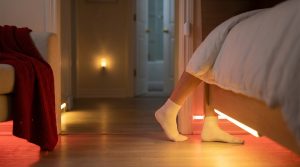
- Night lights or motion-sensor lights help with early morning bathroom visits.
- Flooring that contrasts gently with walls and fixtures can make edges easier to see.
- A different pattern or color in the shower area can help someone recognize the change in surface.
Footwear and foot care
Even a safe floor needs safe feet on it:
- Grip socks or non-slip bathroom slippers can increase traction.
- Trimmed nails and treated calluses help feet grip better and feel grounded.
- People with neuropathy (reduced sensation) may not feel water or soap underfoot, so they need higher safety margins in flooring choice.
Working With Installers, Contractors, Or Landlords
For many caregivers and families, the most stressful part is not knowing how to talk to the person doing the work or how to push back if a suggestion does not feel safe.
Questions to ask before choosing a material
You might find it helpful to ask very direct questions, such as:
- “Is this flooring rated for wet bathroom use?”
- “What is the wet slip rating or DCOF of this product?”
- “Is there a more slip-resistant option from the same line?”
- “Can we use smaller, more textured tile in the shower area for better traction?”
- “How will you prepare the subfloor so that the surface is stable and drains well?”
If a contractor brushes off your concern about slip-resistance or says “any bathroom tile will do,” that is a sign to pause. It is reasonable to insist on information and safety, especially when you are responsible for someone who could be badly hurt by a fall.
Common installation problems that affect safety
Even safe materials can act unsafe if they are installed poorly. Watch out for:
- Uneven surfaces: High or low spots can catch toes, canes, or walker wheels.
- Poor transitions: Abrupt thresholds between the bathroom and hallway, or between shower and bathroom floor.
- Slopes that are too steep: Overly steep slopes toward a drain can feel like walking downhill on every step.
- Loose tiles or panels: Any flexing or movement underfoot is a safety concern.
If you notice a movement or hollow sound under the floor when you step, it is worth asking the installer to check it before the bathroom is put into full use.
Balancing Safety, Comfort, And Dignity
Many people worry that if they choose “safe” bathroom flooring, the room will look clinical or will remind them of a hospital. That emotional piece matters. The bathroom is a private, intimate space, and for someone dealing with illness or aging, it can be a place where they most keenly feel the loss of independence.
We can respect that by:
- Choosing slip-resistant materials in calming colors and simple patterns.
- Keeping the space warm, with towels, lighting, and decor that feel like home.
- Explaining changes gently, focusing on comfort and confidence, not just risk.
You might say to a loved one:
“We are updating the bathroom floor so it grips better when it is wet. I want you to feel steady and safe, so showering can be less tiring and more comfortable.”
That framing keeps the focus on care, not on frailty.
Putting It All Together: Practical Scenarios
To make these choices more concrete, here are a few common situations many of us face and flooring approaches that often work well.
Scenario 1: An older adult with a walker and frequent nighttime bathroom visits
Priorities:
- Very high traction, especially around the toilet and sink.
- Minimal height changes for walker wheels.
- Clear lighting for overnight use.
Possible flooring approach:
- Slip-resistant sheet vinyl or firm rubber flooring for the entire bathroom, securely glued down.
- Textured, low-lip shower base or small-tile shower floor for strong grip.
- Fixed, non-slip mat near the entrance and toilet if extra warmth is desired.
- Night lights that softly light the path to and inside the bathroom.
Scenario 2: A person living with Parkinsons disease who shuffles and freezes
Priorities:
- Surface that reduces sliding but does not “grab” the foot so much that it worsens freezing.
- Clear visual cues for steps and changes in flooring.
Possible flooring approach:
- Matte, textured porcelain tile with many grout lines for grip.
- Strong contrast strips or edges at any step or threshold.
- Very secure, low-profile non-slip mats, tested for toe catching, if needed for warmth.
Scenario 3: A child with seizures and unpredictable falls
Priorities:
- Softness and shock absorption, in addition to slip-resistance.
- No loose mats or rugs that can tangle.
Possible flooring approach:
- Quality rubber flooring throughout the bathroom, rated for wet use.
- Textured shower base or rubber in the shower zone, with good drainage.
- Wall and corner padding in key areas, if seizures are frequent or severe.
Scenario 4: An older couple planning ahead, who still move fairly well
Priorities:
- Safe footing now, and ready for future mobility supports.
- A look that still feels like “their” bathroom.
Possible flooring approach:
- Textured porcelain tile in a calm color, with high wet slip rating.
- Smaller-format, more textured tiles in a walk-in shower.
- Frameless or low-threshold shower entry, gentle slopes, and properly placed backing in walls for future grab bars.
In each scenario, the “best” flooring shifts a little, but the shared themes remain: good traction, stable installation, support around it, and respect for the person who will use it.
Keeping Slip-Resistant Floors Safe Over Time
Once we install a safe floor, it still needs gentle, steady care to stay that way. A few small routines can protect the investment and the people who walk on it.
Regular cleaning that protects grip
Soap film and body oils can build up and quietly undo much of a floors slip-resistance. A calm routine helps:
- Wipe shower and tub floors after use if possible, especially textured surfaces.
- Use cleaning products that do not leave a waxy or oily residue.
- Rinse fully so no cleaner remains to make the floor slick.
If a floor that used to feel safe now feels slippery, it may be a sign of buildup rather than a failed material.
Inspecting for wear, lifting, or damage
Once a month or so, especially in a busy home:
- Check corners, seams, and edges for lifting vinyl or rubber.
- Look for cracked tiles or loose grout that can catch feet.
- Replace bath mats that show wear, curling, or loss of backing grip.
When something feels wrong underfoot, trust that feeling. Many caregivers notice small changes before anyone falls.
Listening to the person using the bathroom
The best safety adjustments often come from the comments we hear every day:
- “The floor feels cold and I hurry to get out.”
- “I feel like my walker wheels jerk in that spot.”
- “My feet keep catching near the shower.”
Those are gentle clues. They can guide where to add a secure mat, review installation, or talk again with a contractor. When people feel heard about their bathroom worries, they are more willing to accept changes that keep them safe.
By choosing slip-resistant materials such as textured tile, quality vinyl, rubber, or textured shower bases, and by supporting them with good drainage, grab bars, and thoughtful lighting, we give ourselves and our loved ones a quieter kind of safety. It is not flashy. It is the steady feeling of stepping into the bathroom and knowing the floor is doing its quiet part to keep each of us standing, supported, and dignified.