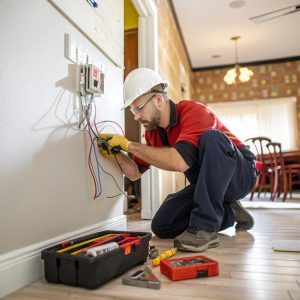
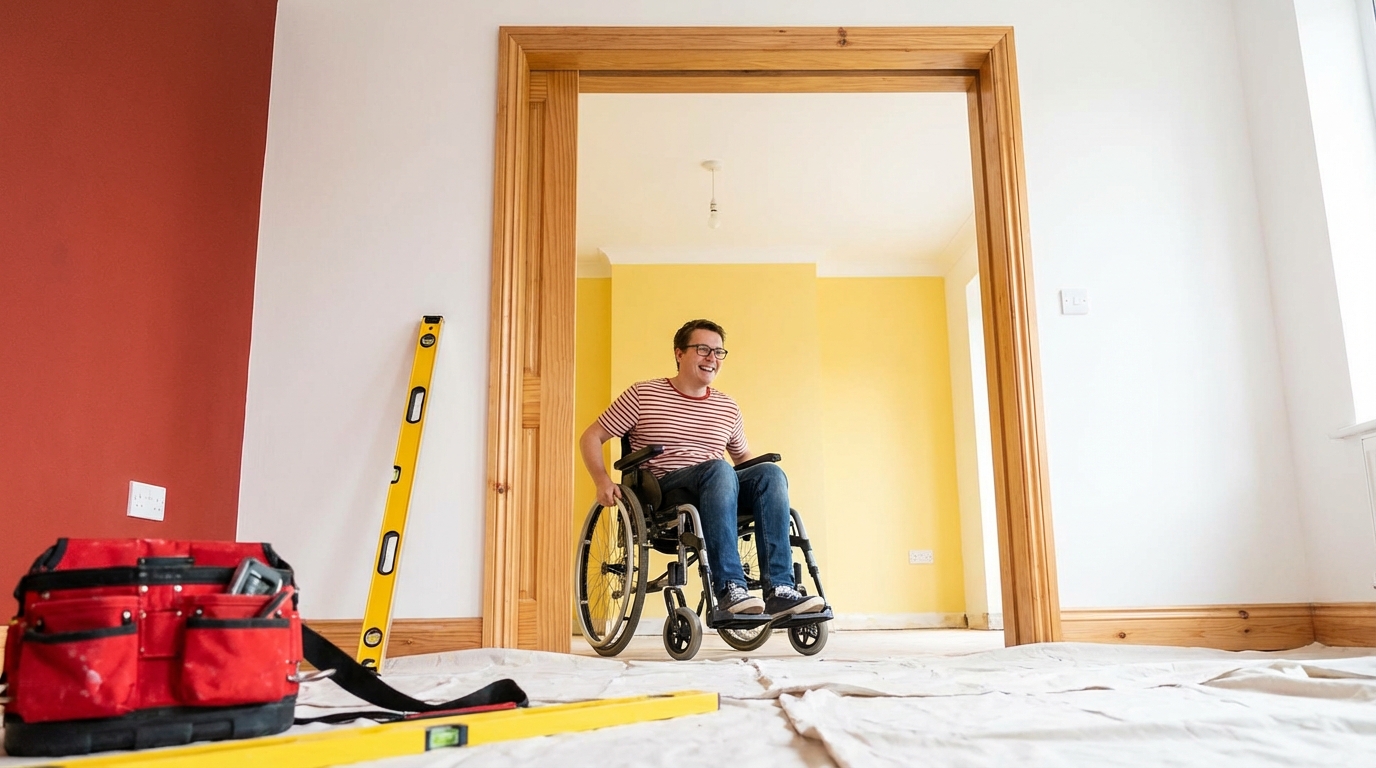
It is not easy to look at a home that you love and realize that it no longer works for your body, or for someone you care about. Many of us have stood in a hallway with a wheelchair, a walker, or a wide-based cane and felt that tight squeeze, that stuck feeling in a doorway that is just a little too narrow. It can feel unfair, tiring, and sometimes a bit frightening.
You might find it helpful to know this right away: for most homes, widening doorways for wheelchair access is very possible, and there are different levels of change you can try, from simple hinge swaps to full framing work. The safest target for wheelchair access is a clear opening of about 32 to 36 inches, with smooth flooring transitions and enough room to approach and turn. The right choice for your home depends on the width you have now, the wall structure, your budget, and how long the person will need wheelchair access.
If a wheelchair cannot pass easily through a doorway, the risk of falls, shoulder strain, and caregiver injury rises every single day that the problem stays unfixed.
We will walk slowly through each part of the decision: what width you really need, how to measure, low-disruption tricks that avoid tearing out walls, bigger renovation options, costs, safety details, and how to work with contractors. You are not alone in this. Many families have faced the same tight doorway and found a way to make the home safer and calmer again.
Understanding how wide a doorway needs to be for wheelchair access
Before anyone brings a saw into your hallway, it helps to know what you are aiming for and why. Door width is not only about the wheelchair itself, but also about the angle of approach, the strength and skills of the person using it, and whether a caregiver needs to walk beside or behind.
ADA guidance and practical daily life
Public buildings in the United States often follow ADA (Americans with Disabilities Act) standards. Homes do not legally have to follow these rules, but they offer a useful guide.
| Item | ADA guideline | What usually works at home |
|---|---|---|
| Minimum clear width at door | 32 in (clear) | 32 in can work; 34-36 in is more comfortable |
| Preferred width when possible | 36 in corridors and doors | 36 in tends to feel safer and less stressful |
| Turning space nearby | 60 in circle or T-shaped space | Helpful near bathrooms and bedrooms |
For most homes, a target of 34 to 36 inches clear opening will feel far less cramped and will support changes in wheelchairs, cushions, and medical needs over time.
Wheelchair sizes and what they mean for your doorway
Wheelchairs vary, but we can look at common width ranges.
| Type of device | Typical overall width | Door recommendation |
|---|---|---|
| Standard manual wheelchair | 24-26 in | 32 in clear opening minimum |
| Heavy duty / bariatric chair | 28-32 in (sometimes more) | 36 in or wider, depending on chair |
| Transport chair | 22-24 in | 30-32 in can work, still better at 34 in+ |
| Power wheelchair / power base | 24-30 in | 34-36 in recommended |
| Walker / rollator | 22-28 in | 30-32 in minimum, 34 in more comfortable |
When someone is new to using a wheelchair, they often bump hands, knuckles, and wheel rims into the frame while learning steering. That learning phase can be painful if every doorway is a tight squeeze. A bit of extra width gives room for error and can protect both the chair and the home.
How to measure your current doorway, the right way
Door labels like “30 inch door” or “32 inch door” refer to the slab size, not the usable space once the frame and door are in place. For safe planning, we need the real clear width.
You might find it helpful to follow this simple method:
- Open the door to 90 degrees.
- Measure from the face of the door (on the latch side) to the inside of the opposite door jamb.
- Measure at three points: top, middle, and bottom. Use the smallest number.
- Write that number down as your “clear opening width.”
For most hinged doors, a 32 inch door slab gives only about 29 to 30 inches of clear space. This gap between advertised size and real width surprises many families and can explain why a doorway feels so tight.
If your clear opening is less than 30 inches, most full-size wheelchairs will struggle, and wider chairs will not pass without damage or risk.
Deciding how much change your doorway really needs
Once you know your clear width, the next question is: do you need a complete rebuild, or can you gain enough space with smaller adjustments? Many families feel nervous about big structural work, and that feeling is understandable. It can help to look at change in layers, from least invasive to most involved.
Step 1: Clarify your goals and time frame
Before choosing a method, it helps to ask a few gentle but honest questions:
- Is wheelchair use likely to be long term or short term?
- Is the person using a manual chair, power chair, or walker for now? Could this change?
- Does a caregiver need to walk beside the chair through the doorway (for example in a bathroom)?
- Is there a chance that a wider, bariatric chair will be needed in the future?
- Is this a rental, a home you plan to sell soon, or a place you hope to stay in for years?
If someone is recovering from surgery and will probably use a small transport chair for a few months, you might choose modest, lower-cost changes. If someone has a progressive condition or long-term disability, it is often kinder to go wider now rather than face repeated renovations later.
Step 2: Look at what is on each side of the doorway
The wall around the door may limit how much you can widen without larger construction.
Check for:
- Closets, plumbing stacks, or electrical panels pressed up against the door.
- Adjacent doors very close by, such as a bedroom and bathroom that share a narrow hall.
- Load-bearing walls that support floors or roof above.
- Radiators, wall heaters, or baseboard heat that would have to move.
A contractor or structural engineer can confirm whether a wall is load bearing. Many interior walls are not, especially in single-story homes, which can make doorway changes simpler.
Step 3: Balance safety, disruption, and budget
Each method to gain width brings some mix of:
| Approach | Width gained (approx.) | Cost level | Disruption |
|---|---|---|---|
| Offset / swing-clear hinges | +1 to 2 in | Low | Minimal, 1-2 hours per door |
| Removing door and trim | +1 to 2 in | Low to moderate | Light carpentry, may need paint |
| Pocket door (same opening) | Similar clear width, better maneuvering | Moderate to high | Wall opened on one side |
| New wider door in same wall | +2 to 6+ in | Moderate to high | Framing, drywall, patching |
| Structural rework in load-bearing wall | +4 to 10+ in | High | More complex carpentry, possible permits |
Sometimes a careful mix of small changes on several doors gives enough freedom of movement without any single large, overwhelming project.
Low-disruption ways to widen a doorway for wheelchair access
For many families, it feels gentler to try the simpler options first. These smaller changes can make a surprising difference, especially if you are only a couple of inches away from your target.
1. Install offset or swing-clear hinges
Offset hinges, sometimes called swing-clear hinges, move the door completely out of the opening when it is open. This simple hardware change can add about 1 to 2 inches of clear space, and you do not need to rebuild the frame.
How they work:
- The hinge leaf attached to the door is shaped to swing the door further out of the opening.
- When fully open, the door edges line up closer to the wall, not sitting inside the doorway.
Considerations:
- You need to match hinge size and thickness to your existing hinges.
- Hinge screws must be well anchored into solid wood, not just old, crumbling jambs.
- If the door is heavy, you may need three hinges instead of two.
This approach suits cases where:
- You are very close to a workable width already.
- Wall changes are not allowed (for example, in some rentals).
- You need a quick improvement while planning a larger renovation.
2. Remove the door slab, or change how it swings
Sometimes, the presence and direction of the door itself cause more trouble than the frame.
Options include:
- Removing the door completely and keeping only the opening, which can work for some closets or wide hallways.
- Reversing the swing so the door opens outward instead of inward, creating more room inside small bathrooms.
- Converting to a curtain or folding screen in bedrooms where privacy matters but door clearance is a big problem.
These changes do not technically widen the frame, but they can remove barriers that make steering through the doorway hard. They can also prevent situations where a fall behind an inward-swinging bathroom door blocks rescue.
If privacy is a concern, consider:
- Using a solid, heavy curtain on a ceiling track.
- Adding a lock to an outward-swinging door that can be opened from the outside in an emergency.
- Frosted or textured glass doors for bathrooms, which give light and some privacy while still allowing caregivers to sense movement or shadows if they worry about falls.
3. Trim and casing adjustments
Door trim and baseboards eat up space, especially in older homes where moldings can be thick. A skilled carpenter can sometimes:
- Remove thick casing and replace it with slimmer trim.
- Cut back or notch baseboards and wall returns that protrude into the opening.
- Plane or sand a door edge to stop it from binding and to allow the door to open wider.
The gains here may be small, often less than an inch, but when combined with swing-clear hinges, they may give just enough breathing room to avoid major construction. Paint and patching will usually be needed.
Full doorway widening: when the wall itself must change
If you measure and find that even with hardware changes you will not reach at least 32 inches of clear opening, or if you hope for a very comfortable 36 inch passage, then you are likely looking at a true doorway widening.
This can feel intimidating, yet with careful planning and a respectful contractor, it often goes more smoothly than people fear.
Key parts of a framed doorway
It may help to understand, in plain language, what you are changing. In a typical framed wall, a doorway includes:
- King studs on each side, which run from floor to ceiling.
- Jack or trimmer studs beside each king stud, which support the header.
- Header across the top of the opening, which carries weight around the opening.
- Cripple studs above the header, between header and top plate.
- Door jamb, the interior wood frame that holds the hinges and latch.
To widen the opening, carpenters adjust these studs, enlarge the header, and then install a new jamb and door.
Is the wall load bearing?
If the wall does not carry significant weight from floors or roof, widening the doorway is usually simpler. The contractor can:
- Open the wall around the door.
- Cut back studs and add new framing for the wider space.
- Patch drywall, install a wider door and jamb, then finish.
If the wall is load bearing, extra steps are needed:
- Support the structure above temporarily (for example with a beam or temporary walls).
- Install a stronger, often deeper header sized for the new width.
- Follow local building codes and likely obtain a permit.
This does add cost and time, but it also keeps the home safe. Skipping structural work in a bearing wall can lead to sagging or cracking over time, which is a risk no family needs.
In a load-bearing wall, safe doorway widening is less about clever shortcuts and more about careful respect for the building’s structure.
Choosing the new width
Many people are tempted to widen only to the smallest size that will work for the current chair. That can make sense for budget, but it can also paint you into a corner if needs change.
Common slab sizes for interior doors include:
- 30 in (about 28-29 in clear)
- 32 in (about 30 in clear)
- 34 in (about 32 in clear)
- 36 in (about 34-35 in clear)
For wheelchair access, many accessibility experts gently suggest stepping up to at least a 34 or 36 inch door where walls allow it, especially for:
- Bathroom entries
- Primary bedroom doors
- Main entry doors from outside
The difference between 32 and 36 can feel small on paper but very large in daily life, particularly when a caregiver is turning a chair into a bathroom or helping someone transfer in tighter spaces.
What the widening process usually looks like
Every home is unique, but for planning and emotional preparation, here is a typical sequence:
- Cover floors and nearby furniture with drop cloths or plastic.
- Remove existing door, trim, and jamb.
- Open the wall around the current doorway to expose studs.
- Cut and adjust framing, install new header and studs as needed.
- Install new, wider door jamb and door (or create a cased opening without a door).
- Patch drywall, tape, mud, and sand.
- Install new trim and casing, then paint or stain.
Noise, dust, and strangers in the home can be stressful, especially for someone who is already feeling vulnerable. It may calm things if:
- You schedule work at times when the wheelchair user can stay in a quieter part of the home.
- You set up a temporary privacy screen if the bathroom door is out of service.
- You ask contractors to explain the order of work in simple terms before they begin.
Door styles that support wheelchair access and caregiving
The width of the opening is one part. The type of door and how it moves also affect daily comfort, especially when someone needs help in private rooms like bathrooms and bedrooms.
Pocket doors and barn-style doors
Pocket doors slide into the wall. Barn-style doors slide along the face of the wall on a track. Both can be helpful because they do not swing into the clear floor space.
Benefits:
- Easier to move wheelchairs in tight hallways or small rooms.
- Less risk of doors hitting someone sitting in a chair.
- Can be fitted with large, easy-to-grab pulls for hands with arthritis or weakness.
Points to watch:
- Pocket doors require wall space free of plumbing and major wiring.
- Barn doors often leave small gaps at the sides, so privacy and sound control are weaker.
- Tracks must be well installed to avoid binding or sagging, which can be harsh for someone with low strength.
For bathrooms where caregivers might need quick access, many families choose an outward-swinging regular door or a sturdy pocket door with an emergency release option.
Double doors and wide cased openings
In some spots, such as between living room and hallway or into a bedroom, double doors can give flexibility. One door can stay latched most of the time, while both can be opened for wheelchair access or moving equipment.
You can also remove the doors entirely and finish the opening with trim, keeping a generous framed width without a swinging panel.
Door hardware for weaker hands and arms
A doorway is not only about the frame and slab. The handle and latch can make entry either simple or exhausting.
Families often find it helpful to:
- Use lever-style handles instead of round knobs, which are easier for weak or painful hands.
- Choose handles with contrasting color to the door for low vision.
- Pick latches that close smoothly without a strong push.
- Install privacy locks that can be opened from outside with a small tool in case of emergency.
A lever handle that someone can open with the side of a hand or a forearm can preserve independence for months or years longer.
Floor transitions, thresholds, and turning space
Widening a doorway will not feel helpful if a wheelchair still gets caught at the threshold or if there is no room to turn into the room. Doorways and floors should work together.
Thresholds and small height changes
Even a half-inch lip can jar someone in a chair or catch front casters.
Health and accessibility guidelines often suggest:
- Keeping height changes at doorways under 1/4 inch if square, or under 1/2 inch if beveled.
- Using low-profile transition strips between flooring types.
- Avoiding raised saddles or deep metal tracks that block wheels.
If your home has older metal thresholds or high saddles, a contractor can often replace them with flatter transitions while widening the doorway.
Turning radius near doorways
A wide door is easier to enter if there is enough room to turn the chair. Pressure often builds when someone has to perform tight, exact moves every time they go into the bathroom.
Try to check:
- Is there at least a 5-foot by 5-foot area near key doorways, especially the bathroom?
- Can the chair approach the door nearly straight, or is there a sharp angle?
- Are there shelves, small tables, or coat trees that could be moved to give more space?
Sometimes, freeing up just a little more hallway width by moving furniture or trimming baseboards can work together with a widened door to make turning calm and smooth.
Planning for safety, privacy, and caregiver needs
When we talk about widening doorways, the core reason is safety and dignity. It helps to bring both of those clearly into the planning stage.
Emergency access and fall response
If someone falls in a bathroom or bedroom and ends up against the door, caregivers need a way to reach them.
Safer designs often include:
- Outward-swinging bathroom doors.
- Pocket doors with an emergency release notch at the latch side.
- No deadbolts on bathroom doors, only privacy locks that open from outside.
- Doorways wide enough that a second person can help first responders move equipment in and out.
Widening doors at the front and back entries can also improve emergency response, since stretchers and evacuation chairs need more space.
Balancing privacy and access
It is common for people to feel exposed when doors change, especially for bathrooms and bedrooms. Listening to these feelings is as important as measuring studs.
You might find it calming to:
- Ask the wheelchair user what kind of door or curtain feels comfortable to them.
- Use solid-core doors for sound control while still keeping wide openings.
- Add soft-closer hardware so doors do not slam.
- Use simple signs or visual cues to signal when bathrooms or bedrooms are in use.
Sometimes a person will accept a wider, more open-feeling bathroom doorway if they can have a lock they trust and a clear agreement with caregivers about knocking and waiting.
Caregiver body mechanics in doorways
Caregivers often strain backs and shoulders when maneuvering chairs through narrow doors. Proper width can protect not only the person in the chair, but also the one pushing.
Safer caregiving around doorways includes:
- Keeping floor surfaces smooth and non-slippery, using low-pile rugs if any.
- Removing clutter and doorstops that catch on wheels.
- Widening key doors enough to allow the caregiver to walk behind the chair in a natural posture.
- Adding grab bars near doorways where transfers happen, such as bathroom entries.
Protecting a caregiver’s back today can mean that same caregiver is still able to help gently and safely years from now.
Cost, funding, and working with contractors
Money is often a real, pressing concern for families trying to adapt a home. It can feel heavy to weigh costs against safety. Honest numbers and clear planning help ease that weight a little.
Typical cost ranges
Prices vary widely by region and by the specifics of each home, but general ranges in many areas look like this:
| Type of change | Approximate cost per doorway |
|---|---|
| Offset or swing-clear hinges installed | $50-$200 |
| Rehanging door / reversing swing | $150-$400 |
| Minor trim changes, no framing | $200-$500 |
| Widening non-load-bearing wall, new pre-hung door | $600-$1,500 |
| Widening load-bearing wall (framing, header, finishing) | $1,200-$3,000+ |
| Installing pocket door in existing wall | $800-$2,500+ |
These figures are broad. Some handy homeowners can lower costs by doing painting or trim finishing themselves. Others may need to budget for more professional time.
Possible funding sources and support
You do not have to handle all of this alone. There may be programs that can share some of the cost.
Depending on where you live and your situation, you might explore:
- Home modification grants through local aging or disability services agencies.
- Veterans’ programs that help adapt homes for mobility needs.
- Low-interest loans or forgiveness programs for accessibility upgrades.
- Nonprofit organizations that offer assistance for home accessibility.
- Insurance or workers’ compensation coverage if the need stems from a covered injury.
Social workers, hospital discharge planners, and occupational therapists are often aware of local resources and can help you find the right contacts.
Choosing and guiding a contractor
Not every contractor is experienced with accessibility, and that gap can lead to choices that look nice but do not work well for real-life caregiving.
When you meet with potential contractors, you might find it helpful to:
- Ask if they have completed projects for wheelchair users or older adults before.
- Invite your occupational therapist, if you have one, to share doorway width and layout recommendations.
- Walk the contractor through a “day in the life” of the person using the wheelchair so they understand how doors are used.
- Request that they protect nearby areas from dust and debris, especially if the person has breathing issues.
It is all right to speak up firmly if a proposal does not feel right. For example, if a contractor suggests keeping a bathroom door at 28 inches because it is “cheaper,” and you know that will not work for the chair, it is reasonable to say no and look for someone who can meet accessibility needs.
Working with therapists and home safety professionals
You do not need to be the only expert on your loved one’s movement needs. Occupational therapists (OTs), physical therapists (PTs), and home safety assessors can be valuable partners.
How therapists can help with doorway decisions
An OT or PT can:
- Measure the wheelchair and the person’s reach, strength, and transfer skills.
- Watch how they move through the home now and identify trouble spots.
- Recommend specific doorway widths and door types for each room.
- Suggest related changes, like grab bar placement near doors or floor surface adjustments.
Having written recommendations from a therapist can also support funding applications or discussions with contractors, as it shows that the changes are medically necessary, not just cosmetic.
Testing the path before final decisions
If possible, some families find it helpful to “test drive” a proposed path:
- Use painter’s tape on the floor and walls to mark where a widened doorway edge would be.
- Roll the wheelchair through the space with caregivers, imagining a 36 inch opening.
- Notice how much turning and backing up is required.
This gentle rehearsal can reveal issues that do not show up on paper. You might discover that you need to widen two doors instead of one, or that moving some furniture solves a turning issue without more construction.
Emotional side of changing familiar doorways
Behind every measurement and cut is a person whose relationship with their home is changing. Doorways have meaning. They mark private spaces, independence, and the flow of daily life.
Grief, loss, and adaptation
It is common to feel:
- Sadness at seeing walls opened and doors changed.
- Anger that these changes are needed at all.
- Fear about the future, and what other changes might come.
- Relief when the chair or walker finally moves through smoothly.
All of these feelings are valid. They can live side by side. A wider doorway is not a sign of defeat. It is a sign that you are choosing safety and dignity in the face of something you did not choose.
Involving the person who uses the wheelchair
Where possible, including the wheelchair user in choices can restore some sense of control.
You might ask:
- Which doorway feels most urgent to change first?
- Do they prefer a pocket door, an outward-swinging door, or a curtain in certain rooms?
- What colors or finishes help the space still feel like home to them?
Sometimes a person will resist changes because they feel like an admission that life has changed. Gentle, honest conversations, perhaps with the support of a therapist or counselor, can help them see that these changes are tools that support independence, not symbols of weakness.
A widened doorway is not only wood and nails. It is an invitation for someone to move more freely, to reach the kitchen table, the garden door, or the bathroom without fear.
Prioritizing which doorways to widen first
Few families can change every doorway at once. Choosing where to start can reduce stress and cost while still creating genuine safety improvements.
A practical order might be:
- Primary bathroom doorway: for toileting, hygiene, and fall prevention.
- Bedroom doorway: for rest, dressing, and easing nighttime care.
- Main entrance doorway: for safe entry, appointments, and emergency access.
- Kitchen doorway: for meals, hydration, and social time.
- Other rooms used daily, such as living room or therapy room.
If resources are tight, focus on the path that the wheelchair uses most often in a normal day: bed to bathroom to favorite chair or kitchen. If that “everyday path” is clear and safe, daily life feels more manageable even if less-used rooms wait.
Bringing it all together
When you stand in front of a narrow doorway with a wheelchair, it can feel like the house itself is saying “no.” Through careful choices and some patient work, that “no” can turn into a quiet “yes, come through.”
To recap in practical terms:
- Aim for at least 32 inches clear opening; 34-36 inches is kinder for long-term wheelchair use.
- Measure clear width with the door open at 90 degrees, from door face to opposite jamb.
- Try lower-disruption options first when appropriate: swing-clear hinges, reversing swing, trim adjustments, or removing doors in non-private areas.
- For lasting accessibility, especially with progressive conditions or larger chairs, full widening with new framing in key locations is often worth the effort.
- Pay attention to thresholds, turning radius, door hardware, and emergency access as part of the same project.
- Seek support from therapists, social workers, and experienced contractors, and do not hesitate to insist on widths that truly meet the wheelchair user’s needs.
You are carrying a lot, both practically and emotionally, by looking at these changes. Every inch you gain in a doorway is a small piece of safety, independence, and calm that you are building into the home for the person you care about, and for yourself.