The bathroom is where a lot of carers’ worries pile up. There is a step over the side of the bath, a floor that is always slightly damp, and nobody there to take an elbow. If you’ve ever hovered outside the door listening for the sound of someone climbing out of the tub, you’ll know the feeling.
From grab rails and shower seats to bath remodeling Greenville SC, the ways to make a bathroom safer cover a wide range of effort and cost. This guide is for families with a parent in Greenville, South Carolina or anywhere else. I’ll take the options in the order I’d try them: check, fix cheaply, decide on bigger changes, then plan the work so the disruption stays low.
Check what is already there before you buy anything
Spend ten minutes in the bathroom with a notebook, or ask your parent to take photos if you can’t be there. Look at the room as someone with stiff knees and a tired back would. In my years testing mobility aids and home-safety kit, the same few failure points came up again and again, and most of them cost nothing to find.
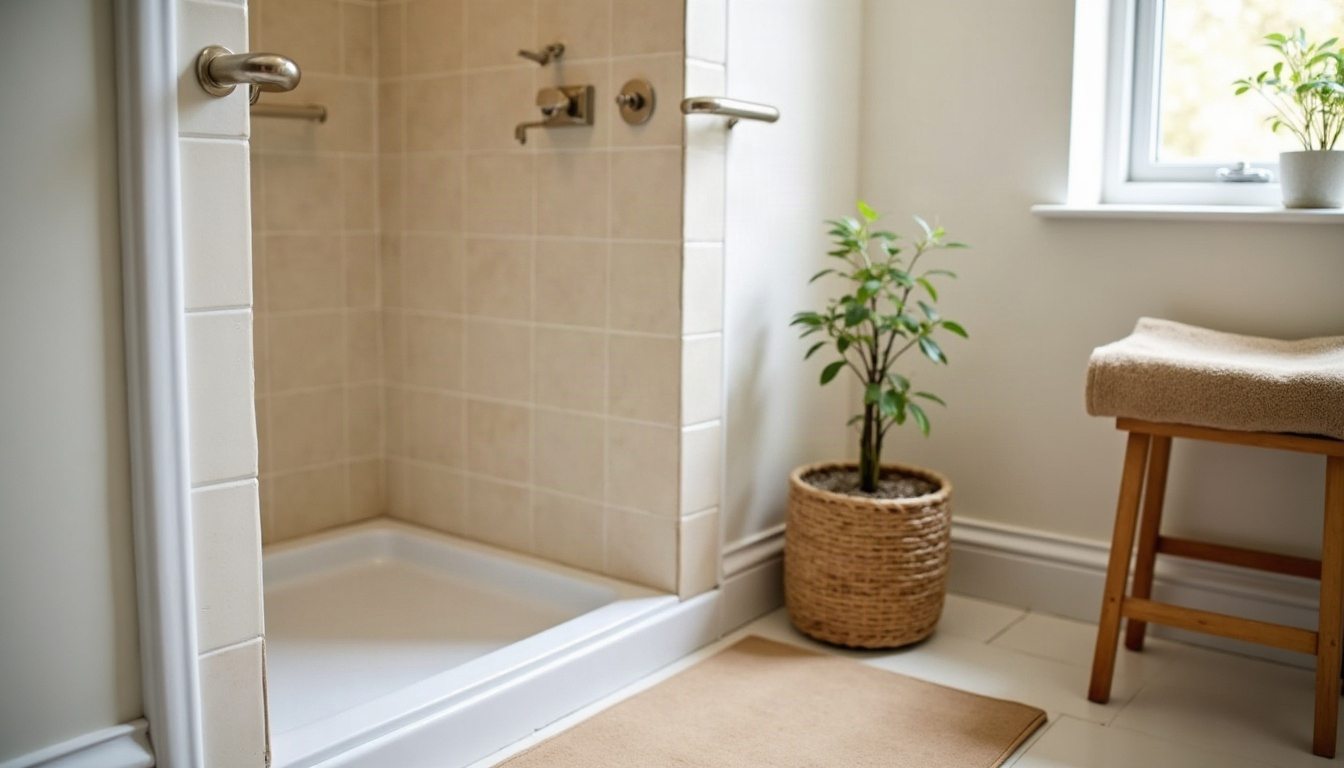
The loose bath mat comes first. A mat that slides, or a rug that curls at the edge, does more harm than having nothing on the floor. Then look at the side of the bath, the toilet height, the light at night, and the door. Can it be opened from outside if someone falls against it? A lock that can’t be released from the hall is a problem in an emergency.
Check the floor when it is wet, not dry. A surface that feels fine in your socks can be treacherous with soap on it, and bare, damp feet on tile are the worst case. Ask what your parent wears on their feet to get in and out, and watch for the towel left on the floor to dry. It is a trip hazard that nobody notices until the day it matters.
Carer’s checklist
- Loose mats and rugs noted, and removed or replaced with a properly fixed non-slip surface
- How high the side of the bath is, and whether your parent has to lift a leg over it
- Whether they can stand up from the toilet without pushing off the sink
- A night light on the route to the bathroom
- Whether the door can be opened from the hall in an emergency
Try the low-cost fixes first, and be honest about their limits
A grab rail, a shower seat and a handheld shower head are the first things I’d reach for. They cost little, they take little time to put in, and they deal with the two moments that matter most: getting in and out, and standing for a long time while wet. A rail is only as good as the wall behind it, so have it fitted by a professional who knows what’s in the wall. Anything that touches the plumbing is for a plumber.
The handheld shower head deserves a word, because it is what makes a seat useful. It lets someone wash sitting down. Check the hose reaches, and that the holder sits at a height your parent can reach without stretching. If fitting it takes more than screwing one part onto another, ask a plumber to do it.
The high-tech version is a battery-powered alert, such as a pull cord or a pendant that calls a family member. I like these, with a caveat. A flat battery is worse than no alarm, because everyone assumes it works. Put a monthly test in the calendar. If an alert relies on Wi-Fi, test it from the bathroom itself, since tiled rooms are often dead spots.
My verdict: rails and a seat first, a night light second, an alert third. All three are low-tech or low-cost, and all three buy time while you decide on anything bigger.
Carer’s checklist
- Rail positions chosen with your parent, standing in the room
- Rails fitted by a professional, not stuck on
- A seat that is stable and the right height for them
- Alert batteries tested on a set day each month
- Wi-Fi tested from inside the bathroom, if the alert needs it
Know when a bigger change makes sense
Sometimes the cheap fixes are not enough. If your parent can no longer step over the side of the bath, or the room is too narrow for a walking frame, no rail will solve it. That is when it is worth talking to a remodelling company about the room itself. Here is how the options compare.
| Option | Disruption | Cost band | Suits |
|---|---|---|---|
| Fixed non-slip surface, night light, loose rugs removed | Almost none | Low | Someone steady who wants fewer risks |
| Grab rails, shower seat, handheld shower | A short visit | Low to moderate | Someone who needs something to hold and a place to sit |
| Walk-in shower in place of the bath | Bathroom out of use for a stretch | Moderate to significant | Someone who can no longer step over the side of the bath |
| Fuller refit with a wider door and a level floor | The longest | Significant | Someone using a frame or wheelchair every day |
My rule is simple. If rails and a seat make the bathroom safe, stop there. If they don’t, or the room is cramped, cold or damp, ask for a professional’s opinion before spending more. Plumbing, wiring and anything structural are work for licensed professionals. Don’t let anyone talk you into a weekend job with a drill.
Carer’s checklist
- An honest answer on whether rails and a seat are enough
- A note of what the room needs that a rail can’t give, such as a wider door or a step-free floor
- Your parent’s own view on what they find hardest
- Any structural, plumbing or wiring work left to licensed professionals
Plan the work so the bathroom isn’t out of action for long
A bathroom job takes away the one room nobody can manage without. Plan around that from the start. Where will your parent wash while the room is out of use? Is there a second toilet? Hot water, dust and noise all need a plan, and so does the night-time trip, which is the part people forget.
Ask any company that quotes to set out the order of work and roughly how long the room will be unusable. Ask how they’ll protect the floors and keep dust out of the rest of the house. Ask what happens if they find a problem behind the old bath, such as hidden water damage, and how extra time and cost would be agreed before anything extra is done. Ask the local building department whether a permit is needed. Warm, humid summers make a damp bathroom worse, so ask about ventilation too.
Tell your parent each step ahead of time, and make sure they know who to speak to on the day if something worries them. Put that person’s number somewhere obvious, like the fridge door. Disruption is easier to live with when it’s expected.
Carer’s checklist
- A temporary place to wash and a toilet plan for the days the room is closed
- An outline of the work in order, with a rough timescale
- A written plan for hidden problems and how extra cost is agreed
- Ventilation and permit questions asked
If you only do one thing this week
Photograph the bathroom from the doorway, the side of the bath and the floor around it, then write one line under the photos about the moment that worries you most. That line decides what you fix first. Bathrooms are small rooms, and sorting out the worrying part usually takes less effort than the worrying does.