
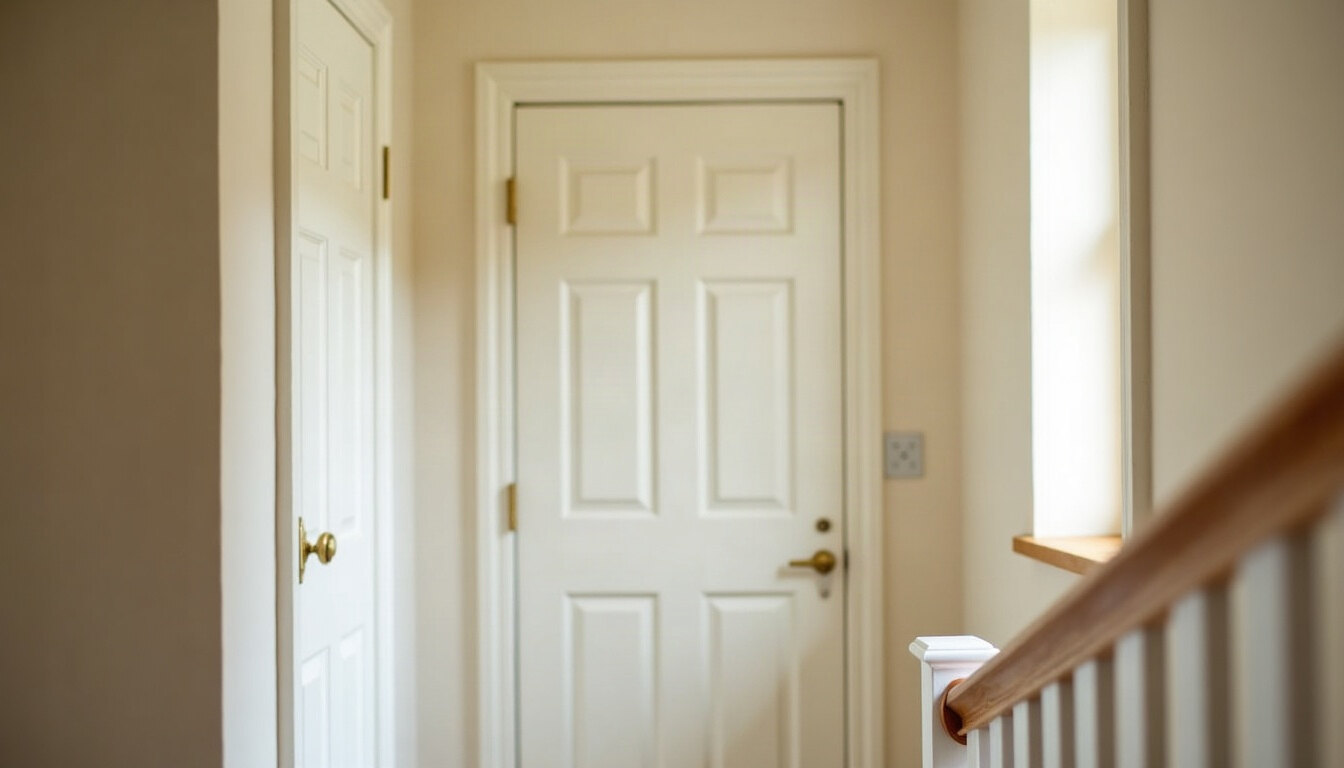
The call usually comes on a Sunday. Your mum mentions, almost in passing, that she walked into the hallway door frame again, or that the stairs “look all the same” in the evening. She lives in Chico, you live here, and the house she has kept for decades is starting to work against her eyesight.
Repainting is one of the gentlest changes you can make to a parent’s home, and it is easy to organise from a distance if you take it in order. What should you ask when looking at house painters Chico homeowners use, and how do you keep the work calm for the person living there? This guide sets out the steps, from the first conversation to the day the furniture goes back.
Start with what your parent finds hard to see
Before anyone talks about colours, find out what is actually going wrong. Ageing eyes often struggle with low contrast, so a pale door against a pale wall, or a beige step against a beige landing, can almost disappear. Glare from glossy surfaces can be just as unhelpful as dim light.
Ask your parent to walk you through the house on a video call, in the evening if you can. Watch where she slows down, touches the wall or hesitates. Those spots are your priority list, and they are often fewer than you expect.
If her eyesight has changed noticeably, it is worth suggesting a check with her optician or doctor before any work begins. Paint can help a home feel clearer, but it does not replace an eye test.
- Do now: note the three or four places where she hesitates or bumps into things.
- Do now: ask whether glare from shiny walls or floors bothers her.
- Plan for: a fuller walk-through with whoever quotes for the work.
Carer’s checklist
- Evening video walk-through done
- Problem spots written down
- Eye check suggested if her sight has changed
- Her own views on colour asked for, not assumed

Use colour and contrast to mark the routes she uses
The principle is simple: things she needs to find should stand out from what surrounds them. A door frame a shade or two darker than the wall shows where the opening is. A handrail that contrasts with the wall behind it is easier to reach for. Light switches are easier to locate on a wall that is not the same off-white as the switch plate.
Finish matters as well. A softer, low-sheen finish on walls tends to cut glare, while woodwork such as skirting and door frames can take a tougher finish that wipes clean. A painting company will usually have views on which finishes suit which surfaces, and it is reasonable to ask them to explain their reasoning in plain terms.
Keep it calm rather than striking. The aim is a house she still recognises as hers, with a few quiet signposts added. Bold feature walls can be confusing for someone whose vision or memory is changing.
- Pick the routes first: bed to bathroom, front door to kitchen, the stairs.
- Choose contrast for frames, rails and edges along those routes.
- Keep the main wall colours close to what she is used to.
Carer’s checklist
- Key routes agreed with your parent
- Contrast planned for door frames, rails and edges
- Low-glare finish discussed for walls
- Wall colours kept familiar
Ask the right questions before you agree to anything
When you are arranging work from another country, the conversation with the decorator matters more than usual, because you cannot pop round to check. Ask for a written description of what will be done, room by room, and how long each part should take. Ask who will be in the house each day, and whether your parent will be told in advance if that changes.
Older houses can have old layers of paint underneath the current one, and some older paints contain lead. Ask how the company assesses this and how they would handle preparation if it turns up. This is work for professionals, not something a relative should tackle with a scraper over a long weekend.
Ask too about the smell and the drying times. Some people are sensitive to paint fumes, particularly if they have breathing problems, and Chico’s hot, dry summers can make it tempting to shut the windows and run the air conditioning. A good decorator will plan ventilation and suggest which rooms can be used while others dry.
- Request a written scope, room by room.
- Ask about old paint and how preparation will be handled.
- Ask about fumes, ventilation and which rooms stay usable.
- Agree how and when they will contact you, not only your parent.
Carer’s checklist
- Written scope received and read
- Old paint question asked
- Ventilation plan agreed
- You are named as a contact alongside your parent

Plan the disruption around your parent’s routine
For someone who relies on routine, a few days of ladders, dust sheets and moved furniture can be unsettling. The trick is to keep at least one room completely normal throughout: usually her bedroom, or the room where she spends most of the day. Work through the rest of the house in a sequence that never cuts her off from the bathroom or kitchen.
Think about trip hazards. Dust sheets, cables and stepladders in a hallway are exactly the things that cause falls. Ask the decorators to clear walkways at the end of each day and to keep her main route open while they work.
If you can, arrange for someone she trusts to be around on the first morning. That might be a neighbour, a friend from church or a relative who lives nearby. A familiar face at the door makes the whole thing feel less like an invasion.
- Do now: decide which room stays untouched.
- Do now: ask a trusted local person to be there on day one.
- Plan for: a short daily message from you, checking how she is finding it.
Carer’s checklist
- One room kept normal throughout
- Bathroom and kitchen always reachable
- Walkways cleared at the end of each day
- Familiar face booked for the first morning
Check the finished rooms through her eyes
When the work is done, repeat the evening walk-through on a video call. Ask her to show you the routes you agreed on. Can she see the door frames clearly? Does the stair edge stand out? Is there anywhere the new finish catches the light in an awkward way?
Small issues are much easier to raise while the decorators are still finishing than weeks later. Make a short list, send it in writing and keep it polite. Most tradespeople would far rather fix a detail than have an unhappy client.
Finally, put the furniture back with care. A chair moved six inches to the left can become a new obstacle. Ask whoever helps to return things exactly where they were, unless you have agreed a better layout with your parent.
- Walk the routes again on video, in evening light.
- Send any snagging points in writing before the job is signed off.
- Return furniture to its usual spot, or to a layout she has agreed.
Carer’s checklist
- Post-work walk-through done
- Snagging list sent in writing
- Furniture back where she expects it
- Leftover paint labelled and stored for touch-ups
If you only do one thing this week
Book a twenty-minute video call with your parent this evening and ask her to walk you from her bed to the bathroom with the lights as she normally has them. Write down every place she hesitates. That list will tell you more about what the house needs than any colour chart.
You can’t be there in person, and that is all right: a clear plan and a few good questions do most of the work for you.