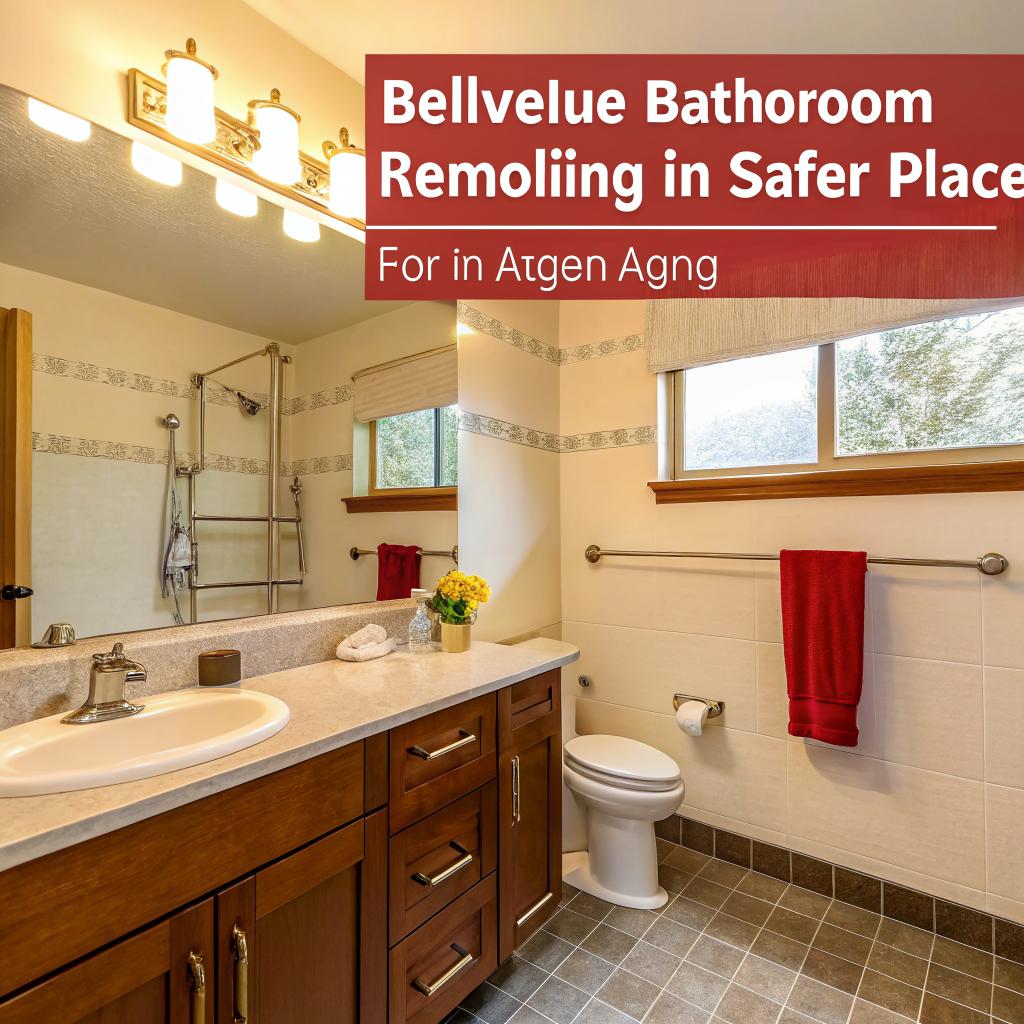
If you live in Bellevue and you want to stay in your home as you age, then yes, bathroom remodeling can make aging in place much safer. A well planned Bellevue bathroom remodeling project reduces fall risks, makes bathing easier, supports caregivers, and lets you keep your routines with more privacy and less stress.
That is the short answer.
The longer answer is more personal. Aging is not just about grab bars and raised toilets. It is about being able to get to the bathroom at 3 a.m. without worrying about slipping. It is about a spouse who can help with bathing without hurting their own back. It is about adult children who are trying to make smart choices for a parent, but who do not want to turn the home into a hospital room.
If you are reading this on a site about caregiving, home access, and health, you are probably already thinking about those tradeoffs. You might be caring for someone now, or you might be trying to plan ahead before a fall or a crisis. I think that is the right time to talk about bathrooms, even if it feels a bit uncomfortable.
Why the bathroom matters so much for aging in place
The bathroom is often the smallest room in the house, but it causes a huge share of accidents for older adults. Slippery surfaces, tight spaces, awkward movements like stepping over a tub, and poor lighting all come together in one place.
A safe bathroom is often the difference between staying at home with some help and moving into assisted living sooner than you planned.
That sounds blunt, but it matches what many caregivers see. A bad fall in the bathroom can trigger a chain reaction: hospital stay, rehab, then a move to a facility because the home no longer works for the person’s mobility or care needs.
So if you live in Bellevue, and you are thinking about aging in place, it makes sense to look hard at this room. The cost of a remodel is not small, but the cost of doing nothing can be higher, both emotionally and financially.
Common bathroom risks for older adults
I want to walk through the main risks in a typical bathroom. You may recognize some of these from your own home or from a parent or client’s home.
- Slippery tile or vinyl flooring
- High step over the tub or shower curb
- No grab bars near the toilet or in the shower
- Low toilet height that makes standing difficult
- Tight spaces that do not fit a walker or wheelchair
- Shower controls out of reach or hard to turn
- Poor or uneven lighting, especially near the shower and mirror
- Rugs that slide or bunch up at the edges
- Hot water that can scald if reflexes are slower
Each of these might seem minor on its own. But they stack up. You have an older body, perhaps a bit of arthritis, maybe some dizziness from meds, and now you add water and soap into the mix. That is not a great combination.
When you think about remodeling for aging in place, focus less on how the bathroom looks and more on how you actually move through it, step by step, on a normal day and on a hard day.
On a hard day, you might be weak from an illness, or you might have a sore knee, or you might need someone to help you get in and out of the shower. If the room works on that day, it will usually feel easy on the good days.
Planning a Bellevue bathroom remodel with aging in place in mind
Before you choose tile or fixtures, you need a clear plan. A nice looking bathroom that is still hard to use will just be a frustration. So, where do you start?
Step 1: Think about who will use the bathroom in the next 5 to 10 years
This part is easy to skip. Many people plan for how they live right now, not for what is coming.
Ask yourself a few questions:
- Will the main user likely use a cane, walker, or wheelchair in the future?
- Is there a history of falls, stroke, Parkinson’s, or other mobility issues in the family?
- Is a spouse or adult child likely to help with bathing or toileting?
- Is there any early memory loss that may change how instructions or controls should work?
You might not have clear answers. That is fine. But thinking about these questions can nudge the design toward more space, more support, and fewer little hazards.
Step 2: Decide which bathroom to remodel
In Bellevue, many homes have a full bathroom upstairs and maybe a half bath on the main level. If stairs are already getting harder, or you think they will, it often makes more sense to remodel the main level bath, even if it is smaller.
If you can only afford to remodel one bathroom, choose the one that will be easiest to reach without stairs. That choice alone can delay a move to a different home or a facility.
Step 3: Prioritize function before finishes
There is nothing wrong with wanting a pretty bathroom. But safety features are what keep someone living at home. Here is a simple way to sort choices when you review a design or a quote:
| High priority (function & safety) | Medium priority (comfort & convenience) | Lower priority (looks only) |
|---|---|---|
| Curbless or low threshold shower | Heated floors | High end designer tile patterns |
| Non slip flooring | Extra storage for supplies | Fancy decorative lighting only for style |
| Grab bars and stable support points | Built in shower niche at reachable height | Complex glass features that add no safety |
| Comfort height toilet | Soft close toilet seat and drawers | High gloss finishes that may show water spots |
| Wide doors and clear floor space | Handheld shower head with slide bar | Very bold trends that might date quickly |
I have seen families trim costs by dropping grab bars while keeping fancy tile. That is backwards. A simple shower with safe support is better than a magazine-ready design that scares you every time you step in.
Key aging in place features for a safer Bellevue bathroom
Let us go through the main features that matter for older adults and caregivers. Some may apply to your situation, others less so, but most homes can benefit from at least a few of these changes.
1. Curbless or low threshold shower
Stepping over a tall tub wall is hard for anyone with weak legs, bad knees, or poor balance. A curbless shower has the floor at one level, with a gentle slope for drainage. A low threshold shower has a small lip that is still easier and safer to step over.
Benefits:
- Reduces tripping when entering or exiting
- Makes it much easier to use a walker or shower chair
- Allows a caregiver to assist without awkward lifting
- Can look modern, not medical
There is a bit of a tradeoff here. Some people worry about water leaving the shower area. That can be handled with the right slope, a linear drain, and a curtain or glass panel. Good planning matters, but the daily safety gain is usually worth the effort.
2. Non slip, low contrast flooring
Tile and luxury vinyl are common choices in Bellevue bathrooms. The key is not just the material, but also the surface texture and the color contrast.
Look for flooring that has some grip when wet, and avoid very shiny or mirror like surfaces that can create glare or visual confusion for aging eyes.
Low contrast between tiles can help someone with depth perception issues. Very strong patterns or dark borders can sometimes look like steps or holes to someone with vision changes, which increases hesitation and fall risk.
If you want a rug, use a thin, non slip backed mat that lies flat, and avoid thick fluffy rugs that bunch up.
3. Grab bars that feel natural
Grab bars are probably the most talked about aging in place feature, and yet many people resist them because they look “institutional.” I understand that reaction. No one dreams of a bathroom filled with shiny metal bars.
But the market has changed. You can get grab bars that look like towel bars, shelves, or part of the design. The main point is that they must be installed into solid blocking or structure, not just drywall.
Where are grab bars most useful?
- Beside the toilet, to push up from sitting
- At the entrance to the shower, to step in and out
- Along the back wall of the shower, for balance while washing
- Near any small step or change in level, if there is one
One thing I have noticed when talking with older adults: they often think they can “use the towel bar” instead. That is unsafe. Towel bars are not built to take body weight. If someone leans on one in a fall, it can rip out and make things worse.
4. A toilet that is easier to use
Toilet height matters more than most people think. A very low toilet is hard to get up from, especially if leg strength is limited or arthritis is present.
A “comfort height” or chair height toilet is a bit taller than a standard one. It brings the seat closer to the level of a dining chair. Add grab bars nearby, and you reduce the strain on knees and hips and also make transfers from a wheelchair or walker easier.
You can also look at:
- Side flush levers that are easy to push
- Soft close seats to reduce sudden slams that can startle someone
- Clear space around the toilet for a helper, if needed
If you care for someone with cognitive decline, large, simple flush controls can be helpful, so the person does not have to search or remember a complex button layout.
5. Accessible sinks and vanities
Many older bathrooms in Bellevue have vanities that are deep and high, with little knee space. They were never designed with wheelchairs or seated use in mind.
Features to consider:
- Shallower depth vanity to give more floor space
- Rounded corners to reduce injury if someone bumps into it
- Single lever faucet that is easier to control with weak hands
- Clear knee space under the sink for seated use, if needed
- Drawers for easy access to items, so you do not have to bend into a deep cabinet
This part is not only about safety. It also affects daily dignity. Being able to sit and wash your face, brush your teeth, or do simple grooming without asking for help can have a big effect on how someone feels about themselves.
6. Better lighting and switches
Bellevue winters can be quite dark. Combine that with aging eyes, and a poorly lit bathroom becomes a problem.
Helpful changes include:
- Bright, even ceiling lighting that does not glare
- Vanity lights that reduce shadows on the face
- Night lights or low level motion lights for safe trips in the dark
- Rocker or large paddle switches instead of tiny toggles
I would also think about switch placement. A switch that is reachable from a wheelchair or from a seated position outside the bathroom can prevent someone from walking into a dark space and fumbling on the wall.
7. Temperature and water control
Burn risk is real for older adults. Reaction time slows. Sensation in the hands and feet may be reduced.
Features that help:
- Pressure balanced or thermostatic shower valves that prevent sudden hot surges
- Water heater set to a safe temperature, not the factory maximum
- Insulated or covered pipes in accessible areas so legs or hands do not touch hot surfaces
A handheld shower on a slide bar is useful too. It lets someone sit while showering, and a caregiver can help without getting soaked, which sounds small but matters on a daily basis.
Designing for caregivers as well as the person aging in place
Caregiving is physical work. Many caregivers in Bellevue and everywhere else hurt their own backs and shoulders from awkward transfers in tight spaces. A thoughtful remodel can reduce that strain.
If you design the bathroom only for the current level of independence, you might create a space that becomes hard to use the moment someone needs hands-on help.
Questions to ask if caregiving is part of the picture:
- Is there enough room beside the toilet or shower seat for a helper to stand or kneel safely?
- Can you move a walker or wheelchair into the bathroom and still close the door?
- Is the shower large enough to allow safe transfer from a chair?
- Are storage shelves reachable without climbing or stretching?
Sometimes the answer to these questions means you remove a tub and enlarge the shower, or change the door swing, or even move a wall by a few inches. Those changes can feel big, but they may prevent injury to both the person receiving care and the person giving it.
Small Bellevue specific considerations
Bellevue has a mix of older homes and newer construction. That brings some local quirks that affect bathroom remodeling for aging in place.
Older homes with small bathrooms
Many mid century homes in the area have narrow hallways and small bathrooms with tub-shower combos. Here are a few options that sometimes work in that setting:
- Replace the tub with a walk in shower to gain extra floor space
- Use a pocket door or an outswing door to open up the interior
- Choose a compact, comfort height toilet to free a bit of space
- Install a corner sink or vanity to open up turning room
This can feel like squeezing extra function out of limited square footage. Not every feature from a universal design checklist will fit, and that is fine. The goal is to remove the biggest risks first.
Newer homes with large bathrooms
Newer Bellevue homes often have big primary bathrooms with soaking tubs, walk in showers, and double vanities. Those spaces have more raw room, but they are not automatically safe.
Common issues in these larger baths include:
- Very slippery large format tiles with minimal grout lines
- Deep freestanding tubs that look nice but are nearly impossible to get in and out of as mobility changes
- Long distances between the toilet, sink, and shower, which can be tiring for someone with limited stamina
In these cases, remodeling might focus on:
- Replacing a deep tub with a safer walk in shower
- Adjusting flooring to something with better grip
- Adding well placed grab bars and possibly a second, smaller sink that is more reachable
Cost, budgeting, and tradeoffs
Bathroom remodeling in Bellevue is not cheap. Labor costs in the region are high, and quality materials add up. It is reasonable to worry about cost, especially if you are on a fixed income or helping a parent whose budget is limited.
Here is a simple way to look at it.
| Type of change | General cost level | Safety impact |
|---|---|---|
| Add grab bars, install brighter lights, remove loose rugs | Lower | Moderate to high |
| Replace toilet with comfort height, add handheld shower, swap faucet | Lower to medium | Moderate |
| Full shower replacement to curbless or low threshold | Medium to higher | High |
| Layout changes, wall moves, door widening | Higher | Very high if caregiver access is needed |
Not every home needs every change. Sometimes a few targeted updates can buy several years of safer living. For someone at high fall risk or already using mobility aids, a more complete remodel may be the only way to keep the bathroom usable.
There is a point where remodeling costs start to approach the cost of moving to a more accessible home or to a care setting. Families often struggle with that line. I do not think there is a simple rule here. You have to weigh not only money, but support networks, emotional ties to the home, and the quality of local care options.
Working with contractors on aging in place goals
Not every contractor focuses on accessibility or aging in place. Some are more used to style driven remodels that photograph well but do not think much about walker clearances or grab bar blocking.
When you talk to a contractor, you can ask direct questions:
- Have you worked on bathrooms for older adults or people with mobility issues?
- How do you plan for grab bar blocking and support, even if we do not install all bars right away?
- How do you handle curbless showers in older homes with wood floors?
- Can you keep at least one working toilet during the remodel, or will we need a backup plan?
It can also help to bring your caregiver, physical therapist, or occupational therapist into the conversation, even just by phone or video. They can point out specific needs, like transfer techniques or equipment that you will likely use, such as shower chairs or commodes.
Balancing safety, pride, and privacy
One of the tricky parts of bathroom remodeling for aging in place is emotional. No one really wants their home to feel like a clinic. Older adults often worry that too many visible “aging” features will make them feel less independent, or will signal that they are frail.
At the same time, caregivers see the risks every day and may push for more support features.
Try to think of safety features as tools that let you keep your independence longer, not as signs that you are losing it.
There are ways to keep dignity and privacy in the design:
- Choose grab bar styles and finishes that match the rest of the fixtures
- Use shower curtains or half height walls to preserve modesty during assisted bathing
- Add locked or closed storage for personal items to keep the space feeling like a private bathroom, not a supply closet
- Plan for flexible lighting, so the room can feel soft and calm for a bath, yet bright and clear for safe movement
Families sometimes disagree here. An older parent may say “I do not need that yet” while the adult child thinks “Yes, you do.” It can help to add at least the blocking in the walls for future grab bars, even if you do not install all of them right now. That way, adding them later is easier and cheaper.
How bathroom remodeling connects to overall health and caregiving
It can feel like a bathroom remodel is just a construction project. But there are larger health and caregiving threads wrapped into it.
A safer bathroom can:
- Reduce emergency room visits from falls
- Lower stress for caregivers, who worry less about bath time
- Support better hygiene, which ties into skin health, infection risk, and overall comfort
- Help someone keep using the toilet independently longer, which is a big factor in delaying higher levels of care
To be fair, a remodel cannot solve everything. If someone has progressing dementia or major medical issues, there may come a point where home is no longer safe despite every modification. But between total independence and full facility care lies a long stretch where smart changes in the home, starting with the bathroom, can buy time and improve daily life.
Questions people often ask about Bellevue bathroom remodeling for aging in place
Q: Is it really worth spending money on a bathroom remodel just for safety?
A: For many families, yes. Falls and injuries in the bathroom can trigger long hospital stays, rehab, and sometimes a permanent move out of the home. The cost of those outcomes, plus the stress, usually outweighs a one time investment in making the space safer. That said, if someone is already near the point where 24 hour care is needed, or if serious cognitive decline is present, it may make more sense to consider broader housing options instead of a major remodel.
Q: Can I just add a few grab bars and skip the bigger changes?
A: You can, and for some people that is a good start. Grab bars, better lighting, and non slip mats are quick and lower cost. For someone with mild balance issues or early aging changes, that may be enough for a while. For anyone already using a walker, or with a history of falls, or with serious arthritis, only adding bars while keeping a high tub or a very tight layout may not be enough.
Q: Will a bathroom designed for aging in place look like a hospital room?
A: It does not have to. Current products and layouts allow for clean, modern, or even spa like looks while still being safer. The key is to choose fixtures and finishes that blend safety with style. For example, a curbless shower with large, subtle tile and a handheld shower can look high end but is much safer than an old fiberglass tub. The “hospital” feel usually comes from white, harsh lighting, and bare, exposed medical equipment, which you can avoid.
Q: How far in advance should I plan a remodel if I want to age in place in Bellevue?
A: Sooner than you think. Construction schedules fill up, and thoughtful planning takes time. Waiting until after a fall or a major diagnosis often leads to rushed decisions. If you are 60 and plan to stay in your home for the next 15 or 20 years, starting to adapt the bathroom now is not overreacting. It is just realistic planning. You can phase the changes if needed, starting with the highest risk features.