Comfort meets style with Black owned jewelry when pieces feel good on your body, fit your real life, and still make you feel like yourself. If you care for someone, live with a health condition, or spend a lot of time at home, the right jewelry can be soft on skin, easy to wear, and still meaningful. Many black owned jewelry brands focus on exactly that balance, often because the founders know what it feels like to juggle work, family, and health at the same time.
That is the short answer. The longer answer is a bit more personal.
I used to think jewelry was only for special days. Weddings, birthdays, the rare dinner out. Then I helped care for a relative who used a wheelchair and had very sensitive skin. I saw how many “pretty” pieces were too sharp, too heavy, or just in the way during transfers or medical appointments. Necklaces caught on clothing. Earrings pressed into the headrest. A simple bracelet made blood pressure checks harder.
So I started paying attention to pieces that did not fight the body, or daily care tasks. And I kept seeing the same thing: many Black designers were creating jewelry that carried culture and story, but also seemed quietly practical. Softer edges. Lighter materials. Adjustable clasps. Things that sound small on paper but feel big at 6 a.m. when you are helping someone dress.
Why comfort in jewelry matters for caregivers and people with health needs
If you care for someone, or you have your own health challenges, you probably already know this. Comfort is not a luxury. It affects mood, energy, and sometimes safety.
Jewelry is often treated like an afterthought, but it sits against skin all day. Around the neck. On swollen fingers. Near feeding tubes or central lines. If it scratches, pinches, or catches, it is one more problem to manage.
Comfortable jewelry is not just about feeling nice; it can reduce irritation, save time during care, and lessen sensory overload.
Think about a typical day for a caregiver.
- Getting someone dressed or undressed for bathing
- Helping with transfers from bed to chair
- Attending appointments or therapies
- Managing medications and vital signs
Now picture rings that get stuck in gloves. Necklaces that tangle in oxygen tubing. Studs that press into the scalp when someone rests their head. None of that is dramatic, but it adds up. You might start avoiding jewelry completely, just to keep things simple.
Here is where thoughtful design comes in. Many Black designers approach jewelry with community and everyday life in mind. That often includes caregiving, chronic illness, or disability, whether they say it openly or not. You see it in how they build pieces that look striking, but feel gentle and low fuss.
How Black owned jewelry brands are blending comfort and style
Not every brand gets this right. Some still chase trends that only work for short events or photos. But there is a growing group that cares about how jewelry feels during long work shifts, caregiving tasks, or flares of pain and fatigue.
1. Softer materials and lighter weight
Weight is one of the biggest comfort issues. Heavy earrings tug at lobes. Big metal cuffs dig into skin, especially if arms rest on wheelchairs or walkers. I once wore thick hoop earrings to a hospital visit and had to remove them halfway through because my ears hurt while leaning against the wall.
Many Black owned brands lean toward:
- Lightweight metals like aluminum or thin gold fill
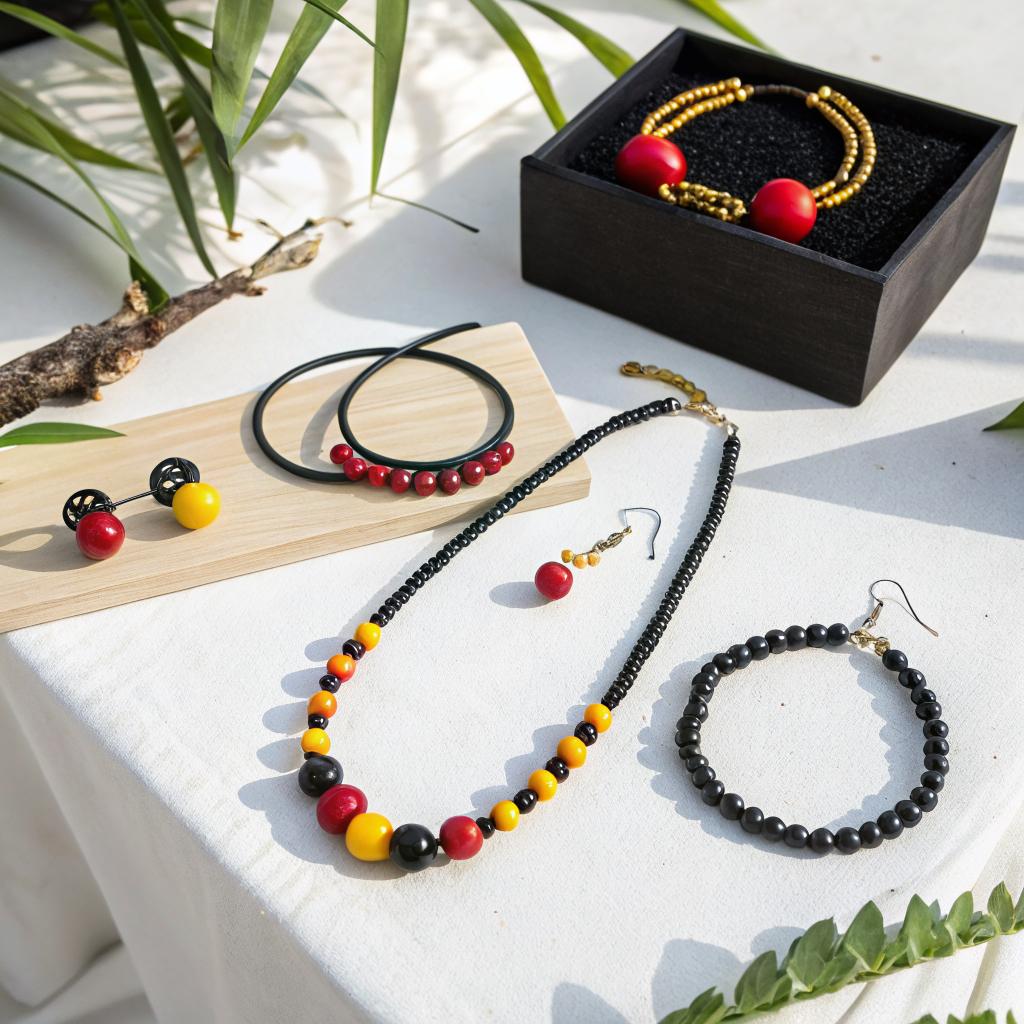
- Beads and textiles instead of bulky solid metal
- Resin or acrylic pieces that look bold but stay light
This helps not only with comfort, but with sensory sensitivity. People with autism, fibromyalgia, migraines, or neuropathy often feel small weight changes strongly. A light earring can be the difference between feeling polished and feeling overstimulated.
If jewelry makes you more aware of your body in a distracting way, it is probably working against your comfort, not with it.
2. Hypoallergenic and sensitive-skin friendly choices
Skin sensitivity is very common in caregiving and health communities. Medications, autoimmune issues, and aging can all make skin react to metals that used to be fine. Nickel, in particular, is a problem.
Many Black designers pay close attention to this. Not all, but more than you might expect. They use:
- Stainless steel or titanium posts
- 14k gold, gold fill, or gold plating over nickel free metals
- Sterling silver with clearly listed metal content
One thing I like about many smaller Black owned brands is their transparency. They tend to list materials plainly, because customers often ask. You can message them, say “my skin is very reactive” and get a real answer, not a vague “mixed metals” reply.
| Metal | Comfort level for sensitive skin | Things to watch for |
|---|---|---|
| Surgical stainless steel | Good for many people | Check if it is nickel free or low nickel |
| Titanium | Often very skin friendly | Can be more expensive, but light and strong |
| 14k gold (solid) | Usually gentle on skin | Very low karat or mystery “gold tone” can cause issues |
| Gold plated | Fine for many, if base metal is nickel free | Plating can wear off with heavy use |
| Brass | Varies a lot by person | May discolor skin if worn long hours |
3. Practical clasps and easy-on designs
Small clasps can be a real barrier for people with arthritis, tremors, or limited hand strength. Caregivers know this too well. You may be the one fumbling with tiny hooks in poor light, right before a morning appointment.
Some Black owned designers are moving toward:
- Magnetic clasps you can close with one hand
- Stretch bracelets that slip on and off
- Front closing necklaces, where the clasp is part of the design
Is every brand doing this? No. Some pieces still use tiny lobster clasps that make you squint and swear. But when you start to look, you find more brands quietly adjusting their hardware because customers ask for it. They listen to older buyers, disabled buyers, and busy parents who say, “I love this, but I cannot put it on alone.”
4. Shapes that work with mobility aids and medical gear
Jewelry interacts with other tools. Wheelchairs, canes, braces, oxygen lines, hearing aids. If a necklace repeatedly catches on a seat belt or tubing, you stop wearing it. That is why shape and length matter so much.
I have noticed more Black owned brands playing with:
- Flat, smooth pendants that do not dig into the chest
- Shorter necklaces that sit above medical ports
- Smaller hoops or huggies that do not hit headrests
This is not always marketed as “accessible” jewelry. Sometimes it is just sold as “everyday” or “minimal.” But the effect is similar. Pieces sit close to the body and move with you instead of snagging on everything.
When jewelry respects your movement, you stop thinking about it, which is often the highest form of comfort.
Style with meaning: why many caregivers choose Black owned brands
Comfort is one side. Style and meaning are the other. Many caregivers I talk to say they want something that feels like “them” even when life revolves around appointments, procedures, or endless routines. A small necklace or ring can be one of the few personal choices left in a day that feels controlled by medical needs.
Culture, memory, and identity in design
Black owned jewelry brands often draw on African, Caribbean, and African American history and art. That shows up in symbols, colors, and materials. You might see cowrie shells, Adinkra symbols, or references to braiding patterns. For some, that is about pride. For others, it is about feeling seen in a space where healthcare is often stressful and impersonal.
If you are sitting in a waiting room for the third time that week, a pair of earrings that reminds you of your grandmother or your hometown can feel grounding. It is not a fix. But it is something.
At the same time, there is a small tension here. Some statement pieces are not very practical for caregiving or medical settings. Long beaded strands, sharp geometric cuffs, oversized rings. They look great in photos but might not work for daily care tasks. I think the key is not to chase every trend, but to pick designs that mean something to you and still fit your body and routine.
Supporting wellness, not just appearance
More Black owned brands are talking about wellness, rest, and mental health. You see this in product descriptions that mention self care, affirmations, or ancestral strength. Some pieces have words like “breathe,” “soft,” or “protected” etched into them.
Does that change your day? Maybe not. But for a caregiver who hears mostly instructions and reminders, seeing “you are enough” around your wrist can be strangely steadying. Even if it is a little cliché, it can still help in a quiet way.
Jewelry choices that work with caregiving routines
Let me be honest: not all jewelry makes sense for caregiving. If you are lifting people, dealing with bodily fluids, or washing your hands fifty times a day, some pieces will just get in the way.
Still, you do not have to give everything up. You can adjust what you wear and when.
Necklaces that do not interfere with care
For caregivers and people with health conditions, good necklace choices often share three traits:
- Sit fairly high on the chest, to avoid ports or central lines
- Have smooth backs, so they do not press into skin when lying down
- Use strong but simple chains that will not easily snap
Short chains with small pendants work well for many. Some Black owned designers are also creating layered looks that still sit flat, so you can get a sense of style without a tangle of chains snagging on clothing or equipment.
Rings for people whose hands work all day
If you help with transfers, toileting, or cleaning, large statement rings can be risky. They can scratch the person you are caring for or tear gloves.
Comfortable options can include:
- Thin bands that sit close to the finger
- Adjustable rings you can loosen on swollen days
- Stackable sets you can remove or add depending on your tasks
Some caregivers keep one “symbol” ring, like an initial or birthstone, and skip the rest. It keeps the emotional connection without the bulk.
Earrings that respect sensitive ears and busy days
This might be the trickiest area. Earrings look small, but they are near masks, hearing aids, phones, and headrests.
I have noticed that many Black owned brands make smaller “huggie” hoops and stud clusters that stay put. They give a bit of style while:
- Not pulling on the earlobe
- Not catching on hair, masks, or stethoscope tubing
- Being easy to sleep in, if needed
If you or the person you care for lies down often, big hoops can dig into the side of the head. In that case, flat studs or small hoops that hug the ear tend to be more comfortable.
Practical tips for choosing Black owned jewelry when comfort is a priority
Now the more concrete part. How do you actually pick pieces that will work for you or your loved one, especially if you order online and cannot try them on first?
Measure, then check product details
Before buying, get a tape measure and run a quick check:
- Necklace: Measure where you want it to fall, taking into account ports, lines, or clothing necklines.
- Wrist: Wrap the tape where a bracelet will sit, then add about 0.5 to 1 inch for comfort.
- Fingers: If swelling is common, measure at the largest part of the finger.
Then look at the product description. Many smaller Black owned brands share exact chain lengths, pendant size, and metal type. If they do not, a quick message often works. If a shop will not answer basic questions about length or materials, I would skip it, especially for someone with health concerns.
Think about washing, sanitizing, and cleaning
Caregiving involves frequent handwashing and contact with cleaning products. Some pieces will dull or peel faster when exposed to soaps and sanitizers. If you know you cannot remove rings or bracelets often, look for sturdier metals like stainless steel, titanium, or solid gold.
You might also set small rules for yourself, such as:
- Remove rings before heavy cleaning.
- Keep a simple pendant for daily wear, and save delicate pieces for non-care days.
- Wipe down jewelry regularly to remove lotion, sweat, and soap residue.
Match designs to sensory needs
People on the autism spectrum, with ADHD, or with certain neurological conditions often experience strong sensory responses. Some like the feel of a weighted necklace or a smooth stone to touch. Others feel overwhelmed by textures or movement.
Jewelry can help here, if you pick carefully:
- For people who fidget, a smooth pendant or spinner ring can be calming.
- For people who are easily overstimulated, avoid dangling earrings or noisy charms.
- For people who chew on things, skip long necklaces that can reach the mouth.
Some Black designers now build “worry” or fidget elements into pieces on purpose. They may not always label them as such, but you can see it in sliding beads, movable rings, or smooth stones placed where a thumb naturally rests.
How comfort friendly Black owned jewelry can support mental health
Jewelry will not fix burnout, illness, or long term stress. That would be unrealistic. But it can play a small role in how you feel about yourself during hard seasons.
A reminder you are more than a diagnosis or a role
Caregivers often say their identity shrinks. Life turns into schedules and pills. People with chronic conditions say the same. Your body becomes a project that other people discuss. In those moments, putting on a piece that reflects your heritage, your taste, or your values can feel quietly defiant.
A pair of beaded earrings that remind you of your family. A pendant with a symbol from your culture. A simple ring that matches your favorite color. These choices may seem small from the outside, but from the inside, they say, “I am still me.”
Rituals that take 30 seconds but change the tone of the day
There is something about a short morning ritual that does not revolve around medical tasks. Making tea, stretching, or choosing a piece of jewelry. The act itself can give a small sense of control.
A 30 second choice, like which earrings to wear, can remind you that there is more to your day than care plans and symptom tracking.
I am not saying jewelry is self care on its own. That would be too simple. But rituals around it can anchor you. For some people, putting on a certain bracelet before a long day in clinic becomes a habit that says, “I have done this before, I can do it again.”
Questions to ask brands before you buy
Since we are talking about comfort and health, a bit of cautious questioning makes sense. Here are a few things you can ask Black owned designers before making a purchase, especially for someone with medical or sensory needs.
Questions about materials
- “What metals are used in the posts and hooks?”
- “Is this nickel free?”
- “Will this discolor if worn daily in contact with water and soap?”
If the answer is vague or defensive, that is a red flag. Honest brands will often say things like, “Most people with sensitive skin do fine with this, but if you react to brass, this might not be for you.” That level of nuance actually builds trust.
Questions about fit and weight
- “How heavy are these earrings compared to a standard stud?”
- “Can you share a photo of the necklace on someone, so I can see where it falls?”
- “Is the ring band thick or thin? My fingers swell by evening.”
Smaller Black owned brands often run their own social media and answer DMs themselves. This can work in your favor. You get real-world photos and honest feedback. It is not always polished, but it is human.
Examples of comfort features to look for
To make this more concrete, here is a simple comparison table of features that matter for comfort in jewelry, especially in caregiving or health related settings.
| Jewelry type | Comfort friendly features | Features to be cautious with |
|---|---|---|
| Earrings | Small hoops, huggies, flat studs, hypoallergenic posts | Heavy dangles, large hoops, rough backs |
| Necklaces | Shorter chains, smooth pendants, magnetic clasps | Very long chains, sharp pendants, tangled layers |
| Bracelets | Soft cords, stretch designs, flat profiles | Bulky cuffs, pieces with sharp corners, stiff metal links |
| Rings | Thin bands, rounded edges, adjustable sizing | Large stones, high prongs, sharp engraving |
A small note on cost and priorities
There is a practical side many articles skip: budget. Some Black owned jewelry is luxury level and pricey. Other pieces are quite affordable. If you are paying medical bills or work reduced hours to care for someone, cost matters a lot.
I do not think anyone should feel pressure to buy expensive items to “treat themselves.” Sometimes the kindest thing you can do is not spend money you do not have. That said, a small, well made piece that does not irritate your skin or snag on clothing can be more useful than a drawer full of cheap items that hurt to wear.
So it might make more sense to pick one reliable necklace or ring, save up for it, and wear it often, rather than chase a lot of low quality pieces.
Common questions about comfort and Black owned jewelry
Is Black owned jewelry only for Black people?
No. Black ownership describes who runs the brand, not who can wear the pieces. Many non Black customers buy from Black designers. At the same time, a lot of designs carry cultural meaning, so it helps to respect that. If a piece uses symbols you do not recognize, it is fair to read about them first.
Can I wear jewelry during caregiving or medical work?
It depends on the setting. Some hospitals and care facilities have strict rules about jewelry, especially for staff. At home, you have more freedom, but comfort and safety still matter. Rings can scratch, long necklaces can be grabbed by confused or agitated patients, and earrings can be pulled. Choosing low profile, smooth, and sturdy pieces can cut down these risks.
How do I know if a brand really cares about comfort, not just style?
Look at how they talk about their products. Do they mention weight, materials, sensitivity, or daily wear? Do customer reviews talk about comfort, not only appearance? Are they willing to answer questions about adjustments, custom lengths, or hardware changes? These signs matter more than glossy photos.
What if I want something symbolic, but the person I care for cannot wear jewelry safely?
You are not wrong to worry about this. Safety comes first. If bracelets or necklaces are not safe, you can still keep meaning nearby through small keychains, bag charms, or pinned pieces on clothing that cannot be reached easily. Some brands will turn a pendant design into a key charm or badge clip if you ask.
Is it worth paying more for hypoallergenic metals?
If you or your loved one has had skin reactions before, then yes, it often is. Inexpensive pieces that cause rashes, itching, or infection end up unused. Paying more once for a well made, safe piece can cost less over time than buying multiple cheap ones that sit in a drawer.
What is one small change I can make today if I want more comfort in my jewelry?
If you wear earrings, start there. Swap heavy, long styles for a small, lightweight pair that you can forget about during the day. Notice how your ears feel by evening. That simple switch can show you how much comfort affects your mood and energy. From there, you can decide if it is worth changing other pieces too.