
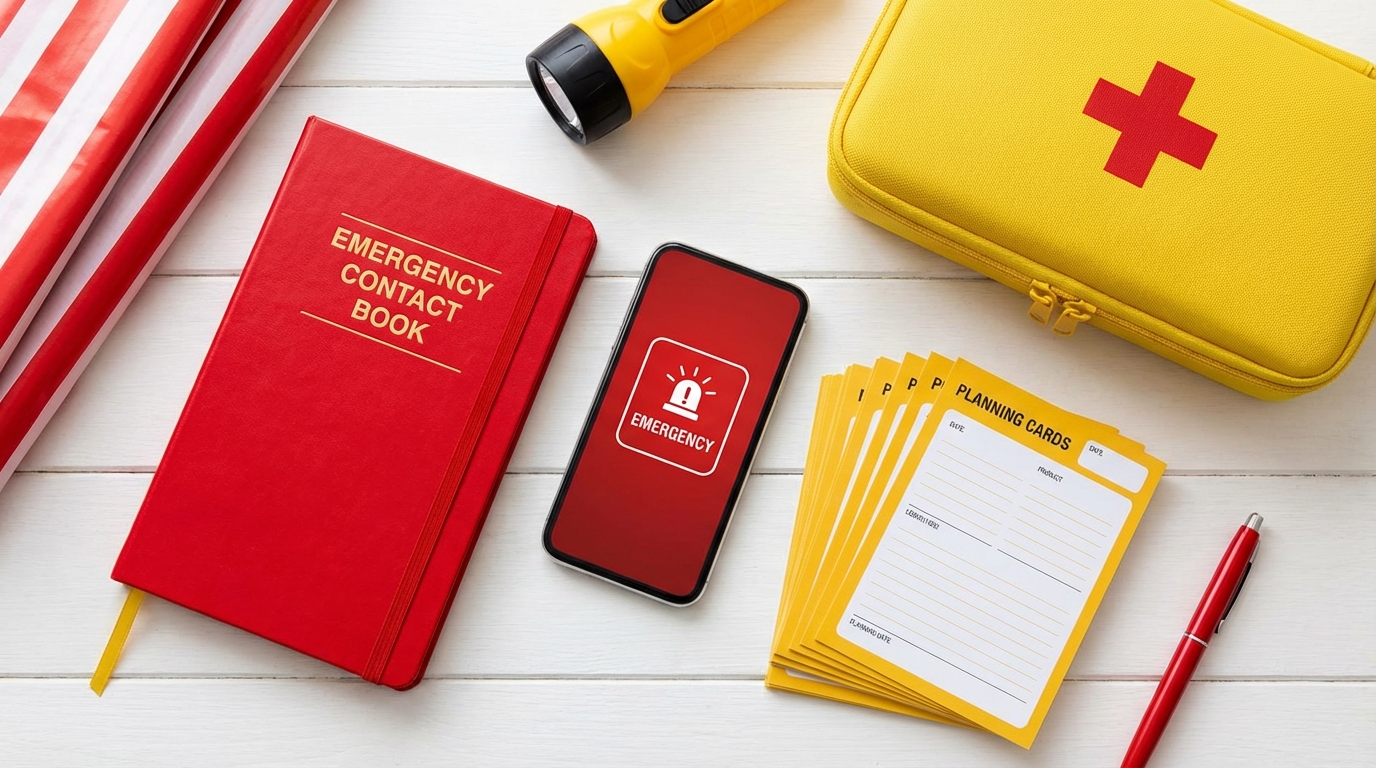
It is a heavy feeling when you suddenly realize that if something went wrong tonight, you are not completely sure who would be called, who would have the house key, or who knows your loved one’s medical needs. Many of us carry that quiet worry in the back of our minds, and it can keep us awake long after the house is quiet.
The gentle answer is that a simple, written emergency contact strategy can ease a great deal of that worry. You do not need a complex system. You need a small group of trusted people, clear roles, up‑to‑date contact details, and easy‑to-find information about your loved one. When we write it down, share it, and practice it once in a while, we give ourselves and our loved ones a calmer path through a hard moment.
What an Emergency Contact Strategy Really Is
Many caregivers think an emergency plan has to be a thick binder or a legal document. In most homes, an emergency contact strategy is simply a shared understanding, backed up in writing, about who gets called first, second, and third, and what each person will do.
An emergency contact strategy is a written guide that says: “When there is a crisis, here is who we call, how we reach them, what they know, and what each of us will do.”
At its heart, it usually covers four things:
- Who your trusted emergency contacts are
- How to reach each person (more than one way)
- What each person is willing and able to do
- Where key information and supplies can be found
For caregivers, this is not just about ambulances and hospitals. It is also about:
- What happens to the person who needs care if you are the one who becomes ill or injured
- Who can step in for a night, a weekend, or a longer time if needed
- How children, neighbors, or home aides will know what to do if something goes wrong when you are not there
The Emotional Weight Behind Emergency Planning
Before we go deeper into steps and details, it helps to name the feelings that often come up:
- Fear of “what if I am not there”
- Guilt about asking others for help
- Worry about being a burden
- Overwhelm at one more thing on an already long list
These feelings are very common. Many caregivers avoid emergency planning because writing things down makes the “what ifs” feel too real. Some of us also had past emergencies where things did not go smoothly, and we carry that memory.
It may help to think of this not as planning for something terrible, but as giving your family a kinder, smoother path if life takes a sharp turn. We are not calling a crisis into being by planning for it. We are simply lighting the hallway in case we have to walk there.
Planning for emergencies is not a sign that you expect the worst. It is a sign that you care deeply about reducing fear and confusion for the people you love.
Step 1: Choose and Prepare Your Core Emergency Contacts
The first part of any emergency contact strategy is the people. These are the ones you trust to receive a late‑night call, speak up for your loved one, or step in with care.
Who Should Be on Your Emergency Contact List
Try to have at least three types of contacts:
- Primary caregiver or decision maker: Often this is you, but you should name a backup person as well.
- Family or close friends: People who know your loved one, can be reached quickly, and are willing to take practical steps.
- Professional or community contacts: Doctor, specialist, home health agency, care manager, or a trusted neighbor or community leader.
A simple list might look like this:
| Role | Name | Primary Contact | Backup Contact |
|---|---|---|---|
| Primary decision maker | Anna (daughter) | Cell, email | Home phone |
| Secondary decision maker | Mark (son) | Cell, work phone | |
| Practical support | Neighbor, Mrs. Lee | Cell, doorbell | |
| Primary doctor | Dr. Rivera | Office phone | On‑call line |
What to Ask Each Person
Instead of simply adding someone to a list, you might want to speak with them calmly and clearly. You can say something like:
“I am putting together an emergency plan for Mom. Would you be comfortable being one of our emergency contacts? This would mean that if there is a crisis and I cannot be reached, the hospital might call you, or you might be asked to help with something concrete, like staying with her for a few hours or calling other family members.”
During this talk, try to clarify:
- When they are most reachable (daytime, evenings, weekends)
- What kind of tasks they feel comfortable taking on (phone calls, staying with your loved one, driving, caring for pets, watching children)
- Anything they cannot do (lifting, driving at night, handling medical decisions)
It is kinder for everyone if limits are clear ahead of time. Someone who cannot physically lift your loved one may still be very helpful with phone calls or sitting at the hospital.
Include Backup Contacts
Life happens. People travel, lose phones, or have their own emergencies. It helps to have:
- At least one backup for medical decisions
- At least one backup for hands‑on care
- At least one neighbor or nearby contact who can arrive quickly
Think of your list as a small team instead of a single hero. No one person needs to carry everything.
Step 2: Gather the Information Emergency Contacts Will Need
Once you have your people, the next step is to make sure they have what they need to be effective. Emergency staff, like paramedics and nurses, move fast and need clear, brief information.
The best emergency information is short, clear, and easy to find, even for someone who is upset or tired.
Key Medical and Personal Details
Try to keep the medical part to one or two pages, focused on what affects emergency care.
| Category | What to Include |
|---|---|
| Basic identity | Full name, date of birth, address, photo if possible |
| Medical conditions | Current diagnoses (such as diabetes, heart disease, dementia, epilepsy) |
| Medications | Names, doses, times, reason for each, prescribing doctor |
| Allergies | Medication, food, or latex allergies, plus what happens during a reaction |
| Doctors | Primary doctor, key specialists, with phone numbers |
| Equipment | Devices like oxygen, feeding tube, insulin pump, wheelchair, with basic notes |
| Communication needs | Hearing aids, vision issues, language preference, memory difficulties |
| Behavior or safety concerns | Wandering, agitation, falls, anything first responders should know |
You might also include:
- Insurance card copies
- Preferred hospital or clinic
- Religious or cultural considerations that might affect care
Legal and Permission Documents
This part can feel intimidating, but it often makes a real difference in crisis care. The exact papers depend on where you live, but many families find the following helpful:
- Health care proxy or medical power of attorney
- Living will or advance directives
- Consent forms for schools or camps (for children)
- Custody documents, guardianship papers, or letters of authority for adults who need support with decision making
If your loved one has any limits on what care they want (for example, “Do Not Resuscitate” or “Do Not Intubate”), these need to be clear, written, and shared with your emergency contacts and doctors. Verbal wishes alone are very hard to support in an emergency setting.
A “One Page” Snapshot for Quick Use
Many caregivers find it helpful to create a very short summary that can be handed to paramedics, school nurses, or emergency staff.
A one‑page snapshot might hold:
- Name, date of birth, and photo
- Top 3 diagnoses that affect emergency care
- Top 5 current medications
- Allergies
- Top 3 contacts with phone numbers
- Key notes like “nonverbal,” “risk of seizures,” or “needs Spanish interpreter”
You can keep this page on the fridge, in a wallet, and saved as a photo on your phone.
Step 3: Create Clear Contact Chains for Different Situations
An emergency contact strategy works better when it matches the actual situations that come up. An asthma flare at school is different from a winter power outage at home or a fall in the bathtub.
Instead of one big plan for “emergencies,” many families find it calmer to have a few small, clear mini‑plans for the most likely situations.
Common Crisis Scenarios To Plan Around
You might want to sketch out contact chains for:
- Medical crisis at home: chest pain, seizure, serious breathing trouble, fall, severe pain
- Medical crisis away from home: at school, day program, work, church, community center
- Caregiver crisis: you become ill, injured, or unable to provide care suddenly
- Environmental crisis: fire, flood, storm, evacuation, extended power outage
- Safety or behavioral crisis: wandering, severe agitation, suicidal thoughts, violence toward self or others
For each of these, you can write a short contact chain: who is called first, second, and third.
Designing Simple Contact Chains
Here is an example for a “medical crisis at home”:
| Step | Action | Who Is Involved |
|---|---|---|
| 1 | Call emergency services (such as 911) | Whoever is present |
| 2 | Call primary caregiver | Neighbor, home aide, family member on site |
| 3 | Primary caregiver calls backup decision maker | Listed backup person |
| 4 | Primary caregiver or backup contacts doctor | Doctor’s office or on‑call service |
| 5 | Secondary contact arranges care for pets/children/home | Neighbor or relative |
For a “caregiver crisis” plan, the steps might look different:
- If caregiver is taken to hospital, paramedics look for emergency plan folder near door or on fridge.
- First listed contact comes to the home to stay with the loved one.
- Backup contact is called if the first contact does not answer in 5 to 10 minutes.
- Neighbor is asked to watch for emergency services, unlock the door, or guide them in.
The key is to avoid long lists of “maybes.” Try to define:
- One first call
- One second call
- One backup path if those fail
Using Phone Trees and Group Messages Carefully
Many families use group texts or messaging apps during emergencies. These can be helpful, but they can also create confusion and anxiety if everyone writes at once.
To reduce stress:
- Choose one “information person” in the group who will send updates.
- Encourage others to avoid rapid questions or rumors in the group during the crisis.
- Use simple, time‑stamped updates: “10:15 am: Ambulance on the way. 10:40 am: At the hospital. Waiting for doctor.”
You might even write in your plan who that “information person” is for your family.
Step 4: Make Information Easy To Find and Hard To Lose
Many plans fail not because they are poorly written, but because no one can find them when they are needed. In a tense moment, people forget where things are kept. So part of our strategy is simplifying access.
In a crisis, you want to be able to say to anyone who helps: “The plan is on the fridge, in the red folder, and on my phone.”
Paper Copies in the Home
You might choose two or three steady places where you always keep updated copies:
- Refrigerator door: Many emergency responders look there first.
- Near the main entrance: On a small shelf or in a marked folder.
- Bedside table: For nighttime emergencies.
You can store these in a simple clear plastic sleeve or a colored folder labeled “Emergency Information.”
Each paper set might include:
- One‑page snapshot
- Longer medical details
- Contact list and contact chains
- Key legal forms or a note that says where they are stored
Digital Copies and Phone Settings
Technology can support your plan if kept simple:
- Save photos of the one‑page snapshot, insurance cards, and key forms in your phone.
- Use the “Emergency” or “Medical ID” feature on smartphones, which paramedics can often see from the lock screen.
- Create a shared folder (email or cloud service) with trusted family members for important documents.
If you use digital tools, remember that in some crises power or web access can fail. That is why paper backups in the home still matter.
Keys, Codes, and Access
Even the best plan does not work if no one can get in the door.
Consider:
- A lockbox with a spare key, with the code shared only with trusted people
- Written instructions for any alarm systems, kept in the emergency folder
- Notes about gate codes or special entry instructions for gated communities or apartment complexes
If your loved one is in a building with security staff, you might want to share with them, in writing, who is allowed entry in an emergency.
Step 5: Special Considerations for Different Care Situations
Every caregiving situation has its own challenges. A good emergency contact strategy respects those differences.
For Older Adults Aging at Home
Common concerns:
- Falls and fractures
- Strokes or heart problems
- Confusion, wandering, or medication errors
You might find it helpful to:
- Make sure the plan lists mobility aids (walker, cane) and fall risks.
- Note any memory issues or dementia clearly so hospital staff understand behavior.
- Arrange with a neighbor to check in if lights are off at unusual times or mail builds up.
It can also help to include a gentle “This is who I am” note from the older adult, with preferred name, brief life story, and what usually comforts them. This can help staff who meet them for the first time in a stressful situation.
For Children With Health or Developmental Needs
Parents of children with health needs often become experts overnight. In a crisis, though, new staff may not know your child at all.
Your emergency contact plan might include:
- A brief description of your child’s communication style and what helps them feel safe.
- A short “to do” and “not to do” list for staff (for example, “Explain each step before touching,” or “Loud voices increase anxiety.”).
- Notes about how pain or illness tends to show up in your child (some children do not cry even when in serious pain).
Coordinate with:
- School nurses and teachers
- Bus drivers or transit staff
- Daycare or respite providers
Share a shorter version of the plan that matches the setting, and keep emergency contacts consistent across all these places.
For Adults With Disabilities or Mental Health Conditions
Some crises involve both safety and health concerns, such as:
- Suicidal thinking or self‑harm
- Severe anxiety or panic
- Psychosis or intense mood swings
- Episodes of aggression or unsafe behavior
Your plan might include:
- Preferred mental health crisis lines or local mobile crisis teams.
- Clear instructions about when to call emergency services and when to call a therapist or crisis line first.
- De‑escalation steps that usually help: quiet room, particular words to avoid, people who calm the person.
Some families find it helpful to write a short “crisis plan” together with the person, if they are able and willing. This can honor their voice while also guiding helpers when emotions are high.
For Caregivers Supporting Multiple People
If you care for more than one person, emergencies can be complex. Who stays with whom? Who goes to the hospital? Who picks up the children?
To simplify:
- Create a separate one‑page snapshot for each person, clearly labeled.
- Use a shared contact list, but separate contact chains, for each person.
- Identify at least one friend or family member whose main role is caring for “everyone else” when one person needs the hospital.
You might also write on each plan what should happen to the others during a crisis. For example, “If Dad goes to the ER, neighbor will keep the children for up to 24 hours” or “If Mom is hospitalized, cousin will check on Grandma in the evening.”
Step 6: Talk Through the Plan With the People It Affects
A written plan only comes alive when people know about it. This can mean some tender conversations, but they often bring relief.
Sharing the plan is not just about logistics. It is also about reassuring your loved one: “You are not alone. We have thought this through together.”
Speaking With the Person You Care For
If your loved one can participate in decisions, it is kind to include them. You might talk through:
- Who they feel most comfortable having as an emergency contact
- Which hospital or doctor they prefer
- What worries them most about emergencies
You can frame it gently:
“I want to make sure that if something unexpected happens, people know what matters to you. Can we talk a little about who you would like us to call and how you would like to be cared for?”
For someone with memory loss, it can still help to speak calmly about what you are doing, even if they cannot remember details later. The tone of care and respect still reaches them.
Speaking With Children About the Plan
Children sense tension, even if we try to hide it. A simple, honest talk can help.
You might say:
“If there is ever an emergency and I need to go to the hospital, Aunt Maria or Mr. Jones next door will come stay with you. You will not be alone. We have written down their numbers on the fridge so you can find them.”
Avoid making children responsible for adult decisions, but do teach them:
- How to call emergency services in your area
- Where the emergency contact list is
- Who they should call first if they are scared and safe at home
Speaking With Trusted Neighbors and Community Members
Many caregivers underestimate how willing neighbors can be to help in specific, defined ways. You are not asking them to take over all care, just to be part of a safety net.
Possible roles for neighbors:
- Meeting emergency responders at the door
- Holding a spare key in a sealed envelope
- Calling you if they see something concerning (like wandering or a fall outside)
A brief, respectful conversation can go a long way:
“I am caring for my father who sometimes gets confused. I have an emergency contact list on my fridge. If you ever see paramedics at our house when I am not home, would you be comfortable letting them know there is a folder on the fridge with medical and contact information?”
Step 7: Practice and Update the Plan Gently Over Time
Emergency planning is not something we do once and forget. Lives change. Phone numbers, medications, and living situations shift.
It is more realistic to think of your emergency strategy as a living document that you revisit kindly every few months, rather than a project you must “finish” forever.
Simple Ways To Practice the Plan
Practice does not have to be dramatic. You can:
- Walk a family member through the emergency folder, showing them where everything is.
- Role‑play a short call: “Mom fell. I am calling you now. Here is what I need you to do.”
- Have a brief “check in” with children: “Remind me, where is our emergency list?”
Some families set a gentle reminder every 6 months to:
- Review contact details
- Update medications and diagnoses
- Check that legal documents are still accurate
You can tie this to a familiar date, such as the start of spring and fall, or a birthday.
Watching for Signs the Plan Needs Changes
You might want to adjust your plan when:
- There is a new diagnosis or major change in health.
- Family members move closer or farther away.
- There is tension or conflict that makes a contact less reliable.
- Your loved one changes their care preferences.
You do not need to rewrite everything. Often, small edits are enough: a new phone number, an added backup person, or a note about a new medication.
Step 8: Caring for Yourself While You Carry This Responsibility
Creating and maintaining an emergency contact strategy asks you to imagine difficult moments. It can stir up fear, sadness, or a sense of pressure. It may help to give yourself the same gentleness you offer to others.
You might:
- Work on the plan in short sessions instead of all at once.
- Share the load with a trusted friend or family member, so you are not doing all of this alone.
- Pause and notice your breathing if you feel overwhelmed while writing.
Some caregivers find comfort in sharing the finished plan with someone outside the family, such as a support group leader, a faith leader, or a care coordinator. It can be reassuring to hear, “This looks clear. You have done well. There is a structure here.”
You are not expected to think of every single possibility. No plan covers all scenarios. What matters is that you have built a path through the most likely storms, with people by your side and information that speaks for you when you cannot.
You do not need a perfect emergency plan. You need a simple, shared strategy that makes a hard day a little less frightening for everyone involved.
Putting It All Together: A Gentle Checklist
To help you move from ideas to action, here is a calm, step‑by‑step outline you can follow at your own pace.
Emergency Contact Strategy Checklist
- People
- Choose at least one primary and one backup decision maker.
- Add at least one nearby neighbor or community contact.
- Confirm who is willing to help with which tasks.
- Information
- Create a one‑page medical and contact snapshot.
- Gather a fuller list of conditions, medications, and doctors.
- Collect or locate legal and permission documents.
- Scenarios
- Write simple contact chains for crises at home, away from home, caregiver crisis, and environmental crisis.
- Decide who will manage text updates or group calls during an emergency.
- Access
- Place copies of the plan on the fridge and near the main entrance.
- Store digital copies on your phone and, if possible, in a shared folder.
- Arrange keys or lockbox access for trusted people.
- Communication
- Talk through the plan with your loved one, at their level of comfort.
- Explain key parts to children in simple, reassuring language.
- Share needed parts with neighbors, schools, or community supports.
- Maintenance
- Set a reminder to review the plan twice a year.
- Update after any major health or family changes.
- Practice small parts of the plan so they feel more natural.
Each step you take brings more clarity and steadiness to your household. You may still feel nervous when you think of emergencies, and that is human. At the same time, your future self, standing in a busy hallway or by a hospital bed, will be able to reach for this plan and feel the quiet support you have already put in place.