We reach a point in life where the house feels both full and not quite enough. We want our mum, dad, or other loved one close, but we also want them to keep their privacy, independence, and sense of self. It is not easy to balance all of that, especially when health or mobility is starting to change. A garage conversion can feel like a kind, practical way to create a safe little home within your home, but it also carries a lot of questions and worries.
The gentle answer is: yes, many families do turn a garage into a comfortable annex for an elderly relative, and it can work very well. To do this safely and thoughtfully, we need to look at planning rules, building standards, accessibility, heating, safety, and the emotional side of everyone suddenly living this close together. When you move slowly, involve your relative in the decisions, and get proper technical advice where needed, a garage can become a warm, dignified space rather than just a converted storage room.
A good annex is not just a bedroom next to your house. It is a small, safe, and respectful home for someone you care about.
Is a Garage Conversion Right for Your Family?
Before we think about walls, ramps, and grab rails, it helps to pause and ask whether a garage annex really fits your loved one’s needs, your home, and your budget. Many of us jump straight to “We will make it work” because we love this person, but it is kind to check the practical side too.
Thinking about your relative’s current and future needs
When we care for an older relative, we often focus on what they need today. Healthy enough to walk with a stick. Able to manage the toilet alone. Still cooking simple meals. But health can change, and a good annex plan will respect that possibility.
You might ask yourself and them:
- How steady are they on their feet right now? Do they use a stick, frame, or wheelchair?
- Do they manage the stairs in their current home, or do they avoid them?
- Do they wake often at night, have confusion, or wander?
- Do they have memory problems, like early dementia, that may change how safe it is to use appliances or go outdoors alone?
- Do they need help with washing, dressing, or using the toilet?
- What do their doctors expect over the next few years?
Planning for “future you” and “future them” now can prevent rushed, stressful changes later on when everyone is already tired.
If your relative is likely to need hoists, a wheelchair, or significant help within a few years, it is kind to design the annex around that now, rather than build something that becomes unsuitable very fast.
Will the garage space actually work as a home?
Garages vary a lot. Some are large doubles in good condition, others are narrow, damp, and dark. Before you commit, it may help to stand in the garage and imagine a day in your relative’s life.
Ask yourself:
- Is there enough width and length for a bedroom, small sitting area, and either a kitchenette or easy access to your main kitchen?
- Can you add a shower room or wet room, or is there room nearby in the main house?
- How easy will it be to insulate the space so it is warm, quiet, and dry?
- Is the floor level with the rest of the house or will you need ramps and raised floors?
- Are there safe routes for plumbing, drainage, electricity, and heating?
If the garage feels very cramped, very low, or badly built, a full annex might be a struggle. In some cases, a partial conversion (for example, a downstairs bedroom and bathroom inside the main house) works better than trying to squeeze everything into a small garage.
Finances, benefits, and long term care plans
Money and care can be uncomfortable topics, but they strongly affect whether a garage annex is a kind choice in the long run.
Things to think about:
| Topic | Questions to ask |
|---|---|
| Budget | How much can we truly spend without causing hardship? Do we have room for unexpected costs? |
| Care support | Will we rely on family only, or will paid carers visit? Does the layout support visiting carers? |
| Benefits | Could building an annex affect any means-tested benefits or council tax? Do we need advice? |
| Future care home needs | If our relative later needs residential care, will the annex still add value or use to the home? |
| Resale and family plans | Do we plan to stay in this house long term? Would another family find an annex helpful or awkward? |
Speaking with an independent financial adviser who understands social care rules in your country can prevent difficult surprises later.
Planning Permission, Regulations, and Legal Points
Once you feel that a garage annex might be right for your family, the next step is to understand the rules that protect safety and set standards. This can feel dry, but it helps keep your relative warm, safe, and protected in law.
Planning permission and “granny annexe” status
Each country, and often each local area, has its own rules. Here is the general picture many families face:
- Basic garage conversion into an extra room for the main house sometimes falls under “permitted development” and may not need full planning permission, as long as the use stays part of your main home.
- Self-contained annex with its own entrance, kitchen, and bathroom is more often treated as a separate dwelling. This may need full planning permission and sometimes can affect council tax or other local taxes.
Before you spend money on plans, speak with your local planning office or a qualified architectural professional. A short early conversation can save a lot of stress later.
Key issues planners often look at:
- Will the annex be used only by family or could it be rented out as a separate flat?
- Is the design in keeping with the street and neighbours?
- Will there be extra parking or access concerns?
Many councils are more comfortable if the annex is clearly part of the family home, with some shared space, and used by relatives who depend on the main family.
Building regulations: safety, insulation, and access
Even if full planning permission is not needed, most garage conversions still need to meet building regulations. These are rules that look at structural safety, fire safety, insulation, ventilation, and sometimes accessibility.
Areas to check with your builder or local building control:
- Foundations and structure: Many garages were not built to be living spaces. Floors might need raising, walls strengthening, or damp-proofing installed.
- Insulation: Good insulation in walls, floors, and roof helps your relative stay warm without huge bills. It also cuts down noise from the rest of the house or the street.
- Windows and exits: There should be safe escape routes in case of fire, usually a door to the outside and a window that opens wide enough.
- Electrics and heating: These must meet current standards. Extra sockets, safe lighting, and controls that your relative can easily reach really matter.
- Ventilation and damp control: Older people can be more sensitive to cold and damp. Proper vents and extractor fans in bathrooms and kitchens reduce condensation and mould.
For an elderly person, it is kind to go beyond the bare legal minimum, especially around insulation, soundproofing, and step-free access.
Legal status, council tax, and “annex discount”
When an annex is self-contained, some councils treat it as a separate dwelling for council tax. At the same time, many areas offer discounts if an annex is lived in by a dependent relative.
Things you might check with your council or a local adviser:
- Will the annex be banded separately for council tax?
- Is there an exemption or discount for a relative over a certain age, or for disabled family members?
- Does the annex need any special registration as a separate property if it has its own kitchen and entrance?
These rules vary, so local advice is very helpful.
Designing a Safe and Comfortable Annex Layout
This is where many families start to feel a bit lighter. We move from rules and forms into thinking about warmth, light, comfort, and dignity. When we design slowly, with the older person involved, the annex can feel like a gift rather than a compromise.
Single level, step free wherever possible
For an older person, every step, threshold, and narrow gap can become a barrier. A good annex layout tries to remove as many of those small obstacles as possible.
You might aim for:
- A single-level space with no internal steps.
- No sudden changes in floor height or trip lips between rooms.
- Wide clear pathways, ideally 900 mm or more, to allow for walking frames or wheelchairs.
- Doors wide enough for a wheelchair (many families aim for at least 800 mm clear opening).
If the garage floor sits lower than the main house, you can often raise the floor inside the annex, and then design a gentle ramp or very shallow step at the entrance.
Balancing privacy and connection
Your relative might want to feel both included and independent. That is a delicate balance, but floor plan choices can help.
Possible approaches:
- Shared main entrance, private internal door: Safer in terms of security and often easier with planning, but still lets your relative come and go with you.
- Separate external door plus internal connecting door: Offers more privacy and can be emotionally helpful, especially if your relative values independence strongly.
- Shared kitchen, private living / sleeping area: Good for relatives who do not wish to cook much, and reduces fire risk.
Where possible, invite your relative to walk through the proposed layout on paper, and gently ask, “Would you feel comfortable here on a winter evening? Could you reach everything you need?”
Natural light, noise, and comfort
Garages are often gloomy. Turning them into bright, calm spaces can have a big effect on mood, sleep, and confusion, especially for those living with dementia or low mood.
You might look at:
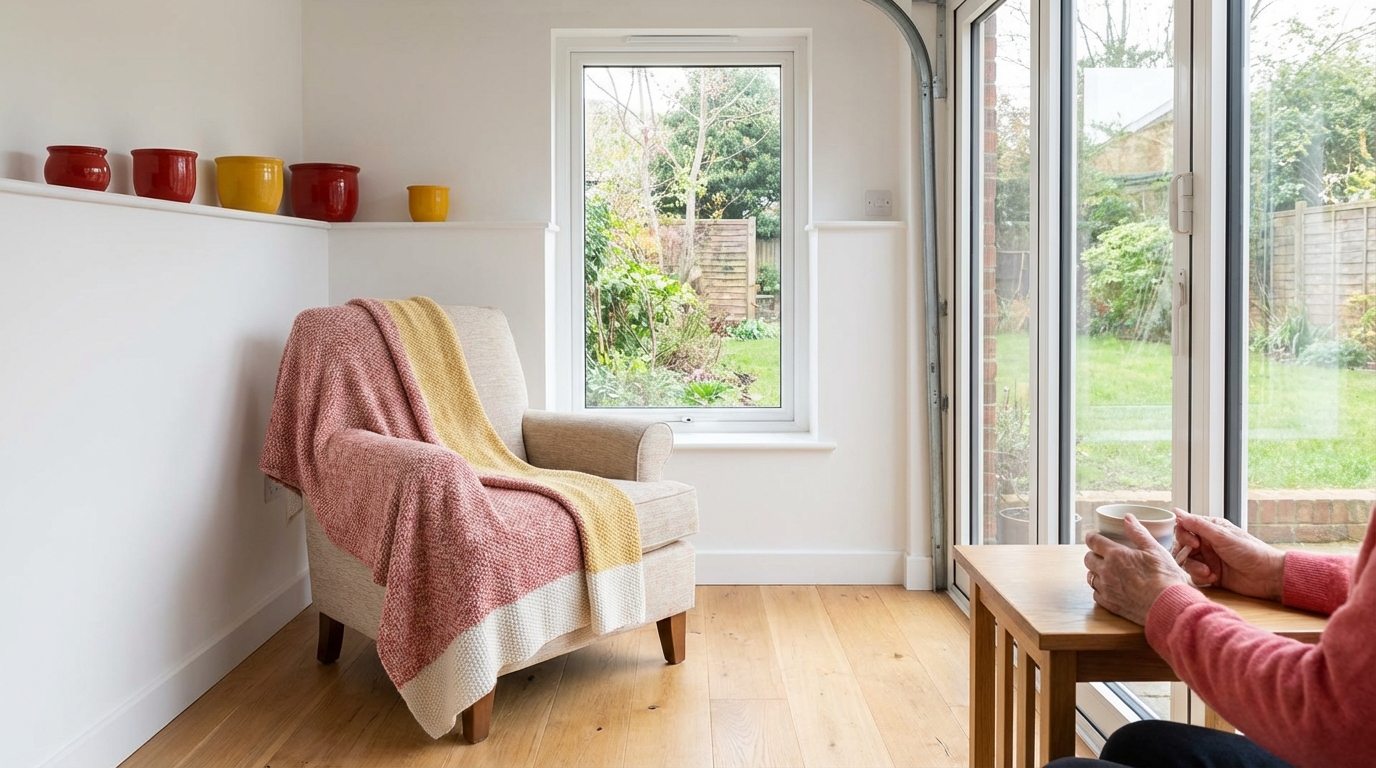
- Adding a large window or patio door where the garage door used to be.
- Using frosted or high windows facing neighbours, with clearer views into the garden if possible.
- Good curtains or blinds that are easy to open and close.
- Soundproofing between the annex and the main house, especially if young children or teenagers will be nearby.
Older people often feel the cold. Underfloor heating with good controls, or properly sized radiators, can keep the space comfortable without needing them to handle complex systems.
Accessibility Features that Make Everyday Life Easier
Accessibility is less about “making things accessible for disabled people” and more about reducing friction and risk so daily life feels calmer and safer. Small choices add up.
Floors, doors, and circulation space
Simple, practical ideas:
- Non-slip flooring: Vinyl or rubber flooring can give grip, is easier to clean than carpet, and can be run through from bedroom to bathroom without thresholds.
- Matt surfaces: Shiny floors can be confusing or look like wet patches, which can worry some older people.
- Clear layouts: Avoid tight corners, awkward alcoves, or furniture jutting into walkways.
- Lever handles: Door and window handles that push down rather than twist are much kinder for arthritic hands.
Lighting, switches, and sockets
Good lighting can prevent falls and ease anxiety.
You might find it helpful to:
- Install bright, even ceiling lights with warm white bulbs.
- Use two-way switches at both ends of the bed and near doors.
- Add night lights in the corridor and bathroom so your relative never has to feel along the walls in the dark.
- Place sockets at mid height so they do not need to bend to reach them.
For someone with dementia or eyesight problems, clear contrast between walls, floors, and door frames can help them make sense of the space.
Bathroom and wet room design
For many carers, the bathroom becomes the most stressful room if it is not well thought out. A safe, easy bathroom supports dignity and reduces the risk of falls.
Key features to consider:
- Level access shower or wet room: No tray lips if possible, with a gentle slope to a drain.
- Shower seat: Either a fold-down wall seat or a stable shower chair.
- Grab rails: On both sides near the toilet and in the shower. These should be professionally attached into solid walls, not into plasterboard alone.
- Raised height toilet: Slightly higher toilets or raised seats can make sitting and standing easier.
- Space for a helper: Enough room beside the toilet and shower for a carer to assist, if needed.
Many local occupational therapists will visit your home and give free advice on bathroom layouts and equipment. Their eye for small details can spare you costly changes later.
Storage and furniture
Clutter is a common cause of trips. At the same time, your relative will want their familiar things nearby.
You might:
- Plan built-in storage where possible, so floors stay clear.
- Choose a bed height that allows sitting, pivoting, and standing without strain.
- Make sure wardrobes and drawers open fully without blocking doors or walkways.
- Keep everyday items at waist to shoulder height.
If hoists or hospital beds may be needed later, you can leave extra space around the bed and use strong ceiling joists suitable for future ceiling track hoists if needed.
Heating, Ventilation, and Comfort for Older Bodies
Many older people feel cold easily, tire quickly in hot weather, and can be more sensitive to damp or poor air quality. A warm, steady indoor climate is a quiet gift we can offer through good design.
Insulation and draught proofing
You may find it helpful to:
- Insulate walls, floors, and the roof well above the basic standard where possible.
- Seal gaps around windows, doors, and pipes.
- Use quality doors and windows with good seals.
This not only keeps them warm but can keep noise from the street or main house out, which can help with sleep and confusion.
Heating systems that are easy to control
Think about how your relative will control the temperature:
- Simple thermostats with clear numbers and large buttons.
- Radiators with easy-to-turn valves or covers to prevent burns.
- Underfloor heating that keeps the space gently warm without very hot surfaces.
- Limit the need for portable heaters, which can be a fire and trip risk.
If your relative is living with dementia, you may want to set limits on how far controls can be turned, to avoid very high or very low temperatures.
Ventilation, condensation, and indoor air quality
Fresh air is often forgotten when we focus on warmth. Garages can suffer from damp, so this is especially relevant.
You might plan for:
- Trickle vents in windows to allow gentle background airflow.
- Extractor fans in bathrooms and kitchen areas with a quiet, automatic overrun after use.
- Regular checks for condensation on windows and walls, with early fixes before mould grows.
If your relative has lung problems, asthma, or COPD, you may want to discuss air filtration or dehumidifiers with their medical team, especially in older properties.
Safety and Emergency Planning
Caring for an elderly relative at home often brings a low-level worry: “What if something happens when I am not there?” Designing safety into the annex can ease that feeling for everyone.
Fire safety and exits
Fire safety is not just about alarms; it is about how an older person will actually escape if needed.
Points to think about:
- Interlinked smoke alarms so that if one sounds, they all do, including in the main house.
- Heat alarm in any kitchen area, to reduce false alarms from cooking steam.
- Clear, wide path to an exit that does not rely on stairs.
- Doors that can be unlocked easily from the inside without small keys, but that still keep the annex secure.
If your relative has memory problems, you might need to balance easy escape with preventing unsafe wandering at night. This sometimes means having key safes, sensor lights, or door alarms that notify you if they leave at unusual times.
Fall prevention and emergency call systems
Falls are one of the most common reasons older people end up in hospital. Many can be prevented or made less serious with planning.
You might:
- Keep floors clear, level, and well lit.
- Avoid small rugs or loose mats, or secure them firmly.
- Add grab rails or handrails where there is any step or change of level.
- Consider a personal alarm pendant or wrist band connected to a telecare service.
- Use bed or chair sensors if your relative is very frail or at high risk of falls, so you are alerted when they get up at night.
Having a clear written plan for what happens if they fall or become unwell gives both you and them a shared sense of safety.
Security without making them feel trapped
Security concerns often grow when a ground floor section of the home has an external door and large windows.
You might find a balance through:
- Good quality locks on windows and doors.
- Outdoor lighting with motion sensors, set so they do not constantly flash at wildlife or passing cars.
- Simple alarms or camera doorbells that you can check from your phone, if that feels appropriate.
- Privacy film on lower parts of windows facing public areas.
Where possible, keep controls simple and clear, so your relative is not frightened by unfamiliar technology.
Emotional and Family Dynamics
A garage conversion affects more than the building; it changes family life. The physical closeness, the caring roles, and the shift in independence can stir up strong feelings on all sides.
Talking openly before building starts
Tension often arises when expectations are unspoken. Before you commit to plans, it can help to sit together and ask some gentle but honest questions:
- How much privacy does your relative want and need?
- Who will do most of the day-to-day caring, and how do they feel about it?
- What house rules would help everyone feel respected? For example, knocking before entering each other’s spaces.
- How will you handle disagreements, such as noise, visitors, or pets?
You may not solve every issue in one talk, but you can start to name them, which eases pressure later on.
Supporting independence instead of creating dependence
It is very easy, once someone lives in your annex, to do everything for them. While this comes from love, it can slowly reduce their independence and confidence.
When designing the annex, you might ask:
- Can they safely make a drink or snack themselves?
- Is it safe for them to lock and unlock their own door?
- Do they have their own address or doorbell, so friends feel welcome to visit them?
- Can they reach the garden or a small sitting spot without asking for help?
Small acts of choice and control help older people maintain a sense of self, which often supports mental health and dignity.
Caring for the carers
Bringing an elderly relative into your home can be a loving act, but it can also be tiring. Broken sleep, constant questions, and the emotional weight of watching someone decline can all take a toll.
It may help to:
- Share the caring load, if possible, between family members.
- Explore respite options, such as day centres or short stays, early on.
- Set gentle boundaries, for example, having agreed “quiet hours” overnight except for emergencies.
- Seek support: carers groups, online forums, or counselling can give a safe space to vent and be heard.
A well designed annex should support both the older person’s dignity and the carer’s wellbeing. If you are breaking, the arrangement is not working, no matter how perfect the building looks.
Working with Professionals: Who Can Help?
You do not have to carry all the design and technical decisions alone. A small team, even for a modest project, can protect your loved one and you.
Architects, designers, and surveyors
Depending on the complexity of the project, you might:
- Use an architect or architectural technician to design a layout that meets building rules and accessibility needs.
- Ask a structural engineer to check any changes to walls, floors, or roofs.
- Hire a surveyor if the garage seems damp, cracked, or unstable.
When choosing a professional, you may want to ask:
- Have you worked on annexes for older or disabled people before?
- Are you familiar with local planning expectations for granny annexes?
- Can you suggest features that support safe ageing in place?
Occupational therapists and health professionals
Occupational therapists understand how health, mobility, and the environment interact. In many areas, you can ask for an occupational therapy assessment through your relative’s doctor or local authority.
They can advise on:
- Placement and types of grab rails.
- Bed height, chair type, and layout.
- Future equipment needs, such as hoists or wheelchairs.
- Bathroom design and shower access.
Their input can shift a design from “nice” to “truly practical for this person.”
Choosing builders who respect care needs
Not all builders are used to working in homes with frail, anxious, or confused older people nearby. Building work is noisy and messy, which can be unsettling.
You might look for:
- Clear written quotes, including timeframes and what is included.
- References from other domestic projects.
- Willingness to discuss quiet times, safe access routes, and dust control, especially if your relative will still be living in the main house during works.
Phasing work, or arranging temporary respite for your loved one during the noisiest stages, can protect their health and peace of mind.
Costs, Funding, and Support Options
Every family wants the best for their relative, but budgets are real. Knowing the rough cost picture and any help available can guide your decisions.
Typical cost areas in a garage annex conversion
Costs vary widely by region and design, but you can expect spending in several key areas:
| Cost category | What it can include |
|---|---|
| Structural work | New floor, foundations checks, removal of garage door, new walls, roof changes. |
| Insulation and finishes | Wall, floor, roof insulation, plastering, painting, flooring. |
| Windows and doors | Front door, patio or French doors, new windows, locks, security features. |
| Plumbing and bathroom | Pipes, drainage, boiler connection, shower, toilet, sink, wet room floors. |
| Electrics and heating | Rewiring, lighting, sockets, alarms, heating system, thermostats. |
| Accessibility features | Ramps, grab rails, wider doors, built-in storage, special equipment. |
Getting quotes from at least two or three builders, using a common set of drawings, can help you compare fairly.
Grants, disability funding, and council support
In some countries and regions, grants or loans are available to help adapt a home for an older or disabled person. These might include help for:
- Level access showers and wet rooms.
- Ramps and handrails.
- Widened doorways.
- Stairlifts or hoists.
These schemes often require an assessment from an occupational therapist and may have means tests. You might start by speaking to:
- Your local council’s housing or adult social care team.
- Charities that support older or disabled people in your country.
- Your relative’s doctor or social worker, who may know local routes.
Even if grants do not cover the whole conversion, they may help with the most specialist accessibility parts.
Alternatives to a Full Garage Annex
It can feel discouraging if you discover that a full annex is too expensive or complex. That does not mean there are no options for safer, closer living.
Internal ground floor adaptations
Instead of a stand-alone annex, some families:
- Convert a dining room or second reception room into a ground floor bedroom.
- Add a small bathroom or wet room under the stairs or in a utility area.
- Create a private “suite” with a bedroom, bathroom, and small sitting corner within the main house.
This can be less costly and may feel more connected emotionally, which can be helpful for those who are anxious or have dementia.
Shared living with supported services
For some, the best balance is to have the older person in a nearby flat or bungalow, while paid carers and family visit regularly. This lowers the building burden but can involve ongoing care costs.
It is reasonable to step back and ask:
- Are we trying to force this garage to become something it cannot comfortably be?
- Would another house move, or a different type of housing, actually serve this person better?
Choosing not to build an annex is not a failure. It is a decision that can still come from love and realism.
Bringing It All Together
Creating an annex from a garage for an elderly relative is both a building project and a family journey. We are not only moving walls; we are reshaping daily life, boundaries, and care roles.
If we:
- Listen carefully to our relative’s wishes and fears.
- Plan for future needs, not only for today.
- Respect planning and building rules for safety.
- Design with accessibility and warmth at the heart.
- Look after our own wellbeing as carers.
then a simple garage can quietly become a small, steady home that brings everyone a little more peace.
The real success of a garage annex is not measured only in square metres or property value, but in how safe, respected, and connected your loved one feels when they close their own door at night.