
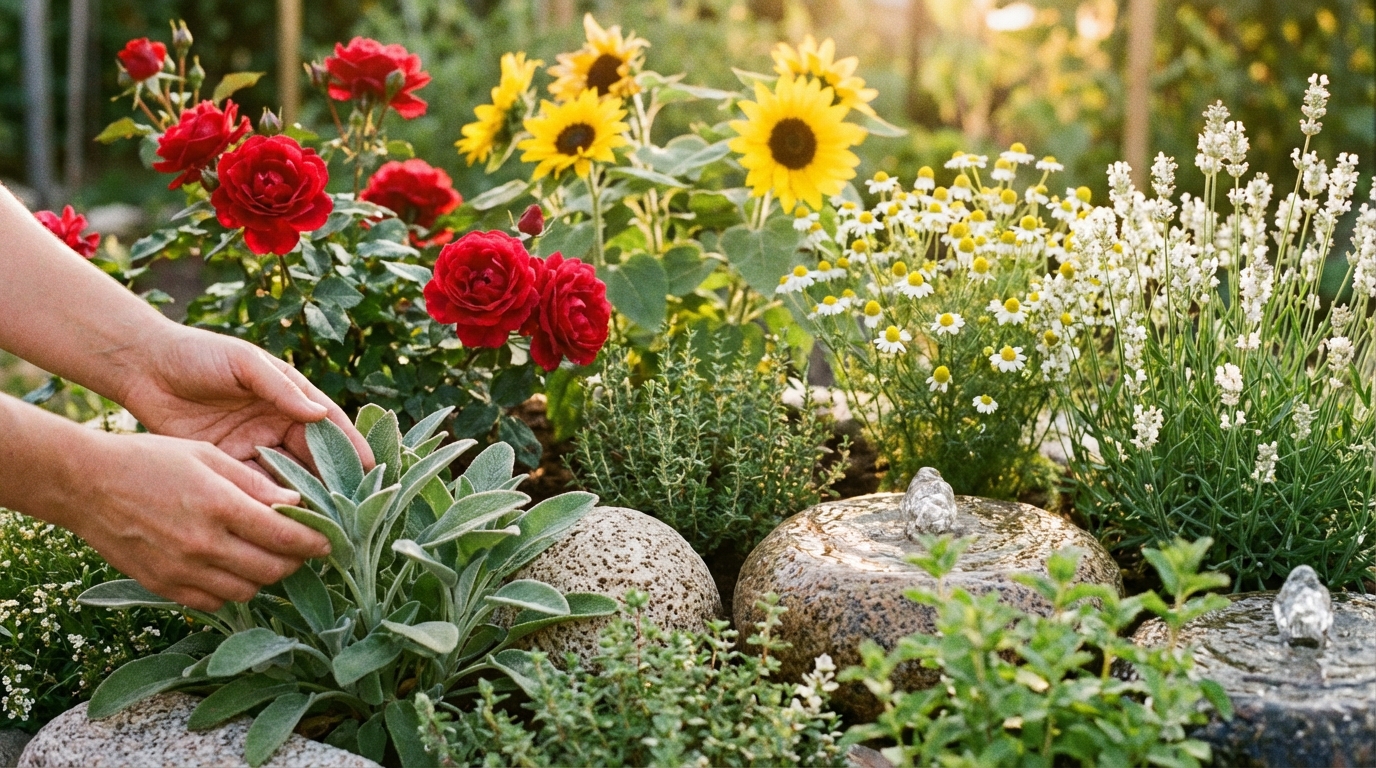
It is not easy to carry worry, stress, and sadness through the day and still try to be strong for everyone around us. Many of us reach a point where we long for a small place that feels calm, safe, and gentle on our hearts. A garden, even a very small one, can become that place.
In simple terms, a sensory garden is a space, indoors or outdoors, that is planned to comfort all our senses: sight, sound, touch, smell, and sometimes taste. For mental health, the most helpful steps are to start very small, choose plants and features that feel comforting to you personally, and create a routine of visiting and gently caring for the space, rather than worrying about making it look perfect.
A sensory garden for mental health is less about how it looks to others and more about how it feels to you on a hard day.
We can treat this garden as a kind friend, not another task on our to-do list. The goal is not a magazine picture. The goal is that when you step into it, breathe in, and look around, your shoulders drop just a little and your mind softens a bit around the edges.
What a Sensory Garden Is (and What It Is Not)
A sensory garden is any space prepared with the senses in mind. It can be:
- A few pots on a balcony or porch
- A raised bed in the backyard
- A window box with herbs
- Indoor containers near a sunny window
- A small corner of an existing yard, gently rearranged
It is not:
- A design project to impress visitors
- Something that must be “finished” before it can help
- Only for people who already love gardening
- Only for people who have perfect mobility or energy
If you can water a plant with a cup, sit near it, and notice how it grows week by week, you are already gardening.
For caregivers, people living with disability, chronic illness, or mental health challenges, a sensory garden can feel like a shared companion. It gives a gentle reason to step outside or to the window, even for a few minutes, and it never expects you to be cheerful. It just lets you be.
How Gardening Supports Mental Health
We often feel pressure to “fix” our mental health quickly. Gardening moves at the pace of nature, which can be soothing when life feels rushed or heavy. Several gentle processes are at work.
Soothing the nervous system
When we:
- Run our fingers through soil
- Smell herbs like lavender or mint
- Listen to leaves moving in the wind
- Watch bees move from flower to flower
our bodies often shift into a calmer state. Breathing tends to slow down, heart rate may ease, and our thoughts can feel less crowded.
Researchers have found that contact with nature can:
| Effect | How a garden supports it |
|---|---|
| Lower stress hormones | Sitting in greenery or gently tending plants can reduce stress levels over time. |
| Improve mood | Soft colors, natural light, and plant scents can lift low mood, even briefly. |
| Support focus | Looking at plants and natural patterns can help resting attention, which may help with burnout and fatigue. |
| Support sleep | Gentle daylight exposure and calming routines in the garden can support better sleep rhythms. |
A sense of purpose without pressure
Many of us, especially caregivers, carry the heavy feeling that we must always do more. Gardening offers small, low-stakes tasks:
- Watering
- Snipping dead flowers
- Harvesting a few leaves of an herb
- Wiping soil off a pot
These are simple, clear actions with visible results. The plant looks a little fresher. A flower opens. A new leaf appears.
A plant never asks if you did it perfectly. It simply responds, slowly and honestly, to the care you are able to give that day.
For someone living with depression, anxiety, grief, or caregiver burnout, even tiny visible signs of life and change can ease the sense that days are all the same.
Gentle movement and grounding in the body
Gardening can involve a lot of movement, but a sensory garden does not have to. It can be adjusted for many bodies:
- Raised beds at wheelchair or seated height
- Light containers that can be placed on a table
- Tools with long handles to avoid bending
- Short visits, just a few minutes at a time
Simple acts like placing your hands on warm soil, lifting a small watering can, or quietly walking a few steps along a garden path can help you feel more present in your own body.
Planning a Sensory Garden That Feels Safe and Soothing
It is easy to get overwhelmed at the planning stage. Many people feel they need to know everything before starting. That can freeze us in place, especially when we are already tired.
You might find it helpful to start by asking just three questions:
- Where can I reach plants most easily?
- What do I personally find comforting to look at, smell, hear, or touch?
- How much energy and time do I honestly have most weeks?
Your answers form the base of your plan.
Choosing the right place
Think about the person who will use the garden most. That may be you, or it may be someone you care for.
Here are some simple location options:
| Location type | Ideas | Helpful for |
|---|---|---|
| Sunny windowsill | Small pots of herbs, trailing plants, scented geraniums. | People who cannot go outside easily; apartments. |
| Balcony or porch | Container garden with mixed flowers and herbs, a chair, and a small table. | Those with limited space but some fresh air. |
| Patio or paved area | Raised troughs, wheeled planters, and a clear walking path. | Wheelchair users, walkers, or those with balance concerns. |
| Yard corner | Simple bed with a few shrubs, perennials, and mulch for low upkeep. | People who can walk a little further and want a small retreat. |
You might find it helpful to notice:
- Where the light falls during the day.
- Where noise from traffic or neighbors is lower.
- Where you already walk by, such as near the kitchen door.
A garden that is in your daily path is easier to tend, especially on hard days.
Setting gentle goals
Rather than planning a complete design, you might choose 1 or 2 simple goals for the first season:
- “I want a place to sit outside with one nice scent and one calming sound.”
- “I would like three herbs I can touch and smell when I feel anxious.”
- “I want my mother to be able to roll her wheelchair up to some flowers.”
A small, honest goal that you can reach is more healing than a large plan that lives only in your mind.
Once the first pieces are in place, you can gently add more over time.
Engaging All Five Senses in Your Garden
A sensory garden does not need to stimulate every sense in every corner. That can feel overwhelming. Instead, you can create small “zones” that focus on particular senses or combine two or three in a calm way.
Sight: Gentle colors and natural shapes
For mental health, bright, intense color everywhere can be tiring. Many people find softer, repeated patterns more calming.
You might find it helpful to:
- Choose a simple color palette, such as blues and purples, or whites and soft pinks.
- Add greenery with different leaf shapes, such as ferns, hostas, or grasses.
- Repeat the same plants in several spots, instead of many different kinds.
- Include at least one plant that looks interesting in winter, such as evergreen shrubs or grasses.
Table of gentle visual choices:
| Feeling you want | Plants and features |
|---|---|
| Calm and cool | Blue salvia, lavender, silver-leaved plants, gray pots, water feature. |
| Soft and comforting | Pale pink roses, white daisies, lambs ear, wooden pots, soft lighting. |
| Quiet energy | Green grasses, hostas, ferns, moss, stones, simple clay pots. |
If sight is sensitive for you or a loved one (for example, migraine, sensory overload, or autism), you might keep some areas visually simpler, with fewer colors and shapes, to rest the eyes.
Sound: Quiet, natural, and adjustable
Sound can comfort or overwhelm. For some, any extra sound can be too much. For others, gentle sound helps block harsh noise and brings ease.
Soothing sound ideas:
- A small recirculating fountain with adjustable flow.
- Wind chimes with a soft, low tone (metal tends to be bright, bamboo or wood often softer).
- Plants that rustle, such as ornamental grasses or bamboo in containers.
- Birdsong, encouraged by a feeder, birdbath, or native plants.
You might find it helpful to test each sound. Stand or sit in the space when it is quiet. Add one sound at a time and notice:
- Do I feel more relaxed, or more tense?
- Is this sound still pleasant after a few minutes?
- Do I need a way to turn it off on loud days?
For people who are easily startled or sensory sensitive, it can be helpful to:
- Keep fountains very gentle, with water falling only a short distance.
- Hang wind chimes where they can be easily taken down on windy days.
- Avoid features that clatter or bang in strong wind.
Smell: Comforting scents, not strong perfume
Fragrance is powerful. It can bring back memories, calm the mind, or trigger headaches and nausea. Every person responds differently, so this part of the garden needs care and patience.
Common calming scented plants:
- Lavender
- Chamomile
- Rose (choose light, sweet scents)
- Lemon balm
- Mint (in pots; spreads quickly in soil)
- Thyme
- Scented geranium (lemon, rose, or mint types)
Ways to keep scent gentle and kind:
- Plant strongly scented plants in pots, so you can move them if needed.
- Avoid planting many heavy-scented plants close together.
- Place the most fragrant plants where you can reach them easily, but not right under a bedroom window if migraine is an issue.
- Test one scented plant at a time for a week before adding more.
The goal is not to fill the air with fragrance, but to give you the choice to lean in and breathe in a soothing scent when you want it.
Touch: Textures that invite gentle contact
Touch can ground us when our thoughts are scattered. A sensory garden can offer many safe, pleasant textures.
Comforting plant textures:
- Lambs ear (soft, fuzzy leaves)
- Soft mosses in shaded, damp spots
- Succulents with smooth, cool leaves
- Grasses that can be brushed lightly by hand
- Herbs like rosemary or lavender for both texture and scent
Non-plant textures:
- Polished stones or pebbles in a bowl or along a path
- A smooth wooden handrail or bench arm
- Textured stepping stones or tiles
- A small tray of sand or fine gravel for fingers to trace patterns
You might find it helpful to place touch-friendly plants at reachable height. For many people that means:
- At the edge of a path, so you can reach them while seated or standing.
- In raised beds or pots on a table.
- Near a favorite chair or resting spot.
For people with sensory seeking behaviors, such as some autistic adults or children, it can help to provide safe outlets for strong touch, such as:
- Sturdy grasses or shrubs that can handle more handling.
- Non-breakable objects like rubbery plant labels or textured stones.
Taste: Safe, simple, and supervised when needed
Edible plants can bring joy, but they also need careful choosing, especially for:
- Children who might put anything in their mouths.
- People with dementia who may be confused about what is safe.
- Pets who chew plants.
Safer edible choices:
- Herbs: mint, basil, parsley, chives, thyme, oregano.
- Small fruits: strawberries in pots, cherry tomatoes (watched closely around children).
- Edible flowers: nasturtiums, pansies (only when you are sure of the type and that no chemicals were used).
Plants to avoid in a taste-friendly garden include any that are toxic if eaten. Many common ornamentals are not safe to eat. You may want to check each plant with a reliable source such as a local extension service or poisoning prevention list.
If someone in your home might eat plants without checking, it can be safer to grow only clearly edible plants in that person’s garden area and keep other plants separate.
Designing for Accessibility and Different Abilities
Mental health and physical health often meet in the garden. A truly supportive sensory space welcomes the body that you or your loved one have right now, not a future, “healthier” body.
Paths and movement
You might find it helpful to think about how stable and clear your garden paths feel. Tripping or struggling to move around will not support calm.
Simple path guidelines:
- Keep main paths at least wide enough for a wheelchair or walker, if needed.
- Use firm, even surfaces where mobility aids can roll, such as compacted gravel, pavers, or firm wood decking.
- Avoid loose, deep gravel that is hard to walk in.
- Keep hoses and tools stored away from walking areas.
- Provide handrails or stable furniture near steps or slopes when possible.
For someone with low vision or dementia, you might also:
- Choose path materials that contrast in color with surrounding soil or grass.
- Keep the route simple, with gentle curves rather than confusing branches.
- Use clear landmarks, such as a brightly colored pot or a familiar statue.
Raised beds and seating
Raised beds help many gardeners with back pain, joint issues, or fatigue. They also make a garden feel more “reachable.”
Ideas:
- Bed height around knee to mid-thigh for those who prefer to stand.
- Table-height beds for wheelchair users or those who prefer to sit.
- Wide bed edges that can double as seats.
Seating is not an extra. It is an essential part of a mental health garden.
You might include:
- At least one sturdy chair with armrests to help with standing up.
- A bench in a shaded spot.
- A small side table for a drink, book, or medication.
- Cushions stored indoors or in a box, to bring out on dry days.
Think of seating as permission to rest. The garden is not asking you to work every time you visit. It is inviting you to simply be there.
Energy levels and cognitive load
Mental health conditions and caregiving can drain energy and focus. A garden that demands constant decisions and heavy maintenance can become one more burden.
To protect your energy, it can help to:
- Choose mostly low-care plants that do not need daily attention.
- Use mulch on beds to reduce weeding.
- Install simple irrigation like soaker hoses or drip lines if budget allows.
- Keep plant labels or a small map so you do not have to remember what is where.
- Limit the total number of different plant types at first.
If you care for someone with memory challenges, you might:
- Choose plants that are resilient if over- or under-watered.
- Create simple routines, such as “water the pots on the patio every morning.”
- Use visual markers, like colored tape on pots that need more water.
Choosing Plants for a Mental Health Sensory Garden
Plant choice will depend on your climate, space, and access to water and light. Still, there are patterns that often work well for gentle, healing spaces.
Low-maintenance sensory plants
Below is a sample list. You can adapt it to your region with help from local gardeners or plant nurseries.
| Sensory focus | Plants to consider | Notes |
|---|---|---|
| Sight (calming) | Hosta, fern, ornamental grasses, lavender, coneflower, hydrangea. | Choose 3 to 5 repeat plants for unity. |
| Smell (gentle) | Lavender, thyme, lemon balm, rosemary, chamomile. | Grow in pots if you are unsure how strong the scent will feel. |
| Touch | Lambs ear, soft moss, succulents, ornamental grasses. | Place at reachable height and within easy reach of a seat. |
| Taste | Mint, basil, parsley, strawberries, cherry tomatoes. | Confirm plant safety; supervise children and those with dementia. |
| Sound | Bamboo in pots, taller grasses, seed heads that rustle. | Control spread of bamboo with pots or barriers. |
Plants to use carefully or avoid
For mental health and safety, you may want to avoid plants that:
- Have sharp thorns or spines near paths or seating (such as some roses, barberry, cacti in walking areas).
- Cause strong skin reactions, such as poison ivy, giant hogweed, or plants that ooze irritating sap.
- Are highly toxic if eaten, especially near children or vulnerable adults.
- Trigger strong allergies for you or household members.
Examples of plants to investigate before planting:
- Oleander
- Foxglove
- Yew
- Some types of daffodil and tulip bulbs (toxic if eaten)
- Plants with strong pollen that worsen seasonal allergies
If you are not sure, you might bring plant names to your doctor, pharmacist, or local extension office, especially if someone in your home takes medications that interact with herbs.
Creating Gentle Routines in the Garden
A sensory garden supports mental health not only through its design, but through how we relate to it over time. Many people find that short, regular visits are more healing than rare, long sessions.
Daily or weekly rituals
You might find it helpful to create one or two simple rituals. They do not need to be formal. They are simply small, repeated actions that your mind begins to associate with safety and calm.
Examples:
- Morning check: Walk or roll slowly through the garden, notice one new change, and say it out loud, such as “The rose has a new bud.”
- Evening wind-down: Sit in your favorite spot for five minutes, feel the air on your skin, and count three smells or sounds.
- Worry release: When a worry circles your mind, step outside, touch the soil or a plant, and imagine placing the worry there for a moment.
- Gratitude round: Once a week, name three things in the garden you are glad to see, no matter how small, such as a single leaf or a spider web.
In a world where many things feel out of our control, returning to the same simple garden act each day can become a quiet anchor.
Gardening with others
Community in the garden can ease loneliness and build gentle connection. This can include:
- Inviting a neighbor or friend to share tea in the garden.
- Gardening alongside a family member in silence, each doing small tasks.
- Joining a nearby community garden where plots are shared.
- Connecting online with other gardeners who share mental health journeys.
For caregivers, the garden can be a shared space where the person you care for can participate at their own level:
- Filling a watering can together.
- Gently brushing hands over soft plants.
- Sitting and naming colors, shapes, or smells.
These shared moments can give both people a break from the roles of “carer” and “person being cared for” and let you simply be humans next to growing things.
Adapting a Sensory Garden for Different Mental Health Needs
Different conditions can call for slightly different choices in a sensory garden. These are not medical treatments, but small supports that may help.
Anxiety and panic
For people who live with anxiety:
- Keep the design simple and uncluttered, with clear lines and open sightlines.
- Use calming colors like blues, greens, and whites.
- Provide stable, comfortable seating in a spot with a clear view of the surroundings.
- Add grounding features, such as a bowl of smooth stones or a textured wall that can be touched.
- Include plants with gentle scents that do not feel overwhelming.
Simple grounding practice in the garden:
- Look for 5 things you can see.
- Touch 4 things you can feel.
- Listen for 3 sounds you can hear.
- Notice 2 scents you can smell.
- Taste 1 safe, small thing, such as a mint leaf or sip of water.
Depression and low motivation
When depression is strong, even tiny tasks can feel heavy. A garden for depression support should:
- Require very low upkeep.
- Look peaceful even if you do not tend it for a while.
- Be visible from indoors, so it can be enjoyed from bed or a chair.
- Offer at least one spot where sun can fall on your face if that feels pleasant.
Plant choices:
- Hardy shrubs and perennials that can handle some neglect.
- Groundcovers and mulch instead of large bare soil areas.
- Self-seeding annuals that bring surprise flowers without replanting.
You might find it helpful to set tiny, very gentle goals, such as:
- “Today I will open the window for 2 minutes and look at the garden.”
- “This week I will water the pots once.”
Dementia and memory loss
Gardens can bring comfort to people with dementia, but they need careful design for safety and calm.
Supportive features:
- Enclosed or clearly bounded space to reduce wandering risk.
- Simple, circular paths that lead back to the same place.
- Raised beds for ease of access.
- Clear, large signs with simple words or pictures for areas like “Seat,” “Herbs,” or “Door.”
Sensory elements:
- Familiar plants that the person may remember from earlier life.
- Safe edibles such as herbs and simple fruits.
- Comforting textures and scents in easy reach from a chair.
For safety, you might:
- Avoid toxic plants completely in the accessible area.
- Keep tools locked or out of easy reach.
- Use fences or gates that are secure but not upsetting.
Autism and sensory sensitivity
People on the autism spectrum can have strong sensory needs, either seeking or avoiding certain inputs.
You might find it helpful to:
- Create both “quiet” and “active” areas in the garden.
- Offer clear control over sensory features, such as switches for fountains.
- Provide steady, predictable lighting instead of flashing or very bright lights.
- Include a cozy corner with a seat that feels enclosed on at least one side.
For sensory seekers:
- Provide safe textures like grasses, lambs ear, and sturdy shrubs.
- Add simple, repeating patterns in paths or tiles.
For sensory avoiders:
- Keep scents mild and spaced out.
- Avoid sharp sounds such as loud metal wind chimes.
- Use soft colors rather than strong contrasts.
Indoor Sensory Gardens for Limited Space or Mobility
Not everyone has access to an outdoor yard. A sensory “micro garden” can still work on a balcony, windowsill, or table.
Windowsill or shelf gardens
You can create a simple indoor sensory space with:
- 3 to 5 small pots of herbs or houseplants.
- A tray beneath to catch water and protect surfaces.
- Small stones or shells around the pots for touch and sight.
- A comfortable chair or cushion nearby.
Soothing indoor plant ideas:
- Pothos or philodendron (trailing greenery).
- Spider plants.
- Small ferns.
- Herbs like basil or mint if there is enough light.
You can add soft sound with:
- A small tabletop fountain.
- Recorded nature sounds played quietly on a speaker.
Container and balcony gardens
On a balcony or small patio, containers can create a rich sensory space without garden beds.
Helpful tips:
- Use larger pots when possible; they dry out less quickly.
- Group pots together to create a sense of a small “room.”
- Include at least one taller plant to add privacy and shade.
- Check weight limits for balconies, especially with large containers and wet soil.
Even one pot with a single plant that you care about can serve as a daily point of calm and connection.
Keeping Things Manageable Over Time
Many people start gardens with enthusiasm, then feel guilt when life becomes busy and plants struggle. A mental health garden should not become another measure of “success” or “failure.”
Accepting change and imperfection
Plants will:
- Bloom and fade.
- Grow and die back.
- Sometimes fail, even when you do everything “right.”
These changes can gently teach us that loss and renewal are part of life, not signs that we are doing everything wrong.
You might find it helpful to:
- Let some leaves stay on the ground to feed the soil.
- Accept a certain amount of wildness as part of the garden’s character.
- Replace plants that make you feel sad or guilty with ones you enjoy more.
Asking for help when needed
There is no shame in needing help to keep a garden going. This might include:
- Asking a family member to handle heavy tasks like moving soil or lifting pots.
- Hiring a gardener once or twice a year for pruning and major cleanup if budget allows.
- Swapping help with a neighbor: you water their plants when they travel; they help with weeding once a season.
- Joining a local group that shares seeds, tools, and knowledge.
If your mental health worsens and you cannot tend the garden for a time, it is not a personal failure. Many plants will survive a break. Others can be replaced when you are ready. The garden is a living thing, not a fixed project.
Bringing Mindfulness into the Garden
You do not need a formal meditation practice to experience mindfulness in a sensory garden. Simply paying attention, gently and without judgment, can support mental health.
Simple mindful exercises
You might try one of these, slowly:
-
Breathing with a plant
Sit near a plant you like. As you breathe in, imagine your breath moving through its leaves. As you breathe out, imagine sending it kindness. Continue for a few breaths, or as long as feels comfortable. -
Slow observation
Choose one small area, such as a square foot of soil. Look closely for 3 minutes. Notice tiny creatures, patterns, and colors. Each time your mind wanders, gently bring it back without scolding yourself. -
Hands in soil
Place your fingers in the soil, or touch the surface of a plant pot. Notice the temperature, moisture, and texture. Let your thoughts slow to the speed of your fingers moving.
These quiet acts, repeated, can help retrain a mind that is used to rushing, worrying, or replaying painful scenes.
When Gardening Feels Overwhelming
There may be days or weeks when even the idea of stepping into the garden feels like too much. This is common, especially for people with chronic mental health challenges.
If that happens, you might:
- Allow yourself to simply look at the garden from a window.
- Ask someone else to water key plants once or twice, if possible.
- Place a small, low-care plant next to your bed or favorite chair indoors.
- Remind yourself that plants, like people, have seasons of growth and rest.
If caring for the garden starts to feel like a measure of your worth, it can help to pause, talk with a trusted person, or consult a mental health professional. The garden is a tool, not a cure, and it works best alongside other supports such as therapy, community, and medical care when needed.
Your value is not measured by how green your plants are. The garden is there to care for you, not only the other way around.