
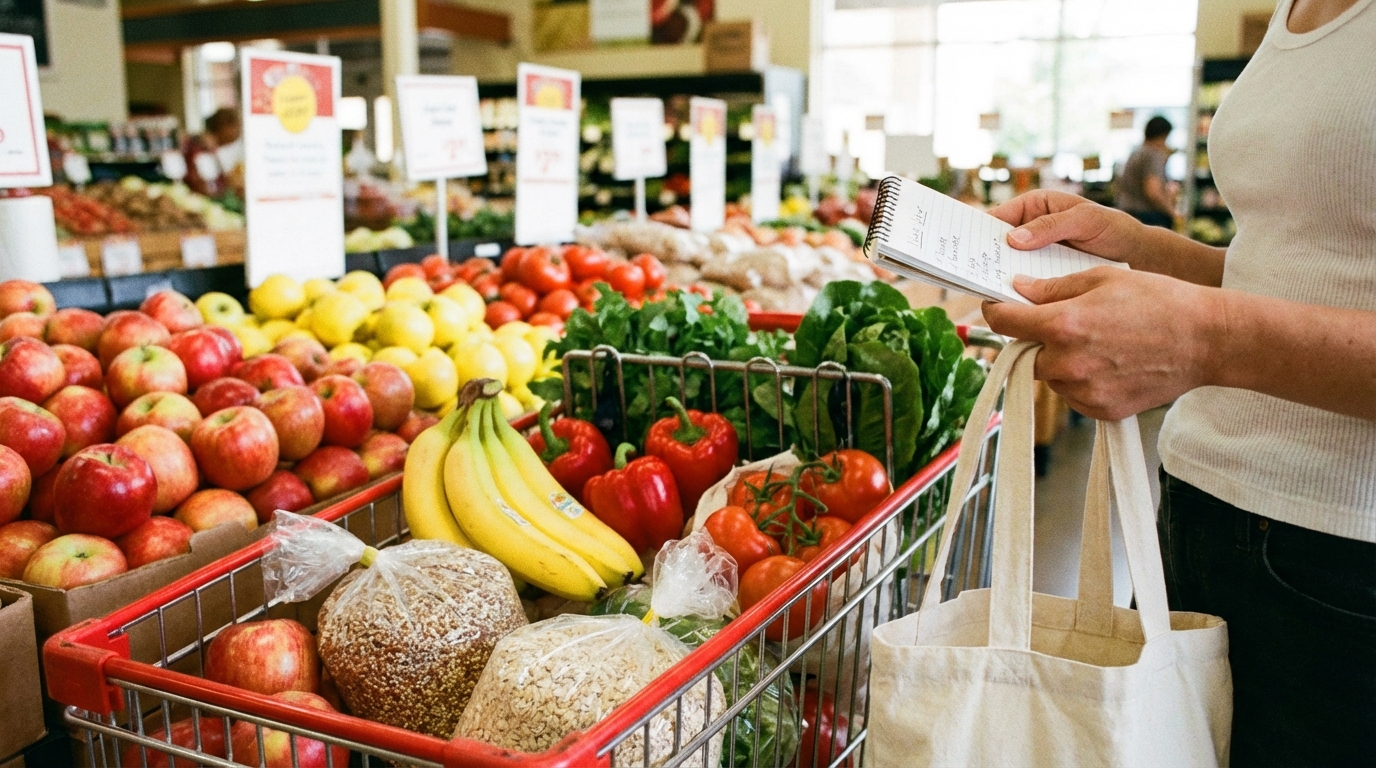
It is hard to walk through a grocery store, watch prices go up, and still feel like you are taking good care of your family and yourself. Many of us have stood in front of the produce section or the meat counter and wondered, “How am I supposed to afford healthy food now?” That worry can weigh on us, especially if we are also caring for children, aging parents, or someone with health needs that depend on good nutrition.
The short answer is that healthy eating on a tight budget is possible, but it usually looks simpler and more planned than the pictures we see online. We lean on basic foods like beans, oats, rice, frozen vegetables, and eggs. We plan around sales, store brands, and what we already have at home. We cook more at home and waste less. Step by step, these small choices add up to better meals and less stress at the checkout line.
Healthy eating on a budget is less about buying special “health” products and more about building simple, filling meals from basic, low-cost ingredients that you repeat often.
We can walk through this patiently, one part at a time, and shape a way of shopping that fits your energy, your budget, and the people you care for.
Understanding what “healthy” means on a budget
Before we talk about lists and coupons, it helps to gently reset what “healthy eating” can look like when money and time are tight.
Healthy does not have to look perfect
Many caregivers feel guilty if every meal is not fresh, organic, colorful, and homemade. That pressure can be heavy. Real life with caregiving, work, and health issues rarely looks like that.
A “healthy” meal can be as simple as a bowl of beans and rice with frozen vegetables, a piece of fruit, and a glass of water.
Healthy eating on a budget usually means:
- Enough food to feel full and steady, not hungry and shaky
- Some protein at most meals (beans, eggs, meat, dairy, tofu, lentils, peanut butter)
- Regular fruits and vegetables, fresh or frozen or canned
- Mainly whole or less processed foods, with room for some convenience when you need it
- Less sugary drinks and snacks, which cost a lot for very little nutrition
It does not mean:
- Only organic food
- Fancy supplements or powders
- A brand new diet or strict rules
- Perfection every day
If you are feeding older adults, children, or someone with a condition like diabetes or heart disease, the goal stays the same: simple foods that are filling, gentle on the body, and affordable.
Nutrition basics that save money
Some nutrients are especially important and often easier to get from low-cost foods:
| Nutrient | Why it matters | Low-cost sources |
|---|---|---|
| Protein | Helps with strength, healing, and staying full | Beans, lentils, eggs, peanut butter, canned tuna, chicken thighs, tofu, milk, yogurt |
| Fiber | Supports digestion, blood sugar, and heart health | Oats, brown rice, whole wheat bread, beans, lentils, fruits, vegetables |
| Healthy fats | Supports brain and nerve health, keeps you satisfied | Olive or canola oil, peanut butter, nuts and seeds (small amounts), canned fish |
| Vitamins & minerals | Support immunity, energy, bones, and more | Frozen vegetables, seasonal fruit, carrots, potatoes, leafy greens, milk or fortified plant milks |
When we focus on these basics and choose simple foods that provide them, we can spend less and still support health.
Planning before you shop: the real money saver
Many people try to save money by shopping less or chasing every sale, but the greatest savings usually come from quiet planning before we leave home.
Start with what you already have
Before writing a list, it can help to take 5 to 10 minutes to look through:
- Pantry: rice, pasta, beans, oats, canned vegetables or fruit, spices, sauces
- Fridge: eggs, dairy, leftovers, fresh produce that needs to be used soon
- Freezer: frozen vegetables, fruit, meat, bread
Let your existing food guide your meals first, then your shopping list fills in the gaps.
Ask yourself:
- “What simple meals can I make from this?”
- “What needs to be used soon so it does not go to waste?”
For example, if you have half a bag of rice, a few carrots, an onion, and some frozen peas, you can plan a simple fried rice or rice bowl and only buy eggs and soy sauce.
Build a simple meal pattern
To save money and mental energy, it can help to use a basic weekly pattern rather than brand new recipes every day. Something like:
- Breakfast: oatmeal or eggs on most days
- Lunch: leftovers or simple sandwiches
- Dinner: one pot meals, soups, beans and rice, pasta with vegetables and protein
- Snacks: fruit, yogurt, carrots and hummus, peanut butter on toast
Then you only need to plug in a few choices within that pattern:
| Meal | Low-cost ideas |
|---|---|
| Breakfast | Oatmeal with banana, egg and toast, yogurt with frozen berries |
| Lunch | Lentil soup, tuna sandwich with carrot sticks, rice and beans bowl |
| Dinner | Chili, baked chicken thighs with potatoes and carrots, vegetable pasta |
| Snacks | Apple, popcorn, peanut butter on celery, hard boiled egg |
Repeating meals is not a failure. For many caregivers, repeating simple, balanced meals is what keeps everyone fed without burning out.
Write a focused shopping list
Once you know what you will cook, write a list divided into sections that match your store:
- Produce (fresh fruits and vegetables)
- Dry goods (rice, pasta, oats, beans, flour)
- Canned & frozen
- Dairy & eggs
- Meat or plant proteins
- Household and personal items
Next to each item, you might gently add:
- A size (for example, “2 lb bag of carrots”)
- A limit (for example, “1 snack item under $4”)
This does not have to be perfect. The list just needs to keep you anchored so impulse items are fewer.
Set a spending target before you go
Many of us avoid facing the exact number, but having a clear target can feel grounding. You might say:
- “This week I can spend 80 dollars on food.”
- “I aim for no more than 20 dollars for non-food items.”
You can bring a simple calculator, or use your phone, and round up each item as you place it in the cart. For example, if an item is 2.49 you count it as 3. This helps you stay under budget, and it also helps you decide, in the moment, whether a treat or extra item still fits.
Knowing your number before you walk in can reduce the quiet fear at the checkout and help you feel more in control.
Choosing low-cost, healthy foods that stretch
Certain foods tend to give a lot of nutrition for a relatively low cost. They are often plain, simple items that can be cooked in many ways.
Budget-friendly pantry staples
Here are some pantry items that many caregivers rely on:
- Dry beans and lentils: Pinto, black, navy, and lentils are much cheaper per serving than meat and keep for a long time.
- Rice: White or brown rice is usually inexpensive and filling. Brown has more fiber, but white is fine too.
- Oats: Rolled or quick oats cost less than boxed cereal and are very flexible.
- Pasta: Store brand pasta with a simple tomato sauce and vegetables makes a full meal.
- Peanut butter: Shelf stable, high in protein and fat, and useful for quick meals and snacks.
- Canned tomatoes: Useful for soups, stews, sauces, and chili.
- Canned beans: Easier than dry beans if time or energy is low.
- Flour, sugar, baking powder/yeast: Helpful if you bake bread, pancakes, or muffins at home.
Low-cost proteins
Protein can be one of the most expensive parts of a meal, but it does not have to be.
| Protein | Why it helps your budget | Simple meal ideas |
|---|---|---|
| Dry beans & lentils | Very low cost, store well, high in fiber and protein | Chili, lentil soup, beans and rice bowls, bean tacos |
| Eggs | Usually cheaper than meat, cook quickly | Scrambled eggs on toast, egg fried rice, frittata with vegetables |
| Chicken thighs or drumsticks | Often much cheaper than chicken breast | Baked chicken with potatoes, chicken stew, sheet pan dinners |
| Canned tuna or salmon | Long shelf life, no freezer needed | Tuna salad sandwiches, tuna pasta, salmon patties |
| Tofu | Often low cost per serving, stores in the fridge | Stir fry with vegetables, tofu scramble, baked tofu cubes |
| Plain yogurt | Gives protein and calcium, flexible use | Breakfast with fruit, snack, base for sauces or dressings |
Affordable fruits and vegetables
Fresh produce can feel expensive, but some choices are usually more stable in price.
- Carrots: Whole carrots in bags cost less than baby carrots and last longer.
- Potatoes: White or sweet potatoes are filling and flexible.
- Onions and garlic: Add flavor and some nutrients at low cost.
- Cabbage: Stores well and can be used in salads, soups, and stir fries.
- Bananas: Often one of the lowest priced fruits.
- Apples (bagged): Bags are usually cheaper than buying by the piece.
- Frozen vegetables: Often cheaper than fresh and less waste; try mixed vegetables, peas, broccoli, spinach.
- Frozen fruit: Good in oatmeal, yogurt, or smoothies without going bad.
- Canned vegetables and fruit: Choose low sodium vegetables and fruit packed in juice or water if possible.
Frozen and canned produce can be just as nutritious as fresh and often costs less, especially when you count how little you throw away.
Shopping strategies that lower the bill
Once you have your plan and your list, a few habits at the store can protect your budget further.
Shop store brands and unit prices
In most stores, the bottom or top shelves hold cheaper “store brand” items that are very similar to the name brands.
You can look at the small price label on the shelf. It often shows the “unit price” such as cost per ounce or per pound. This lets you compare different sizes and brands fairly.
For example:
- If one jar of peanut butter is 2.99 for 16 oz (about 19 cents per ounce)
- And another is 3.49 for 12 oz (about 29 cents per ounce)
The first one is a better deal, even though the sticker price is lower by only 50 cents.
Limit single-serve and pre-cut items
Pre-cut fruits and vegetables, single-serve yogurts, and pre-shredded cheese can be very helpful when energy is low or when a person has trouble cutting or chewing. Still, they often cost more per serving.
You might:
- Buy a large tub of plain yogurt and portion it into containers at home.
- Buy block cheese and shred some yourself.
- Buy whole carrots instead of baby carrots when you have the energy to cut them.
If you care for someone with limited hand strength or vision, pre-cut foods can be a reasonable extra cost for safety.
Shop the outer aisles, but not only those
The outer edges of many stores hold produce, dairy, and meat. The inner aisles hold many higher priced snack items, but they also hold dry beans, rice, oats, and canned vegetables.
A calm approach might be:
- Walk the outer aisles for milk, eggs, and produce, focusing on sale items and staples.
- Go into inner aisles with a purpose: beans, rice, oats, canned tomatoes, and other staples on your list.
Plan around sales, not the other way around
Sales can be helpful, but they can also tempt us to buy things we do not need.
A gentle rule that helps many people is:
Use sales to choose between items you already planned to buy, instead of letting sales decide what fills your cart.
For example, if you planned to buy some fruit, you might pick whichever is on sale that week: apples, oranges, or grapes. If you need protein for dinners, you pick whichever is on sale between chicken thighs, ground turkey, or canned tuna.
If something you use often is truly on a good sale and you have room to store it, buying an extra one or two can help you save over time.
Use coupons and apps carefully
Coupons and store apps can reduce costs, but they often focus on processed foods. A simple method:
- Look at store flyers or apps at home, after you set your meal plan.
- Mark only the coupons for things you already planned to buy or real staples you use often.
- Ignore offers that would add extra snacks or luxury items unless they truly fit your budget and plan.
If screen time is tiring, you might ask a family member to check the digital coupons for you and share a short list.
Cooking simple, low-cost meals at home
Cooking at home usually costs less than prepared or restaurant food, but energy and time are real limits, especially for caregivers. Simple, flexible recipes can help.
One-pot and sheet pan meals
One-pot meals and sheet pan dinners reduce dishes and tend to use low-cost ingredients.
Some ideas:
- Bean chili: Canned or cooked dry beans, canned tomatoes, onion, carrots, spices. Serve with rice or bread.
- Lentil soup: Lentils, carrots, onion, celery or frozen vegetables, broth or water, herbs.
- Rice and vegetables skillet: Rice, mixed frozen vegetables, egg or tofu or chicken, soy sauce or any seasoning.
- Sheet pan chicken and vegetables: Chicken thighs, potatoes, carrots or frozen vegetables, oil, salt, pepper.
These can usually stretch to more than one meal, which saves both money and effort.
Cooking in batches
Cooking extra on nights when you have more energy can give you ready-made meals on harder days.
You might:
- Make a big pot of soup on the weekend and freeze portions.
- Cook a large batch of rice or beans and use them in different dishes across the week.
- Bake extra chicken and save some for salads, wraps, or casseroles later.
Labeling containers with the date and name helps prevent food being forgotten in the freezer.
Using leftovers without boredom
Leftovers are one of the most powerful budget protectors. To keep them from feeling dull, it can help to think of “planned leftovers.”
For example:
| Day | Base food | New meal idea |
|---|---|---|
| Day 1 | Chili with beans and ground turkey | Serve in bowls with rice |
| Day 2 | Leftover chili | Serve on baked potatoes with a little cheese |
| Day 3 | Leftover chili (small amount) | Use as filling for quesadillas or wraps |
You turn one cooking effort into different meals, so it does not feel too repetitive.
Reducing food waste to protect your budget
Every time food spoils in the fridge, it is like throwing money away. Many of us feel guilty when this happens, but it is very common, especially when caregiving pulls us away from our plans.
Store food so it lasts longer
A few gentle habits can stretch how long food stays safe and tasty:
- Keep older items in front and newer ones in the back in the fridge and pantry.
- Move leftovers into clear containers so you can see them easily.
- Freeze bread, extra meat, or cooked grains that you will not use soon.
- Store onions and potatoes in a cool, dark place, but not right next to each other.
A simple weekly “fridge check” can help you rescue food before it spoils and gently guide what you cook next.
Plan “use it up” meals
One night a week can be a “use what we have” night. You might:
- Make a stir fry from leftover vegetables and protein.
- Turn extra vegetables into a soup or frittata.
- Use overripe fruit in oatmeal, smoothies, or baked goods.
This gives you permission to combine foods in simple ways without worrying about matching recipes perfectly.
Balancing time, energy, and money for caregivers
Caregivers face unique pressures. Some money-saving tips assume that we have the time and strength to cook everything from scratch, compare prices in several stores, or stand in the kitchen for long periods. That is not always realistic.
When it is worth paying a bit more
There are times when spending a little extra can protect your health or your sanity:
- Pre-cut vegetables if you or your loved one cannot safely cut hard items.
- Rotisserie chicken if it gives you several meals and saves you on a day you feel worn out.
- Microwaveable brown rice or frozen meals for emergencies, especially if they are cheaper than takeout.
The goal is not the lowest possible cost at any price to your wellbeing. The goal is a pattern that you can live with, that will keep you and those you care for nourished.
Simple routines that help when you feel overwhelmed
When life feels heavy, planning a full week of meals can be too much. In those times, it may help to fall back on a very short, repeating list of meals that you already know how to make.
For example:
- Breakfast: Oats with banana or toast with peanut butter
- Lunch: Tuna or bean sandwiches, fruit
- Dinner rotation:
- Night 1: Rice, beans, and frozen vegetables
- Night 2: Pasta with tomato sauce and frozen spinach
- Night 3: Eggs, toast, and carrots
- Night 4: Soup from leftovers
If you keep the ingredients for these on hand, grocery shopping becomes more automatic and less stressful.
Special situations: children, older adults, and health conditions
Families often eat together, yet each person may have different needs.
Feeding children on a budget
Children often prefer simple foods and may resist changes. This can be frustrating when you are trying to shop wisely.
Some gentle ideas:
- Offer at least one familiar food at each meal, along with new or less liked foods.
- Serve milk or water instead of sugary drinks most of the time to save money and protect teeth.
- Use fruit as a main snack instead of packaged treats when you can.
- Let children help choose one fruit or vegetable at the store so they feel involved.
Budget-friendly kid-friendly staples often include oatmeal, bananas, carrots, peanut butter, eggs, and rice dishes.
Feeding older adults
Older adults may have reduced appetite, trouble chewing, or medical diets.
To support them on a budget:
- Offer small, frequent meals and snacks instead of three large meals.
- Focus on soft, high protein foods like yogurt, scrambled eggs, cooked beans, mashed potatoes with milk, and soft fruits.
- Use full fat dairy if weight loss is a concern and your provider is comfortable with that.
- Keep water or other low sugar drinks nearby to encourage sipping through the day.
If you are buying for both yourself and an older adult, you can often cook one main dish and then adjust textures for them by mashing, chopping smaller, or adding sauce.
Budget shopping with diabetes, heart disease, or kidney concerns
Chronic health conditions can make food choices feel even more stressful. Many people think specialized health foods are required, but simple home cooking can fit most guidance.
Some general ideas:
- For blood sugar: Focus on beans, lentils, whole grains when possible, and lower sugar drinks.
- For heart health: Use smaller portions of processed meats, and cook more with beans, lean meats, fish, and plant oils.
- For kidney concerns: There may be limits on potassium, phosphorus, or sodium. In this case, a dietitian or health provider can help you target which low-cost foods are safer.
If a diet plan feels impossible to follow with your budget and caregiving load, it is reasonable to speak up and ask your care team for a simpler, more realistic plan.
Making the most of community support
No one should have to face food costs and health concerns alone. Many communities have supports that can ease some of the strain.
Food assistance programs
Depending on where you live, some options may include:
- Government food assistance (like SNAP or similar programs) that help pay for groceries.
- WIC for pregnant people, infants, and young children.
- School breakfast and lunch programs.
- Senior meal programs or congregate meals at senior centers.
These programs sometimes have nutrition educators who can walk through budget shopping and simple cooking with you.
Food banks and community pantries
Using a food bank is not a failure or a shameful act. Many caregivers turn to these resources during hard seasons.
To make the most of pantry visits:
- Look for staples like beans, rice, oats, peanut butter, canned vegetables, and canned fruit.
- Ask volunteers if they have recipe cards or suggestions for simple ways to use the items.
- If you can, plan your grocery store trip after visiting the pantry so you know what you do not need to buy.
Sharing skills and resources together
Within families, neighborhoods, and faith communities, sharing can bring both savings and connection:
- Cook together with a friend and split a big pot of soup or stew.
- Share extra garden produce or bulk items.
- Trade recipes that use low-cost ingredients common in your area.
Even sharing tips about which local store has the best prices on certain staples can help everyone stretch their budgets.
Sample low-cost meal plan and shopping list
To bring everything together, here is an example of a simple, budget-conscious meal plan for a small family or household. You can adjust amounts and items for your own needs and culture.
Sample 3-day meal plan
| Day | Breakfast | Lunch | Dinner | Snacks |
|---|---|---|---|---|
| Day 1 | Oatmeal with banana | Bean soup with bread | Baked chicken thighs with potatoes and carrots | Apple, yogurt |
| Day 2 | Eggs and toast | Leftover chicken and vegetables in a rice bowl | Pasta with tomato sauce and frozen spinach | Carrot sticks with peanut butter, popcorn |
| Day 3 | Yogurt with frozen fruit | Tuna sandwiches with carrot sticks | Rice and beans with mixed frozen vegetables | Banana, hard boiled egg |
Sample shopping list to support that plan
- Oats
- Bread (whole wheat if affordable)
- Rice
- Pasta
- Dry or canned beans
- Canned tomatoes or tomato sauce
- Canned tuna
- Chicken thighs (value pack)
- Eggs
- Plain yogurt (large tub)
- Peanut butter
- Frozen mixed vegetables
- Frozen spinach
- Frozen fruit (such as berries or mixed fruit)
- Potatoes
- Carrots
- Onions
- Bananas
- Apples (bagged)
- Cooking oil (such as canola or olive)
- Basic spices (salt, pepper, garlic powder, dried herbs)
This list does not cover every detail, but it gives you a base from which you can adjust for taste, culture, allergies, and local prices.
The most powerful step is not one special ingredient or one perfect meal, but the steady habit of planning simple, repeatable meals that fit your real life and your real budget.
Healthy eating for less is not about doing everything perfectly. It is about taking small, steady steps that respect your limits and your care responsibilities, while still giving you and your loved ones the nourishment you deserve.