
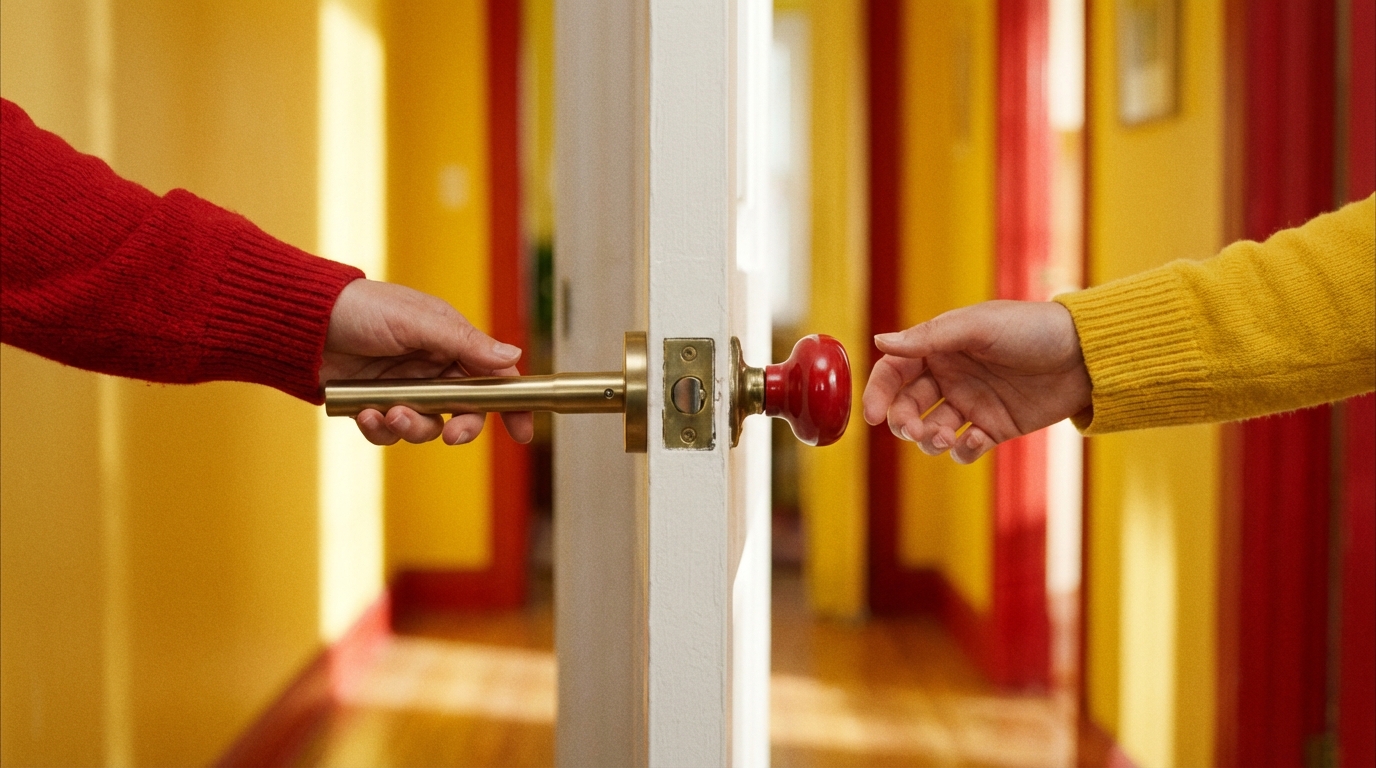
It is hard to walk around the home you love and realize that simple things, like opening a door or turning on a faucet, have started to feel like a struggle. Many of us have watched a parent, partner, or even ourselves hesitate at a doorway, not because we are not welcome there, but because the handle is hard to grip or twist. Those moments can feel small on the surface, but they carry a lot of emotion underneath.
In gentle terms, the short answer is this: lever handles are usually safer, easier, and more comfortable than round knobs for older adults, children, and anyone with weak grip, pain, or balance concerns. Swapping knobs for levers on doors, cabinets, and faucets can reduce falls, ease joint strain, and help someone stay independent longer, without making the home feel “medical” or unfamiliar.
We will walk through the differences between levers and knobs, where each can still make sense, and how to choose and install the right hardware so that it supports the people who live in the home, both now and in the years ahead.
A simple change from a knob to a lever often matters more for independence and safety than many larger, more expensive home projects.
Why This Small Change Matters So Much
For most of us, the handles in our home fade into the background. Doors open, cabinets close, water runs, and we do not think much about how. That routine feels very different when hands hurt, strength is low, or balance is not steady.
Before we compare levers and knobs, it helps to name what is really at stake:
- Comfort and pain levels during everyday tasks
- Fall risk during turning, reaching, and pulling
- Ability to move around the home without help
- Quiet dignity of being able to open your own doors
When someone needs to ask for help with every bathroom door, every pantry door, or every faucet, it chips away at that sense of confidence. This can be just as emotional for family caregivers as it is for the person needing help. We want to support, but we also want our loved one to feel capable.
Lever handles often offer a gentle middle ground: they are discreet, familiar, and attractive, yet they remove physical barriers that knobs quietly create.
Lever Handles vs. Knobs: How They Work With The Body
Basic Mechanics: Push vs. Twist
At the most basic level:
| Feature | Lever Handle | Round Knob |
|---|---|---|
| Primary motion | Push or pull down/up | Twist or grasp tightly and turn |
| Grip needed | Can use side of hand, palm, wrist, or forearm | Needs pinching or full finger grasp |
| Strength needed | Lower; uses larger muscles | Higher; focuses force in small joints |
| Fine motor skill | Low | High |
| Compatibility with arthritis or weak grip | Generally friendlier | Often difficult or painful |
A lever allows you to push down with gravity helping you, while a knob asks your hand to squeeze and twist at the same time. For someone with arthritis, neuropathy, tremors, a prior stroke, or simple age-related weakness, that twist can be the hardest single motion of the day.
Lever handles work with the body’s natural movement, while knobs often work against it, especially when pain or weakness is present.
Impact on Joint Pain and Arthritis
For people with osteoarthritis or rheumatoid arthritis, the small joints of the fingers often hurt the most. Knobs focus all the pressure and motion into those joints. Each turn can mean:
- Increased pain in the finger joints
- Swelling or stiffness that lingers afterward
- Avoiding certain doors or cabinets altogether
Levers let the hand rest more open. Your loved one can:
- Use the side of the hand or the palm
- Press with the heel of the hand or even the forearm
- Rely more on the shoulder and arm muscles, which tend to stay stronger
Many people quietly begin drinking less water or avoiding certain rooms just to avoid turning painful knobs. When we soften those small points of friction, people often move more easily through the day without needing to “save up” energy or courage to get through a doorway.
Balance and Falls: One Hand Free vs. Two Hands Busy
Door knobs often force someone to:
- Put both hands on the knob to get enough grip
- Lean their body weight toward the door
- Twist the upper body while the feet are planted
This combination is risky if someone uses a cane, walker, or wall for support. They may need to let go of their device, twist their spine, and pull at the same time. A small slip here can easily become a fall.
Levers change that picture:
- The person can keep one hand on a cane, walker, or grab bar
- The lever can be pressed down with the free hand, forearm, or elbow
- The body can stay more upright and aligned
Any change that allows someone to keep one hand on stable support while opening doors reduces fall risk in a quiet but meaningful way.
Where Levers Shine: Doors, Cabinets, and Faucets
Interior & Exterior Doors
For most homes, the biggest gains come from switching interior and exterior door knobs to levers. These are the doors people use dozens of times per day.
Areas where levers often make the biggest difference:
- Bathroom doors where wet hands, urgency, and limited space create extra risk.
- Bedroom doors for nighttime trips, when vision is low and fatigue is high.
- Exterior doors where someone may be handling keys, bags, or a walker at the same time.
- Basement or garage doors where stairs and lighting can increase fall risk.
Some families worry about security. Modern lever sets are available with the same lock quality as knob sets. In most cases, you can match or exceed your current lock security while still choosing a lever.
Cabinets and Drawers
Small cabinet knobs ask the fingers to pinch, which is often even more painful than turning a door knob. Over a day, someone may open and close kitchen or bathroom cabinets dozens of times.
Lever style pulls and “C” or “D” shaped handles for cabinets and drawers can help by:
- Letting the person hook fingers or even a few knuckles around the pull
- Reducing the need for a tight fingertip pinch
- Allowing use of the side of the hand or a closed fist
For a person with weak grip, those little changes in hand position can mean the difference between cooking a simple meal independently and needing help with every step.
Faucets: Lever Handles vs. Round Knobs
Round faucet knobs, especially older ones, can be very hard to twist. They often require:
- Strong pinch strength
- Twisting under pressure when mineral buildup has stiffened the valve
- Fine control to find a comfortable temperature
Single-lever or dual-lever faucets allow someone to:
- Lift or push the handle with minimal grip
- Adjust temperature and flow in one smooth motion
- Use wrist, side of hand, or forearm when fingers hurt
Many occupational therapists name lever faucets as one of the highest impact changes in kitchens and bathrooms for people with arthritis.
If a full faucet replacement is not possible right now, there are also add-on lever extensions that attach to existing knobs as a temporary step.
When Knobs Might Still Make Sense
While levers are easier for many people, there are situations where knobs can still have a place. It can help to weigh comfort, safety, and household needs rather than feeling that one choice must fit every single door.
Concerns About Young Children
One common worry is that lever handles are easier for toddlers to open. A child who could not reach and twist a knob may be able to bump a lever and open a door.
Some ways families balance this:
- Use lever handles on key interior doors for older adults, but keep knobs on certain high-risk doors (such as basement or exterior doors) until children are older.
- Add high door latches or childproof door handle covers in selected areas.
- Place levers higher on doors in some cases, though this can look unusual and may not suit every home.
If a home includes both young children and an older adult, it is helpful to talk together about which doors must be easiest for the older person to manage and where child safety takes priority.
Behavioral or Safety Concerns
In some homes, there may be safety care plans around someone who tends to wander or exit the home unsafely because of dementia or confusion. In those cases, very easy-to-open exterior levers might create concern.
Later in this article we will talk about lever options that include added safety without making someone feel “locked in.”
Aesthetic or Historic Home Concerns
Some people feel deeply attached to the style of existing knobs, especially in older homes. That feeling deserves respect. Our homes carry our memories.
If this is the case, you might:
- Begin with the bathroom and bedroom doors first, where function matters more than matching existing style.
- Choose lever styles that echo the look of your current hardware in color and finish.
- Keep a few key decorative knobs in less-used spaces and focus levers where they support daily routines.
Accessibility does not need to erase a home’s character. Often we can blend safety and style with careful choices.
Comparing Levers and Knobs: Safety, Comfort, and Cost
Sometimes it helps to see the comparison in one place.
| Aspect | Lever Handles | Round Knobs |
|---|---|---|
| Ease of use for weak grip / arthritis | High; can use palm, wrist, or forearm | Low; needs tight grasp and twist |
| Fall risk impact | Lower; one hand can stay on support | Higher; often needs two hands and twisting |
| Pain level for finger joints | Usually less | Often more |
| Child resistance | Lower; easier for toddlers to open | Higher; harder for toddlers |
| Accessibility standards (ADA, etc.) | Meets guidelines when properly sized | Often does not meet guidelines |
| Cost difference | Often slightly higher but still modest | Usually baseline |
| Installation effort | Similar to knobs in most cases | Standard |
What To Look For In A Lever Handle
Once you decide to favor levers, the details still matter. Not every lever is gentle on the hands. Some are very thin, very short, or have sharp edges. Those styles may look striking, but they ask more from the body than they give back.
Shape, Size, and Comfort
Here are some features that usually feel better for older hands:
- Rounded edges: Smooth edges reduce pressure points on tender joints.
- Moderate thickness: Not too thin, so it does not dig into the hand, and not so thick that it is hard to push.
- Gentle curve: A slight curve helps the hand “catch” the lever without much grip.
- Enough length: A longer handle gives more leverage and makes it easier to press with the forearm.
If possible, try a sample lever in your own hand, or the hand of the person you are supporting. Many hardware stores have display boards where you can gently push and pull.
Resistance and “Return” Spring
Some levers feel very stiff because of strong internal springs. Others feel loose and wobbly. Neither extreme is ideal.
You might look for:
- A lever that moves with a light, smooth motion
- Enough spring to return to a neutral position without much noise
- No rough grinding or catching when you move it
If someone has very limited strength, the lightest action possible is helpful. For strong individuals who still value easy use, a slightly firmer spring can feel more solid under the hand.
Finish and Grip
Very glossy or polished finishes can feel slippery, especially with lotion, sweat, or water. Very textured finishes may feel rough to fragile skin.
Common friendly finishes include:
- Brushed nickel
- Matte black
- Oil-rubbed bronze with a soft, matte feel
- Satin brass
Again, the test is simple: does the lever stay steady under a light press from your palm, without sliding or requiring a tight grip?
Door Lever Types: Privacy, Passage, and More
Not all lever sets are the same. Choosing the right type for each door can protect privacy and safety.
Common Lever Set Types
| Type | Where It Is Used | Features |
|---|---|---|
| Passage | Hallways, closets, pantry | No lock; always open on both sides |
| Privacy | Bedrooms, bathrooms | Simple lock; can be opened from outside with small tool |
| Keyed entry | Exterior doors, sometimes home office | Uses a key; offers more security |
| Dummy | Closet or pantry doors that do not latch | Pull handle only; no latch or lock |
For many caregiving situations:
- Bathrooms benefit from privacy levers that can be opened quickly from the hallway in an emergency.
- Bedrooms may also use privacy levers, especially for someone who may need assistance at night.
- Hall and closet doors usually do well with passage levers to avoid confusion and accidental lockouts.
Emergency Access and Dementia Considerations
If someone in the home has dementia, confusion, or a history of falls in the bathroom or bedroom, it may be wise to:
- Choose privacy levers with an outside emergency release slot, so caregivers can enter quickly.
- Avoid complex lock mechanisms that are hard to unlock in a hurry.
- Consider leaving some interior doors without locking functions at all, based on the care plan.
For exterior doors, consult with healthcare providers or dementia care specialists about balancing safe wandering prevention and dignity.
Installation: Who Can Do It And What To Expect
Switching from knobs to levers is often less complicated than people fear, especially for newer homes.
Checking Compatibility With Existing Doors
Before you buy, it helps to check:
- Bore hole size: Most modern doors have a standard hole size that fits most new levers.
- Backset (distance from door edge to center of hole): Usually 2 3/8 or 2 3/4 inches; many levers are adjustable.
- Door thickness: Most interior doors fall within the range that new levers accommodate.
For very old doors, you might find non-standard measurements. In those cases, it can help to speak with a locksmith or handyman before purchasing.
DIY vs. Hiring Help
Many families are able to replace door hardware on their own with basic tools like a screwdriver. Still, there is no shame in asking for help. Caregivers often carry a heavy load already, and not everyone has the time or energy for home projects.
Reasonable choices include:
- Doing a single “test” door yourself, then deciding how it feels.
- Hiring a handyman or handywoman for a half day to change multiple doors at once.
- Asking a trusted friend or relative who is comfortable with tools to assist.
It is not a failure to ask for help with projects like this. Protecting your energy as a caregiver is also an act of care.
Common Mistakes To Avoid
When changing knobs to levers, some common issues appear:
- Wrong handing: Levers are left-handed or right-handed in some models. Many modern ones can be flipped, but not all. Check before installation.
- Loose screws: If not tightened well, levers may wobble, which can be unsafe for someone who leans on them for balance.
- Misaligned latch: If the latch does not meet the strike plate cleanly, doors can be hard to close or open.
A slowly wedging door can cause someone to yank hard and lose balance. If a door feels “sticky” after a hardware change, it is worth adjusting right away.
When Money Is Tight: Prioritizing Changes
Not every family can replace every knob at once. That reality deserves respect. The good news is that targeted changes can still bring real relief and safety gains.
High-Priority Areas
If you must choose, most caregivers and therapists begin with:
- Bathroom door: Frequent use, often in a hurry, and high fall risk if someone rushes.
- Bedroom door: Nighttime trips when someone is tired, dizzy, or half-asleep.
- Main exterior door: Safe entry and exit, especially if using assistive devices.
- Kitchen sink faucet: Frequent hand washing, dishwashing, and food prep.
These four spots alone can ease a surprising amount of daily strain.
Low-Cost Aids When Replacement Is Not Possible Yet
If new hardware is not in the budget at all right now, you still have options:
- Knob turners: Rubber or plastic devices that fit over knobs to give a larger, easier grip.
- Faucet handle extenders: Levers that attach to existing faucet knobs.
- Grippy wraps: Silicone or rubber wrap material that adds thickness and friction to knobs.
These are not perfect solutions, but they can be a kind bridge until full lever replacements are possible.
Special Situations: Stroke, One-Handed Use, and Wheelchair Access
Every family has its own story. Some situations call for extra planning around handles.
Stroke Survivors and One-Sided Weakness
For someone who can use only one hand well, or who has severe weakness on one side:
- Levers on the strong-hand side of doors are especially helpful.
- Lever handles that are not too stiff reduce fatigue over the day.
- Handles with a clear, tactile shape can help if sensation is limited.
Position in the home can matter. For instance, arranging furniture so the strong side faces the door makes it easier to reach the lever safely.
Wheelchair Users
From a seated position, round knobs can be hard to reach and turn at the same time. Levers help by:
- Allowing horizontal pushing motion, which matches seated reach.
- Permitting use of the forearm if leaning forward is hard.
- Reducing the need to twist the upper body while seated.
Some guidelines consider lever handles to be more accessible for wheelchair users, especially when they are installed at reachable heights and paired with doors that swing out of the way.
Blending Accessibility With Style
Many families hesitate to change hardware because they worry the home will start to look like a clinical setting. It is understandable to want the home to feel warm, familiar, and inviting.
Modern lever options help bridge that gap:
- Traditional levers with gentle curves fit older homes with classic trim.
- Simple, straight levers look clean and modern and tend to be very easy to use.
- Decorative backplates can echo existing design details if that matters to the family.
If you are changing hardware gradually, try to keep finishes consistent across nearby doors so the changes feel intentional rather than patchy.
Talking With Family About Making The Switch
Sometimes the hardest part is not the hardware; it is the conversation. Many older adults feel sensitive about changes that signal aging or disability, even small ones.
Here are some gentle ways to frame the discussion:
- Focus on comfort: “I notice your fingers seem sore when you open that door. What would you think about a handle that is kinder on your joints?”
- Share the burden: “It would help me feel calmer knowing you can get in and out of the bathroom more easily at night.”
- Offer choice: “There are lots of styles. Would you like to look at some pictures together and pick what you like?”
Changes around the home feel best when the person affected still has a say in how their space looks and feels.
Some people prefer to test just one door first. For example, starting with the bathroom door only, then expanding if it feels good.
Red Flags: When Handles Signal Bigger Issues
Struggles with knobs and handles can be early signs of changes in strength, balance, or cognition. While hardware changes help day-to-day life, they may also signal that it is time to seek more support.
You might notice:
- New bruises on the hands from gripping knobs too hard.
- Doors left partially open because closing them fully is difficult.
- Spills, dropped items, or hesitation around doors and cabinets.
- Statements like “I just stay in this room so I do not have to go through that door.”
If you see these signs, it can be wise to:
- Talk with a primary care provider about strength, balance, and joint pain.
- Ask for a referral to an occupational therapist for a home safety assessment.
- Look more broadly at other small barriers in the home, such as rugs, lighting, and tub access.
Changing knobs to levers is one piece of a larger picture of gentle, respectful support.
Putting It All Together
Lever handles are not magic, but they often feel that way once someone uses them consistently. Walking through the home without wincing, keeping a hand on the walker while opening the bathroom door, turning kitchen water on without straining sore fingers: these are the quiet victories that keep people in their own homes longer and with more ease.
This “small” change touches many daily actions:
- Entering and leaving rooms alone, without calling for help
- Staying steadier on the feet while handling doors and faucets
- Reducing joint pain at every touch point throughout the day
- Letting the home remain a place of comfort, not constant struggle
For many families, the path forward looks like this:
- Start with 1 to 4 key spots (bathroom, bedroom, main entry, kitchen faucet).
- Choose lever styles that feel good in the hand and fit the home’s look.
- Install safely, testing each door for smooth action and secure fit.
- Watch how daily life feels over the next few weeks, and adjust as needed.
Change does not need to be all at once. Each lever that replaces a knob is one more small promise that the home will keep working with the body, not against it, as the years go on.