If you are wondering whether a kitchen can be made safe enough for aging in place in a Boston home, the short answer is yes, it can. With the right layout, better lighting, safer flooring, and some careful planning around storage and appliances, most kitchens can be turned into spaces where an older adult can cook, eat, and move around with more confidence. Local contractors who focus on kitchen remodeling Boston projects see this kind of work all the time, and they often say the same thing: a few smart changes usually matter more than one big dramatic renovation.
I think that matters for caregivers, too. If you help a parent or a partner at home, a safer kitchen can lower your stress and theirs. It reduces the daily worry about falls, burns, or accidents that can change everything in one second.
Let me walk through the main ideas, and I will try not to overcomplicate things. Kitchens are already stressful enough.
Seeing the kitchen clearly: lighting that actually helps
Good lighting is one of the first upgrades to look at. It sounds boring, but poor lighting in a kitchen is a quiet risk. People squint, lean forward with a knife in their hand, or misjudge where the edge of a countertop is.
You do not need fancy fixtures. You do need layers of light.
Overhead lighting
If the main ceiling light is dim, yellow, or far from the work areas, it can create shadows. Shadows hide spills, cords, and edges.
Some simple steps:
- Replace bulbs with brighter, neutral white LED bulbs.
- Use fixtures that spread light across the room, not just straight down.
- Add a second ceiling fixture if your kitchen is long and the far end feels dark.
Older eyes usually do better with more brightness. Not harsh, just enough that everything is clear on first glance.
Task lighting where hands are working
Task lighting is light focused on the spots where people chop, stir, and read labels.
Common spots:
- Under the wall cabinets above the main counter.
- Above the sink.
- Over the stove and cooktop area.
Under cabinet LED strips or puck lights help a lot. They light the cutting board and make it easier to see color changes in food. That is not just about cooking quality. It can also help a person see if chicken is still raw, or if a pot is about to boil over.
Switches, controls, and night lighting
Think about how someone enters the kitchen at 2 a.m. for water or medication.
You want light without a hunt for switches.
- Place switches at the kitchen entrance at a reachable height, usually around 42 inches from the floor.
- Use rockers instead of tiny toggles, so stiffer fingers can turn them on.
- Add plug in night lights near the walkway or use motion activated toe kick lights.
Better lighting is one of the least disruptive parts of a remodel, but it can reduce both trips and kitchen anxiety in a very real way.
Many caregivers say that once the kitchen is well lit, the person they care for moves more calmly and needs less help with simple tasks.
Flooring and layout: preventing falls before they happen
Falls in kitchens are often not about one big mistake. They come from small things adding up. A slick floor. A rug edge. A tight corner.
Boston homes, especially older ones, often have narrow kitchens with tile or hardwood floors that are pretty but not very forgiving.
Better flooring choices
When you think about flooring for aging in place, you want three simple things:
- Good traction, even when slightly wet.
- Some softness to reduce the impact of a fall.
- A smooth, flat surface without thresholds or big transitions.
Here is a quick way to compare common kitchen flooring types:
| Flooring type | Slip risk | Comfort | Comments for aging in place |
|---|---|---|---|
| Glossy ceramic tile | High when wet | Hard | Looks nice but can be slippery; falls can be serious. |
| Matte or textured tile | Lower | Hard | Better grip; still very hard underfoot. |
| Luxury vinyl plank or tile | Moderate to low | Slightly cushioned | Often a good balance of traction, comfort, and cleaning. |
| Cork | Low if sealed properly | Softer | Comfortable and warm, but needs care with moisture. |
| Hardwood | Moderate | Firm but not as hard as tile | Works if kept dry and finished with a non slick finish. |
Small rugs or mats can help near the sink, but they often create new hazards. If you use them, choose rubber backed mats with beveled edges that sit flat and do not curl.
Clear paths and fewer obstacles
Aging in place is not just about a wheelchair future. It is about walkers, canes, and slower, less stable walking even without a device. That usually calls for:
- At least 36 inches of clear pathway, wider if possible.
- No bar stools sticking out into walking paths.
- No extra furniture or trash cans sitting in tight corners.
If you are planning a remodel with new cabinets or an island, think hard about traffic flow. An island that looks nice in a photo can make life harder in a real Boston kitchen if it shrinks the walking space too much.
When you walk through the kitchen, imagine doing it with a cane on a tired day. If you have to twist or shuffle around something, that object is in the wrong place.
I have watched families keep a recycling bin in a corner because it “sort of” fits there, then the older parent bumps into it every single day. Sometimes the simplest fix is just relocating a few items.
Counters, cabinets, and storage that work with aging bodies
Reach and strength change over time. Knees do not handle deep bending very well. Shoulders tire faster. Gripping small handles can be painful.
A remodel is a chance to adjust the kitchen so the user does not have to fight their own body.
Counter height and work zones
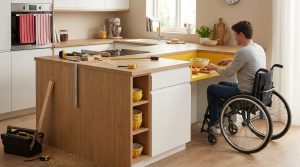
Standard counters are about 36 inches high. Many older adults are fine with that, but some are not, especially if they use a wheelchair or prefer to sit while chopping or mixing.
You can:
- Lower part of a counter to about 30 to 32 inches to create a sitting friendly prep area.
- Leave space under one section of countertop for knees, so a chair or wheelchair can slide under.
- Use contrasting colors for counter edges to make them easier to see for aging eyes.
Breaking the counter into zones can help too:
- A prep zone near the sink with knives and cutting boards close by.
- A cooking zone near the stove with pots, pans, and spices stored right there.
- A snack or breakfast zone by the fridge with bowls, plates, and everyday foods in one spot.
This reduces the need to walk back and forth across the room. That can be a big relief for someone with arthritis or balance issues.
Cabinet style and hardware
Traditional upper cabinets that go all the way to the ceiling can be hard to use with aging shoulders. That top shelf often becomes dead space.
If you are remodeling, think about:
- More drawers in the lower cabinets instead of big deep doors.
- Pull down shelves or lazy Susans in corner cabinets.
- Open shelving for dishes that are used daily, but only if the person can reach them safely.
Handles and knobs sound like a small thing, yet they affect daily comfort.
Bar style pulls that you can grab with the whole hand are usually kinder to stiff fingers than small round knobs.
Soft close hardware can also be useful. Doors and drawers that do not slam reduce the risk of fingers getting pinched.
What to keep within easy reach
A simple rule is to keep the heaviest and most often used items between hip and shoulder height.
That usually includes:
- Pots and pans.
- Mixing bowls.
- Everyday plates and cups.
- Cutting boards.
- Common pantry items like rice, pasta, and canned goods.
Try not to store heavy items on the floor, where they require bending, or up high, where they require reaching and sometimes stepping on a stool. Stools in kitchens can create extra risk, especially if someone feels they “only need it for a minute.”
Appliance choices that care for aging users
Appliance changes can be expensive, but they often have a clear safety payoff. I have seen families try to avoid these upgrades, then change their minds after one close call with a hot oven door or a heavy pot of boiling water.
Safer stove and cooktop options
Here are a few stove and cooktop features that often help older adults:
- Front mounted controls so there is no reaching over burners.
- Clear visual indicators that a burner is still hot.
- Induction cooktops that heat the pan, not the surface around it.
- Automatic shutoff features that turn off heat after a set time.
For someone with memory concerns, a system that makes it harder to leave the stove on is not just nice to have. It is a real layer of protection.
Wall ovens and safer oven doors
A standard range with an oven under the cooktop can be hard for aging bodies. People have to bend deeply to lift heavy dishes out, often while holding the oven door open and leaning forward.
A wall oven at chest height or slightly below helps. It lets the user slide a tray out at a safer level. Some models also have side swinging doors, which remove the need to reach over a hot door.
Refrigerator styles that are easier to use
It might sound like a detail, but refrigerator layout can influence how often an older person bends or stretches.
French door or bottom freezer fridges keep the fridge section at eye level. Since most people open the fridge more often than the freezer, this layout lowers daily strain.
Try to:
- Use clear bins to group items and reduce searching.
- Keep heavy things like milk or juice at a mid height shelf, not in a low bin.
- Label shelves if memory is a concern, so food does not get lost and forgotten.
Dishwasher, microwave, and smaller appliances
Dishwashers can be easier to use when they are raised slightly from the floor. That said, not every Boston kitchen has the space or structure to support that.
You can still:
- Choose a dishwasher with simple, large controls and clear labels.
- Place it near the sink to avoid carrying dripping dishes across the room.
Microwave placement matters, too. Over the range microwaves can be risky for shorter adults or people with shoulder issues. A better option is:
- Microwave at counter height or in a lower cabinet niche.
- Controls that are simple and easy to read.
Small appliances like toasters, coffee makers, and electric kettles should sit close to outlets. Long cords stretching across the counter increase the chance of catching a cord and pulling a hot item over the edge.
Sinks, faucets, and water safety
Water is central to any kitchen, and it is also a common source of slips and scalds.
Sink style and depth
Deep, wide farmhouse sinks are popular in pictures, but they are not always the best choice for an older adult.
A more moderate depth, often around 8 inches, can reduce the need to lean forward. An undermount sink with a rounded edge can be gentle on wrists and easier to wipe clean.
If someone might use a wheelchair in the future, leaving open space below part of the sink area can help with leg clearance. That is a more complex remodeling decision, so it takes planning with a contractor who understands accessibility.
Faucets that prevent strain and burns
Faucets that work well for aging in place usually have:
- A single lever instead of two separate knobs.
- A pull down sprayer built into the spout.
- Clear hot and cold markings.
Single levers are easier for weaker hands, and a pull down sprayer makes it easier to rinse dishes without moving them around as much.
You can also install a scald guard or a thermostatic mixing valve at the sink or water heater. This sets a maximum water temperature and reduces the risk of burns, especially if someone has slower reactions.
Grab bars, seating, and subtle support
Many people do not want their kitchen to look like a hospital. That is fair. At the same time, small supports can be included in attractive ways.
Where grab bars and supports help
Common spots:
- Near the entrance to the kitchen.
- Close to the sink, where the floor may get wet.
- By any step down or small change in floor level.
You can use decorative rail style bars that match the cabinet hardware. Some manufacturers also make grab bars that look like towel bars, but they are strong enough to bear weight.
Seating for prep and rest
Standing for a whole meal prep is tiring for many older adults and caregivers.
Ideas:
- Provide a sturdy, stable, back supported chair near a lower counter section.
- Use a height adjustable stool with a backrest that can roll but locks in place.
- Keep seating away from active traffic paths so no one trips over chair legs.
Giving someone a safe place to sit while chopping vegetables can be the difference between “I can still cook” and “I guess I have to stop using the kitchen.”
That change can affect mental health as much as physical safety.
Color contrast, labels, and helping aging eyes and minds
Aging does not only affect joints and muscles. Vision and cognition often change too. A kitchen remodel can offer small, quiet supports in these areas.
Using contrast to define edges and hazards
Color contrast helps someone see where one surface ends and another begins. You do not need bright colors, just clear difference.
Some examples:
- Light countertops with darker cabinet faces, or the other way around.
- Darker flooring under light colored cabinets.
- Edges of steps or thresholds marked with a narrow strip of contrasting color.
- Light switch plates in a different color from the wall.
This also helps people with depth perception issues judge distances better, which can reduce bumps and spills.
Labels and simple organization
For older adults living with mild cognitive changes or early dementia, the kitchen can become confusing. Labels give gentle guidance.
Some practical options:
- Small printed labels on cabinet doors like “Plates” or “Glasses”.
- Clear containers with large, simple labels for dry goods.
- Color coded bins for recycling, trash, and compost.
If a caregiver visits only a few times a week, labels also help them find what they need faster.
Thinking about Boston homes in particular
Many Boston area kitchens sit in older houses or triple deckers with quirks. Narrow doors, radiators in the kitchen, uneven floors, or tiny windows are common.
You might not be able to fix everything in one remodel, and I think that is fine. You choose the highest risks first.
Common Boston kitchen challenges
Some patterns repeat:
- Very tight galley kitchens with less than 36 inches between counters.
- Small windows that keep the room dim, especially in winter.
- Old wiring with limited outlets, leading to power strips and extra cords.
- Steps down from the dining room or back entry into the kitchen.
In these cases, a contractor often has to be careful not to overpromise. For example, widening a kitchen in a row house may not be realistic without major structural changes. So instead of chasing a “perfect” layout, you focus on:
- Lighting and visibility.
- Slip resistant flooring.
- Safe appliance placement.
- Grab bars and railings where needed.
Seasonal issues: winter and aging in place
Boston winters add their own layer of concern.
Think about:
- Snow gear coming into the kitchen and leaving wet footprints on the floor.
- Drafts near doors that make older adults more likely to rush or hurry.
- Heavier use of the oven and stove for hot meals when it is cold.
A mud area separate from the main kitchen floor helps keep ice and water in one zone. Even a small boot tray with a chair for sitting while removing shoes can reduce the risk of wet socks on a kitchen tile floor.
Balancing independence, safety, and caregiving needs
Many families in Boston are trying to keep an older adult at home as long as possible. The kitchen is often central to that plan, but there are tensions.
You want the person to stay independent. You also want to keep them safe. Sometimes those goals push against each other.
Where to be strict and where to be flexible
From what I have seen and heard, it can help to be firmer on the issues that have high risk and less room for error:
- Stove safety for someone with memory loss.
- Flooring where past falls have happened.
- Lighting in corners where spills occur.
Strong boundaries on those topics do not mean taking away all control. You can still invite the person to choose cabinet colors, hardware styles, or where to keep certain items. That kind of shared decision can make the remodel feel like something done with them, not to them.
Involving occupational therapists and aging specialists
If you work with an occupational therapist or aging in place specialist, bring them into the kitchen planning. They tend to notice things a contractor might miss, such as:
- How high a particular person can reach without strain.
- How they move from a walker to a chair.
- What objects they use most often during the day.
This is not just theory. Watching someone move through their kitchen for ten minutes usually teaches more than any checklist.
Cost, priorities, and what to tackle first
Kitchen remodeling is not cheap, especially in Boston. That does not mean you have to choose between “full remodel” and “do nothing.”
Often it helps to group changes into tiers.
Tier 1: Simple, lower cost upgrades
These can usually be done without major construction:
- Better bulbs and added task lighting.
- Grippier flooring mats used carefully or adding a non skid finish to existing floors.
- Reorganizing cabinets for easier reach.
- Adding labels and clear containers.
- Swapping small knobs for easier pulls.
These steps can be done even if you rent, though you may need to keep the landlord in the loop.
Tier 2: Moderate remodeling steps
These need more planning but are not full gut jobs:
- Replacing very slippery flooring.
- Installing grab bars with proper backing in the walls.
- Adding or moving outlets to control cord clutter.
- Adjusting one counter section for sitting prep.
- Replacing one or two key appliances with safer models.
Tier 3: Larger remodels for long term aging in place
This is when you are committed to a long stay in the home:
- Reworking the kitchen layout for wider pathways.
- Changing window and door locations for better light and access.
- Building in wheelchair friendly clearances and under counter spaces.
- Upgrading electrical and plumbing systems as needed.
I do not think every family needs Tier 3. For some, Tier 1 and Tier 2 changes already offer a strong improvement in daily life.
Common questions about safe kitchen remodeling for aging in place
Question: What is the single most effective change for an older adult living at home?
Answer: It often depends on the person, but if I had to pick one change that helps many people, I would choose safer flooring and clear walking paths. Falls can lead to hospital stays and loss of independence very quickly. Reducing slip risk and tripping hazards is often the fastest way to protect someone in the kitchen.
Question: Does every aging in place kitchen need to be wheelchair accessible?
Answer: Not necessarily. Full wheelchair access is ideal in theory, but some Boston homes cannot reasonably fit that level of change without very high cost. What you can do is plan for a range of mobility levels. That means fewer tight corners, some seating options, reachable storage, and surfaces that do not punish every misstep.
Question: How do I balance my parents attachment to their current kitchen with safety upgrades?
Answer: Try starting with changes that do not alter the look too much, such as lighting, hardware, and storage layout. Then involve them in choices for bigger updates like flooring or cabinet style. You can also explain the reason behind each change in plain terms: “This will help you avoid slipping near the sink” feels more respectful than “You might fall.” The goal is to keep them in the kitchen, not to take it away from them, and that shared goal can guide your decisions.