
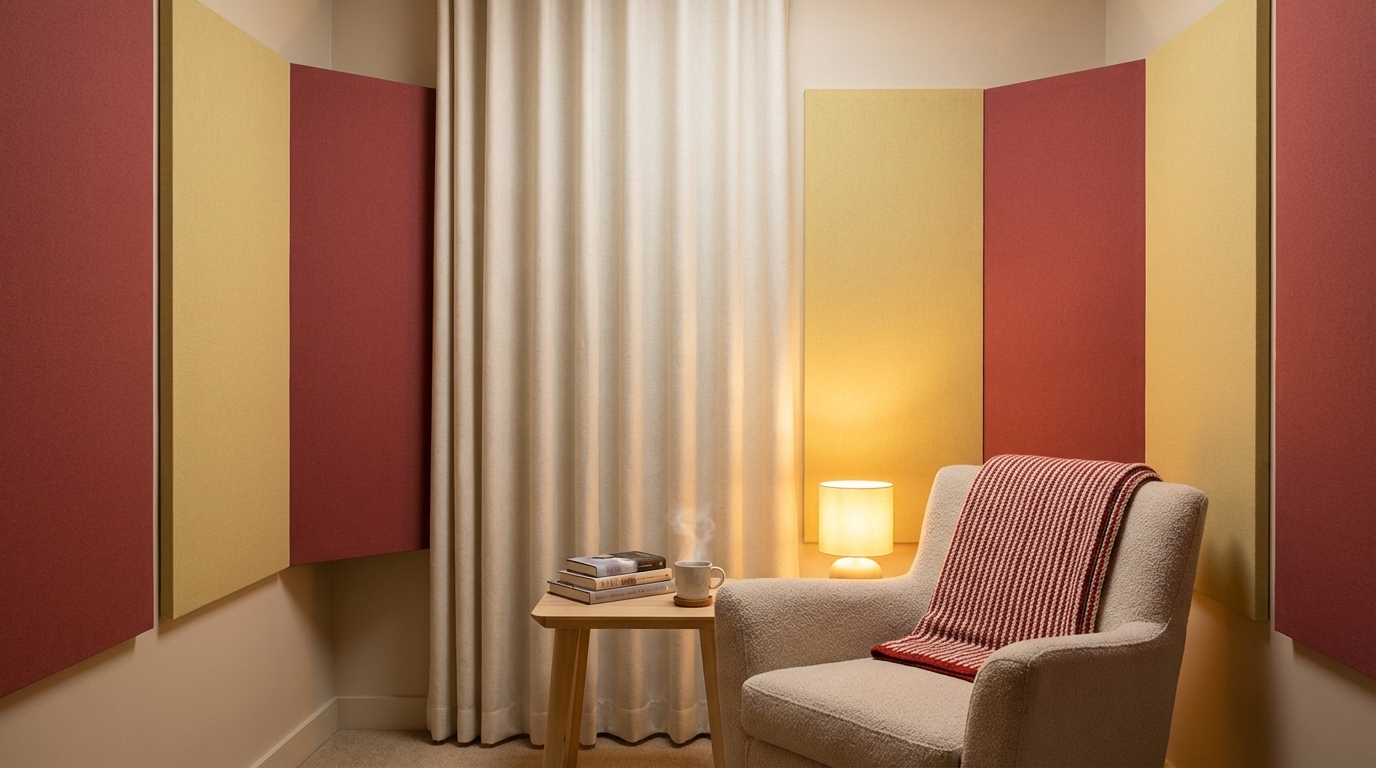
It is not easy to help someone heal when the house never seems to quiet down. Many of us have had those nights where every little sound feels louder than usual, and we hold our breath hoping the person we care for will stay asleep this time. Noise can make recovery feel longer, harder, and lonelier than it needs to be.
If you only remember one thing, let it be this: you do not need a perfect, studio-level soundproof room to support recovery. Gentle steps like soft-closing door hardware, heavier curtains, a white noise machine, and small changes in daily routines can bring noise down enough for better rest, fewer startles, and a calmer mood. Together, a series of modest, thoughtful choices often helps more than one expensive renovation.
Noise does not need to disappear completely to support healing; it only needs to feel softer, more predictable, and less intrusive.
Why quiet matters so much during recovery
When someone is sick, in pain, or adjusting to new limitations, sound can feel sharper and more exhausting than it did before. Recovery asks a lot of the body and mind, and constant noise can feel like one more demand that never lets up.
How noise affects sleep, pain, and stress
Even when a person does not fully wake up, sudden or ongoing noise can disturb the deeper stages of sleep that are so helpful for healing. That can mean:
- More frequent awakenings through the night
- Lighter, less refreshing sleep
- More daytime fatigue and irritability
- Harder time coping with pain, anxiety, or confusion
For people recovering from surgery, heart conditions, stroke, or serious infections, restful sleep can support better blood pressure control, steadier mood, and improved immune function. For those living with dementia, brain injury, or sensory processing differences, extra noise can worsen confusion, agitation, or fear.
Pain and noise interact in both directions:
- Pain makes sound feel bigger and harder to tolerate.
- Noise raises stress hormones, which can increase how strongly pain is felt.
When we soften the sound environment, people often report that pain feels more manageable, even if nothing else has changed.
Emotional weight of a noisy home
Many caregivers describe feeling on edge, waiting for the next slam of a door, barking dog, or blaring television to undo an hour of calming and comforting. The person recovering may feel guilty for needing quiet, as if they are asking too much from family or neighbors.
We can gently shift that story. Quiet is not a luxury. It is part of basic comfort, very much like keeping a room at a comfortable temperature or having enough pillows for support.
When we protect quiet time, we are not being difficult. We are creating the conditions the body and mind need to do their healing work.
Understanding types of noise before we start changing things
Before we put money or effort into soundproofing, it helps to understand where noise comes from and how it behaves. This way, we can choose changes that match the actual problem instead of guessing.
Airborne vs structure-borne noise
Most home noise falls into two broad groups.
| Type of noise | Examples | How it travels |
|---|---|---|
| Airborne noise | Voices, TV, music, dogs barking, traffic, appliances humming | Moves through air, leaks through gaps, thin walls, doors, and windows |
| Structure-borne noise | Footsteps on floors, doors slamming, chair scraping, upstairs laundry, plumbing knocks | Vibrations travel through floors, walls, and framing |
Airborne noise is often easier to reduce with softer materials and better sealing. Structure-borne noise can be more stubborn and sometimes needs behavior changes or changes to how things are attached to walls and floors.
Outside vs inside noise
It also helps to notice the balance between:
- Outside noise: traffic, neighbors, lawn equipment, sirens, nearby schools or businesses
- Inside noise: TVs, kids playing, kitchen sounds, pets, doors, appliances
You might take a day or two and quietly jot down what tends to disturb rest most:
- Time of day
- Type of sound
- Where it seems to come from
- How the person you care for reacts
This simple “noise diary” can guide you toward the changes that have the most impact.
Setting realistic goals for quiet
We sometimes picture a hospital quiet room or a recording studio and feel discouraged when our own space is far from that. A home, especially one that includes children, pets, or multigenerational family, will always carry some sound.
Instead of chasing complete silence, we can set softer, kinder goals:
- Reduce sharp, sudden noises that startle or wake the person.
- Lower constant background noise that raises stress.
- Create a few predictable “quiet windows” each day for sleep and deep rest.
- Give the person recovering a sense of control: ways to soften or mask sound as needed.
You might sit with the person (if they are able to take part) and talk through questions like:
- “Which noises bother you the most?”
- “Is there a time of day when sound feels hardest to cope with?”
- “Would you prefer more quiet at night or during daytime naps?”
- “How do you feel about soft background sounds, like a fan or gentle music?”
Real success is not a perfectly silent room. It is a space where the person feels safer, less overwhelmed, and more able to rest when they need to.
Gentle soundproofing from the inside out: furniture, fabrics, and layout
A lot of helpful sound control begins with things we already own or can add gradually without construction.
Soft materials that “soak up” sound
Hard surfaces bounce sound around. Soft, thick materials absorb some of that energy and make a room feel calmer.
Here are some ideas that many caregivers find manageable:
- Rugs and carpet runners in hallways and outside the bedroom to soften footsteps and dropped items.
- Thicker curtains, especially if there is street noise. Lined or “blackout” curtains can help with both sound and light.
- Upholstered furniture instead of only wood or metal chairs in nearby rooms.
- Throw blankets and cushions in spaces close to the recovery room to break up echo.
- Fabric wall hangings or decorative quilts on walls that face noisy areas.
If allergies are a concern, you can choose washable covers and vacuum regularly with a HEPA filter. It is possible to make a room quieter and still keep air quality in mind.
Furniture placement as a simple sound shield
The way we arrange furniture can gently change how sound moves.
- Place a bookcase with books against a wall that faces noise (for example, the wall that backs up to the living room or hallway).
- Use a padded headboard on the bed, especially if the bed is against a wall with other rooms on the other side.
- Push a dresser or wardrobe against a wall that borders a noisy neighbor or a stairwell.
- Set a sofa or padded chair against shared walls in adjacent rooms to help “catch” sound before it reaches the bedroom.
These steps do not block everything, but they can reduce how directly sound hits the bedroom wall.
Choosing the quietest room possible
If you have any flexibility about where the person sleeps during recovery, room choice often matters more than fancy materials.
You might look for a room that:
- Faces away from the street or driveway.
- Is not directly under a busy hallway or children’s bedroom.
- Does not share a wall with a noisy bathroom, laundry area, or kitchen.
- Has a door that closes fully and a window that can latch tightly.
Sometimes simply swapping the person into a back bedroom or moving their bed to a different wall can lower noise dramatically.
Before spending on products, ask: is there a quieter room or layout option that we have not tested yet?
Reducing noise from doors, floors, and inside the house
A lot of disruptive sound comes from everyday movements inside the home. Small physical changes can make a real difference, especially at night.
Making doors softer and quieter
Doors usually create two kinds of problems: the slam of closing, and the gaps that let sound pass through.
Steps that often help:
- Soft-close hardware or stick-on bumpers on door frames so doors meet the frame more gently.
- Weatherstripping around the door to seal gaps and reduce sound leaks.
- Door sweeps or draft stoppers along the bottom to block both sound and drafts.
- Adjusting latches so doors close firmly but do not need to be slammed.
- Adding weight to hollow interior doors by hanging a thick fabric panel or quilt on the room side.
You might also:
- Agree that people will gently pull doors closed rather than letting them swing on their own.
- Keep frequently used doors slightly ajar during quiet hours so they do not latch loudly.
Quieting footsteps and daily movement
Footsteps, dropped items, and sliding chairs can all send vibrations through the home.
Helpful changes include:
- Rugs or carpet runners on wood or tile hallways near the bedroom.
- Felt pads or rubber caps on chair and table legs so they glide instead of scrape.
- Soft-close lids on toilets, trash cans, and laundry hampers.
- Gentle rules, like no running or jumping in the hallway during certain hours.
If the person is resting in a room under an upstairs space, you can:
- Place area rugs on the upstairs floor, especially where people walk the most.
- Shift noisy activities (like home workouts or heavy toy play) to a different area.
We cannot remove every thump, but we can lower the number and intensity of them.
Kitchen, laundry, and bathroom noise
The sounds of daily care can also disturb rest, especially in small homes or apartments.
You might find it helpful to:
- Run dishwashers and laundry machines during daytime hours when the person is more awake.
- Place anti-vibration pads under washing machines or dryers to reduce shaking noise.
- Put a small rug or mat in front of the bathroom sink to soften footsteps during nighttime handwashing or teeth brushing.
- Set bathroom fans to a lower speed if they are very loud, or choose a quieter model when there is a chance for replacement.
Sometimes a simple conversation within the household about “quiet hours” around the bedroom can help people stay mindful when turning on appliances or watching TV.
Managing outside noise: windows, curtains, and neighbors
Outside noise can feel the hardest to control because it belongs to other people or the surrounding area. There are still gentle steps we can take.
Helping windows block more sound
Standard single-pane windows, or older windows with gaps, let a lot of airborne noise through.
Possible upgrades and supports include:
- Weatherstripping around the frame to cut down gaps.
- Caulking any visible cracks or holes around window trim.
- Thick curtains that cover the window fully, ideally extending beyond the frame on all sides.
- Acoustic or “sound deadening” curtain liners if new curtains are not in the budget.
- Window inserts (clear panels that fit inside the existing frame) for renters or where new windows are not practical.
If a full window replacement is possible during a remodel, double or triple glazing with good seals can cut traffic and street noise significantly. For many caregivers, smaller changes still bring noticeable relief.
Landscaping and outside barriers
If you control the space immediately around your home:
- Planting dense shrubs or hedges along the side that faces the street can help break up sound.
- A solid fence (wood or composite) tends to block more sound than chain link.
- Outdoor rugs and cushions on patios and decks can lessen the echo of conversations outside the bedroom window.
These measures tend to help most with constant, lower-level noise instead of sharp, sudden sounds.
Talking with neighbors about shared quiet times
This part can feel sensitive. Many of us do not want to be seen as complaining, especially if neighbors already have their own stresses.
You might choose one trusted neighbor and gently share:
- That someone in your home is recovering from surgery, illness, or treatment.
- That rest has been hard because of certain noises (you can be concrete but kind).
- A specific, reasonable request, such as keeping loud music indoors after a certain hour.
For example:
“We are helping my father recover from heart surgery, and his sleep has been very fragile. On weekends, would it be possible to keep the backyard music lower after 9 pm? We really appreciate your help while he is healing.”
Not every neighbor will respond perfectly, but many will adjust once they understand the situation. It is also fair to remind yourself that asking for shared respect during a health crisis is not selfish.
Sound masking and gentle background noise
Quiet does not always mean silence. For many people, complete silence can feel unsettling, and the smallest noise becomes startling. Soft, steady background sound can cover or “mask” unpredictable noises.
White noise, fans, and nature sounds
Common options include:
- White noise machines with adjustable volume and sound types.
- Box fans or tower fans set to a steady, low setting.
- Apps or devices that play gentle rain, ocean, or forest sounds on a loop.
These do not remove noise, but they make sudden sounds less noticeable by smoothing out the contrast between “quiet” and “loud.”
When choosing sounds:
- Ask the person recovering what feels most soothing or least distracting.
- Keep the volume just high enough to soften outside noises, not so high that it becomes new noise pollution.
If the person has hearing aids, tinnitus, or sound sensitivity, you may need to test different options slowly and watch for signs of discomfort.
Television and music as background
Many people like to fall asleep with the television on, but it can be a mixed blessing for recovery. Quick changes in volume, surprise commercials, and bright screens can all disturb deep rest.
Gentler alternatives might be:
- Soft instrumental music without lyrics.
- Familiar audiobooks with a calm narrator, played at low volume.
- Relaxation or meditation recordings designed for sleep.
Some caregivers find it helpful to set a timer so audio stops after the person usually falls asleep. That way, the room will stay quiet during the deeper parts of the night.
Personal tools for the person recovering
Even when we adjust the home, there will still be sounds we cannot control. Personal tools can help the person feel less helpless about noise.
Earplugs, ear muffs, and hearing-safe choices
Ear protection is not suitable for everyone, so it is wise to check with a health professional when there are medical concerns. In some cases, hearing important alarms, breathing changes, or caregivers calling is more important than blocking noise.
For those who can safely use them, options include:
- Soft foam earplugs that mold to the ear canal. These are common and cheap, but some people find them uncomfortable.
- Wax or silicone earplugs that sit at the entrance of the ear instead of deep inside.
- Over-ear noise reducing muffs that cover the ear entirely. These can be helpful for daytime rest or for people who do not like things in their ears.
If the person uses a hearing aid:
- Talk with their audiologist about safe ways to reduce nighttime noise.
- Ask whether certain settings or “sleep programs” might help.
Comfort and safety matter more than maximum sound blocking. The person should still be able to reach help or respond in an emergency.
Eye masks and light control as part of a quiet feeling
While this article focuses on sound, light and sound often work together. Lowering brightness can help the body settle, which in turn makes noises less upsetting.
Tools that can help:
- Soft eye masks that do not press on the eyes and have adjustable straps.
- Blackout curtains to reduce streetlights, early morning sun, or car headlights.
- Dim, warm nightlights instead of overhead fixtures during nighttime care tasks.
A dim, calm room can make small, remaining sounds easier to tolerate.
Routines, communication, and “quiet culture” in the home
Noise control is not only about materials. It also grows from shared habits and expectations inside the household.
Creating predictable quiet times
It can be helpful to define specific “quiet windows” when the home will be kept as calm as possible, for example:
- Nighttime: 9 pm to 7 am.
- Daytime nap: 1 pm to 3 pm.
During these times, family or housemates might agree to:
- Lower TV and music volume.
- Avoid vacuuming, heavy cleaning, or loud hobbies.
- Use headphones for gaming or streaming.
- Keep conversations away from the bedroom door.
Posting a small sign on the bedroom door that says something like “Healing rest in progress” can remind everyone, including visitors, to be gentle with noise.
Talking with children about quiet without making them feel guilty
Children often want to help but may not always remember. Instead of scolding, we can invite them into the caregiving task:
- Explain in simple terms that the patient needs extra rest to help their body heal.
- Ask for their ideas on how the house can be softer and calmer.
- Turn it into a game, like “quiet feet” or “library voices” near the bedroom.
You might also plan “loud times” when children can play freely in another part of the home or outdoors, so they are not always being asked to hold back.
Supporting the caregiver’s own needs
Caregivers often absorb stress on both sides: protecting the person recovering from noise while trying not to impose on family, neighbors, or building staff. That stress can build into resentment or exhaustion.
It is reasonable to:
- Ask for help rearranging furniture or hanging curtains, instead of trying to do all the physical work alone.
- Let trusted friends know that your home needs to stay calmer for a while, so they understand if you decline loud social plans at home.
- Plan your own “quiet minutes” when you can rest your ears and mind, perhaps after the person has fallen asleep.
Your well-being and sleep matter, too. A calmer home supports both the person healing and the person doing the care.
When medical equipment and alarms are part of the noise
Some of the most stressful sounds in a recovery setting come from equipment that is there to protect health: oxygen concentrators, feeding pumps, bed alarms, and more. We cannot simply turn these off, but we may be able to reduce how disturbing they feel.
Talking with home health providers
If a nurse, therapist, or equipment technician visits the home, you can ask:
- Are there volume settings or tone options that are still safe but less jarring?
- Can certain alarms be adjusted to reduce false alerts while still keeping the person safe?
- Is the machine placed in the quietest safe location relative to where the person sleeps?
- Can tubing, cords, or stands be arranged so they do not rattle or knock against walls?
Sometimes simply placing a small piece of foam, a folded towel, or a rubber mat under a device can reduce vibration noise.
Balancing safety and comfort
Some alarms, like those for breathing or heart rate, must stay loud and clear so caregivers can respond quickly. Others, like reminders or low-level alerts, may allow more flexibility.
You might keep a simple chart:
| Alarm or device | Can volume change? | Who adjusted it? | Notes |
|---|---|---|---|
| Feeding pump | Yes / No | Home nurse / technician | Keep volume at medium, alarms wake caregiver but not patient |
| Oxygen concentrator | Yes / No | Supplier | Moved to corner on rubber mat to lower hum |
This record helps everyone who enters the home respect both the medical plan and the healing environment.
When more intensive soundproofing might be worth exploring
Most families will rely on simple changes. In some situations, more involved work may be reasonable, especially if:
- The person has a long-term condition that makes them very sensitive to noise.
- There is ongoing construction or traffic noise that cannot be avoided.
- The building has unusually thin walls, ceilings, or floors.
Wall and ceiling improvements
For owners, or renters with permission, some building changes can help:
- Adding insulation inside key walls or ceilings.
- Mounting acoustic panels on the walls facing the noise source.
- Creating a second layer of drywall with sound-dampening material between layers.
These projects cost more and take time, so they are usually reserved for long-term needs or major renovations that are already planned.
Flooring choices
If you are replacing flooring in a room below or above the recovery space, you might:
- Choose carpet with good padding instead of hard surfaces.
- Use underlayment products designed to reduce impact noise under laminate or hardwood.
Again, this is usually a future planning step, not something most caregivers can take on in the middle of a crisis.
Making a simple step-by-step plan
When life is already full of medical appointments, medication schedules, and emotional weight, soundproofing can feel like “one more thing.” It can help to break it into small, gentle stages.
Here is one way to structure it:
Stage 1: Awareness
- Keep a short noise diary for a few days.
- Talk with the person recovering about which sounds trouble them most.
- Notice which rooms or times of day feel most challenging.
Stage 2: Free or low-cost behavior changes
- Agree on quiet hours in the household.
- Move noisy activities away from the bedroom during rest times.
- Adjust TV and music habits; encourage headphones when practical.
- Practice gentle door closing and “quiet feet” near the bedroom.
Stage 3: Simple physical changes
- Add rugs, curtains, and door sweeps.
- Place bookcases or wardrobes on shared walls.
- Add felt pads and soft-close items where possible.
Stage 4: Sound masking and personal comfort tools
- Introduce white noise or gentle background sounds.
- Test earplugs or ear muffs if medically safe and comfortable.
- Adjust light with curtains or eye masks to support a calm environment.
Stage 5: Larger decisions
- If needed, speak with a contractor, building manager, or landlord about structural options.
- In long-term care situations, keep noise control in mind for any future moves or renovations.
At each stage, it helps to pause and ask the person recovering how they are sleeping, how their mood feels, and whether certain changes are more helpful than others. Our goal is not to “do everything,” but to find the mix of steps that offers the most comfort for the least strain.
Quiet is a kind of medicine we create together. Every softened footstep, gently closed door, and thoughtful choice about sound tells the person healing: “Your rest matters here.”