We have all had those moments where we stand in a bedroom, look at a heavy medical bed, and quietly worry: “Is this floor really strong enough?” It can feel unsettling, especially when we are doing our best to keep someone safe at home. The last thing any of us wants is to discover a problem only after something has gone wrong.
The short answer is: yes, most homes can safely support a medical bed, but only if the subfloor beneath is solid, stable, dry, and in good repair. The real risk usually comes from old, damaged, or poorly supported flooring, not the bed itself. Taking time to check what is under the carpet or vinyl, spreading the load, and fixing weak spots before bringing in a medical bed can prevent sagging floors, tripping hazards, noisy movement, and even structural failure in extreme cases.
Why subfloor stability matters so much for medical beds
A medical bed is not just another piece of furniture. It is more like a small piece of medical equipment that a loved one depends on for safety, comfort, and dignity. We ask that bed to do a lot: raise and lower, tilt, support transfers, and sometimes attach to lifts or side rails. All of that activity sends force down into the floor.
- The total weight is higher than a standard bed.
- The weight is more concentrated, usually on 4 to 6 small casters or legs.
- The bed moves: head and feet go up and down, the whole frame may tilt or articulate.
- Caregivers often lean and push on the bed when helping with transfers or repositioning.
If the subfloor is not stable, all of this can cause problems over time. The surface flooring might hide small movements and squeaks, but the deeper structure tells the real story.
A stable subfloor is part of the safety system of a medical bed. The bed, the mattress, and the subfloor all work together to protect the person in the bed and the people providing care.
What we mean by “subfloor” and “stability”
Before going deeper, it helps to be clear about what we are talking about.
| Term | What it usually means in a home |
|---|---|
| Subfloor | The solid sheet material (wood panels, plywood, OSB, or concrete) that sits on top of floor joists or a slab and under your visible flooring. |
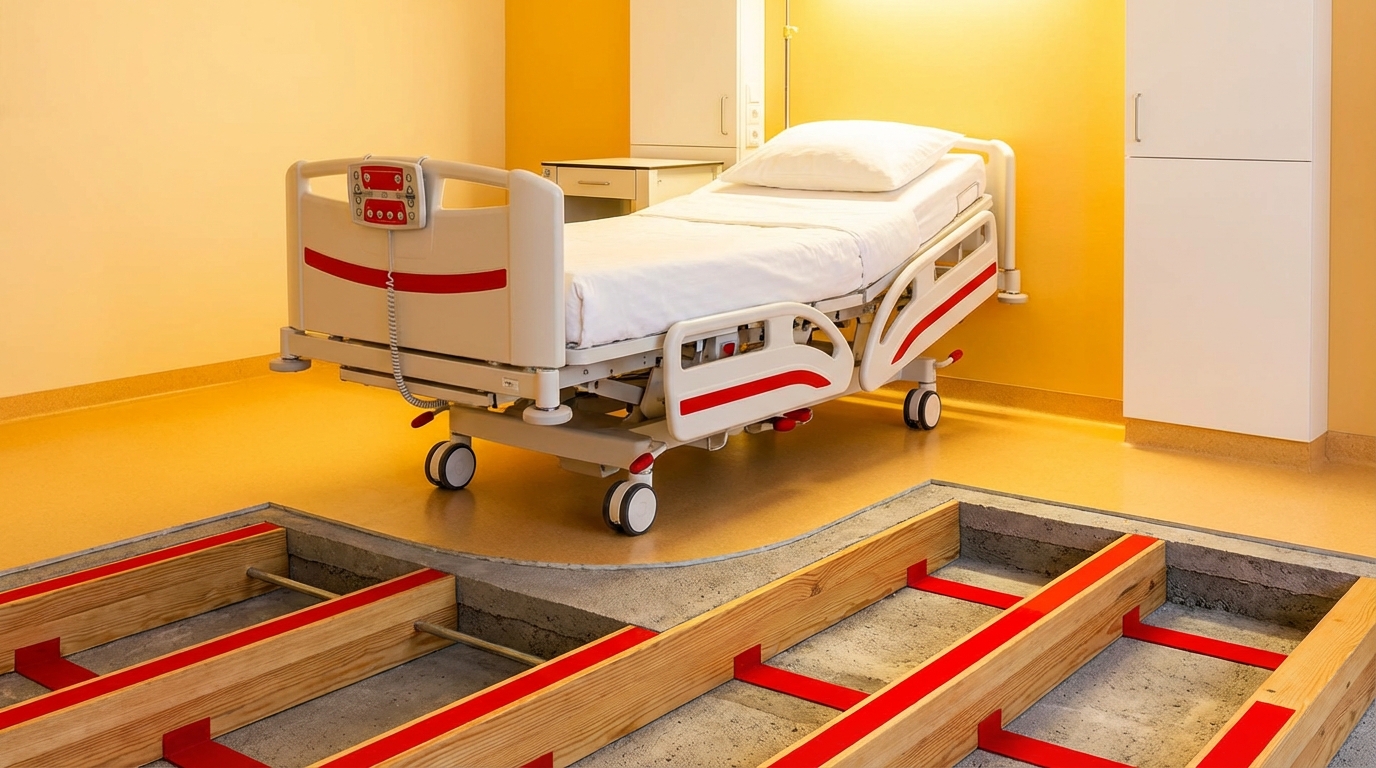
| Floor joists | The long horizontal beams (usually wood) that support the subfloor in houses with basements or crawlspaces. |
| Flooring | The visible walking surface: carpet, vinyl, laminate, hardwood, tile, etc. |
| Stability | How solid, level, and unmoving the subfloor is when weight is placed on it, and how well it can carry weight without damage. |
A “stable” subfloor for a medical bed should:
- Support the total load without bending or sagging more than a tiny amount.
- Stay level so the bed does not tilt, wobble, or roll on its own.
- Resist long term damage from weight, moisture, and movement.
- Remain quiet and firm, without loud creaks, pops, or shifting boards.
How much weight a medical bed puts on your floor
Weight is one of the most common worries. Many of us picture a hospital bed as extremely heavy and imagine it might crush a floor. The full story is a little calmer once we break down the numbers.
Typical weights involved
Here is a general range for home and semi-electric medical beds:
| Item | Approximate weight |
|---|---|
| Standard homecare bed frame (manual or semi-electric) | 150 to 250 lb |
| Hospital-grade full electric bed with side rails | 250 to 450 lb |
| Mattress (foam or innerspring) | 25 to 60 lb |
| Bariatric bed frame | 300 to 600 lb or more |
| Person using the bed | Varies, for bariatric setups sometimes up to 700 to 1,000 lb |
When we talk about subfloor stability, what really matters is:
- Total weight: bed + mattress + person + bedding + any attached equipment.
- How that weight is spread out through the casters or legs.
- Where in the room the bed sits in relation to supporting walls and joists.
How residential floors are usually built
Most building codes set a minimum design load for bedroom floors of around:
- Live load (people and furniture that can move): about 30 to 40 pounds per square foot (psf).
- Dead load (permanent materials): around 10 to 15 psf.
So a typical bedroom floor is designed to carry roughly 40 to 55 psf total, spread over the floor area.
In many cases, one medical bed with a person in it is within what a normal floor can carry. The concern grows when we have one or more of these conditions:
- Very heavy or bariatric beds.
- Very heavy individuals.
- Older homes with unknown structure or known damage.
- Floors that already squeak, bounce, or slope.
- Small rooms where most of the weight is on a limited area of floor.
The risk is rarely that a floor will suddenly collapse; the more common and quieter problem is slow damage, sagging, and increasing instability under a bed that never moves.
What can go wrong if the subfloor is not stable
A weak or damaged subfloor under a medical bed can cause several different kinds of trouble. Some are annoying, others are serious safety concerns.
1. Sagging floors and uneven beds
If the subfloor or joists bend under the concentrated load from the bed, you might notice:
- The bed looks lower on one side or one corner.
- Items placed on bedside tables slowly slide in one direction.
- The person in bed feels like they are always rolling to one side.
For someone who already has limited mobility, even a small tilt can increase fall risk, pressure injuries, and discomfort.
2. Movement, rocking, and wheel drift
An uneven or soft floor can cause:
- Bed wheels that do not all make solid contact.
- The bed to rock when the person moves or when staff raise the head or foot.
- Wheels that roll slowly downhill if the floor slopes.
If a caregiver is transferring a person from bed to wheelchair and the bed shifts, that moment of surprise can cause a fall or strain.
3. Noisy, creaking, and cracking sounds
When subfloor panels are not firmly fastened or when joists are undersized or damaged, movement can lead to:
- Loud creaks when the bed motor runs.
- Popping sounds as the person shifts weight.
- New noises that grow worse over time.
While noise alone is not always dangerous, it can frighten the person in bed, especially during the night, and it can warn us of worsening instability.
4. Damage to flooring and structure
Continuous heavy load in a concentrated area can lead to:
- Indentations in vinyl or laminate under each caster.
- Cracked tiles under the bed legs.
- Crushed carpet pad and visible dips in the surface.
- Over time, possible splitting or delamination of the subfloor.
In very serious cases, long term overload in a damaged area can cause partial floor failure. This is rare, but it is not something we want to test by trial and error.
5. Hazards for caregivers
We sometimes focus only on the person in the bed and forget that caregivers move around it many times each day. When the flooring and subfloor are unstable:
- There can be soft spots that feel like stepping on a sponge.
- Height changes or “dips” create trip hazards near the bed.
- Caretakers may unconsciously adjust their posture, which can cause back and leg strain over time.
A solid subfloor protects everyone who enters that room, not just the person using the medical bed.
How to tell if your subfloor might be a problem
Many of us do not see our subfloor directly because it is hidden under carpet, vinyl, or hardwood. Still, there are simple checks that can help you decide if you need a deeper look.
Simple observations you can make yourself
You might find it helpful to walk through these steps before the bed is delivered:
- Walk the room slowly. Feel for soft, bouncy, or “spongy” spots, especially where the bed will go.
- Listen for sounds. Notice loud creaks, pops, or cracks when you walk in different directions.
- Check for slopes. Place a small ball or marble on the floor and see if it rolls. A gentle slope can still work, but a strong slope is a warning sign.
- Look along the baseboards. Gaps between the floor and baseboard or visible floor sagging near interior walls might suggest structural movement.
- Look at the ceiling below. If this bedroom is above another room, check the ceiling under the planned bed location for cracks, stains, or sagging.
- Inspect for moisture. Stains, musty smells, or known plumbing leaks in or around the room can weaken subfloor panels.
Red flags that deserve a contractor or structural professional
If you notice any of the following, it is wise to bring in a qualified contractor or structural engineer before placing a heavy medical or bariatric bed:
- Large dips where furniture already leans or tilts clearly.
- Cracks in walls or ceilings that seem to center under the room where the bed will be.
- Repeated loud popping sounds when weight is added to the floor.
- Evidence of past rot, termites, or wood decay around the room or underneath it.
- Visible sagging joists or cracked beams when you look from a basement or crawlspace.
Bringing in a professional before a problem grows is almost always less costly, and far less stressful, than repairing serious damage later.
Special concerns for different types of subfloors
Not every home is built the same. The subfloor material and structure change the kind of risk we should think about.
Wood-framed floors with plywood or OSB subfloor
This is common in many single family homes and upper floors of townhouses or condos. Here are key points for medical beds on wood-framed floors:
- Orientation of joists: A bed placed so that its long side is across several joists spreads the weight better than one running parallel and sitting mainly on 1 or 2 joists.
- Joist size and spacing: Older homes may have smaller joists or wider spacing, allowing more bounce and deflection under load.
- Plywood thickness: Subfloor sheets that are too thin or that were patched poorly can flex under point loads like caster wheels.
- Age and moisture: Long term moisture exposure can weaken wood and cause delamination of plywood or swelling of OSB.
A contractor can usually check these things from below if there is a basement or crawlspace.
Concrete slab floors
Concrete slabs are common in ground floor rooms and some apartments. These floors are often stronger for concentrated loads, but there are still concerns:
- Surface flooring damage: Bed casters can crack tile or dent softer finishes.
- Levelness: Older slabs may still have slopes or dips that affect bed stability.
- Moisture: Concrete near ground level can absorb moisture that may harm flooring adhesives or cause mold under vinyl or laminate.
Usually, a stable concrete slab is very suitable for a medical or bariatric bed, but floor protection and level checks still matter.
Second floors, older homes, and mobile homes
These settings can demand extra care:
- Second floors: Floors above another living space might have more deflection than ground floors. Heavy beds and equipment can make this more noticeable.
- Older homes: Homes built before modern building codes may have undersized joists, long spans, or modifications from past renovations that affect strength.
- Mobile homes and manufactured housing: These often have lighter floor systems, and the manufacturer or a specialist should be consulted about heavy medical equipment or bariatric beds.
In these cases, it is safer to over-check rather than under-check, especially for heavier beds.
Protecting and strengthening the subfloor for a medical bed
Once we understand the possible risks, the good news is that there are many ways to improve safety. Some are simple and can be done by caregivers, while others need professional help.
Spreading the weight with platforms or pads
Rather than having 4 or 6 small wheels concentrate all the weight on a few tiny spots, we can spread the load over a larger area.
Common options include:
- Bed boards or platforms: A strong sheet of plywood or similar material placed under the bed frame can distribute weight across more of the floor.
- Caster cups or pads: Small, wide cups under each wheel spread each point load slightly and protect surface flooring.
- Thick rubber mats: Non-slip, high density mats under the bed footprint can help distribute load and reduce sliding on smooth floors.
If you are considering a platform, the material and thickness matter. Many people use:
| Material | Typical thickness | Notes |
|---|---|---|
| Plywood (construction grade) | 3/4 inch | Strong and widely available; edges should be sanded and sealed. |
| OSB (Oriented Strand Board) | 3/4 inch | Can work if kept dry; may swell if exposed to moisture. |
| Engineered wood panels | 3/4 inch | Often more stable, but cost can be higher. |
A simple, well-supported platform can turn a few narrow pressure points into a wide, gentle footprint that is kinder to your floors and subfloor.
You might find it helpful to:
- Cut the platform slightly larger than the bed footprint.
- Seal edges to avoid splinters and moisture damage.
- Consider a non-slip layer between platform and finished flooring.
A contractor or carpenter can help design a safe, stable platform, especially for bariatric beds.
Choosing where to place the bed in the room
Placement is more than just convenience for outlets and windows. Good positioning can reduce stress on the subfloor.
Consider:
- Near supporting walls: Exterior walls or some interior load-bearing walls usually sit directly on structural supports. Placing the bed so its heaviest area is closer to one of these walls can reduce deflection.
- Across joists, not along them: When possible, line up the bed so that its length crosses multiple floor joists rather than running parallel on one or two.
- Away from known weak spots: If a corner of the room has known soft or squeaky spots, avoid that area for the bed.
If you are unsure where the joists run, sometimes a contractor, handyman, or even a stud finder designed for floor use can help locate them.
Repairing and reinforcing the subfloor and structure
If early checks show problems, it might be wise to reinforce the floor before placing the bed. Some common approaches include:
- Sistering joists: Adding new joists alongside existing ones to stiffen the floor.
- Adding beams or posts below: In a basement or crawlspace, installing support posts under the area where the bed will sit.
- Replacing damaged subfloor panels: Removing sections with rot, mold, or severe damage and installing new, properly fastened panels.
- Re-fasten squeaky flooring: Driving screws through the subfloor into joists to reduce movement.
These are not do-it-yourself repairs for most caregivers. This is where a partnership with a local contractor, rehab engineer, or home modification specialist is very helpful.
Special case: Bariatric beds and higher weight capacities
Bariatric beds are designed for higher weight capacities, sometimes 600, 800, or even 1,000 pounds or more. The frame, motors, and mattress are heavier, and the person using the bed may have significant weight as well.
For these setups, subfloor stability becomes even more central.
Extra checks for bariatric placements
For heavy beds and users, it is wise to:
- Consult the bed manufacturer for total potential weight and footprint.
- Ask a structural engineer or experienced contractor to review the specific room and floor support.
- Consider placing the bed on a ground floor over a concrete slab when possible.
- Use heavy duty platforms or load spreading systems under the bed.
Some local building departments or insurance providers may have their own guidelines for very heavy medical equipment in homes. Checking with them ahead of time can prevent conflicts later.
How subfloor stability affects daily care and comfort
When we improve the stability of the subfloor under a medical bed, the benefits show up in everyday life, not just in structural safety reports.
Comfort for the person in the bed
A solid base helps:
- Keep the mattress level, which supports better posture and pressure distribution.
- Reduce unwanted rolling or sliding toward one side of the bed.
- Lower the chance of feeling sudden jolts when motors operate or when caregivers assist with repositioning.
For someone who spends many hours in bed, these details can have a real effect on pain levels, sleep quality, and sense of security.
Safety during transfers and positioning
Caregivers often do some of their most physically demanding work at the bedside. Subfloor stability supports:
- Safe bed height adjustments without sudden shifts or rocking.
- More predictable transfers to wheelchairs, commodes, or standing aids.
- Reduced risk of bed brakes slipping or wheels digging into soft spots.
When the bed does not rock or slide, caregivers can focus more attention on the person and less on controlling the equipment.
Protection of home value and long term maintenance
Many families hope that their home will continue to be comfortable and safe long after a period of caregiving. Strengthening and protecting the subfloor contributes by:
- Reducing long term sag that might otherwise require expensive floor leveling later.
- Preventing deep indentations or cracks in flooring that are costly to repair.
- Limiting hidden moisture or structural damage that can spread beyond the bedroom.
Investing in subfloor stability during a caregiving season can protect both the person you care for and the home you care about.
Working with professionals and asking the right questions
Many caregivers feel unsure about how to talk with contractors or suppliers about subfloor stability. It can feel technical, and we already have so many other concerns. A few clear questions can make those conversations easier.
Questions for the medical bed supplier
Before delivery, you might ask:
- “What is the total weight of this bed frame and mattress?”
- “What is the safe working load, including the person and equipment?”
- “How many casters or feet carry the load, and what is their spacing?”
- “Do you have any guidance about floor surfaces or load spreading platforms for this model?”
Having these numbers written down can help a contractor or engineer make sound recommendations.
Questions for a contractor or structural engineer
When you bring in a professional to look at subfloor stability, you might ask:
- “Can this room safely support a medical or bariatric bed with a total load of about [X] pounds?”
- “Are there any signs of damage or weakness in the joists or subfloor under this room?”
- “Would you recommend load spreading, extra support from below, or both?”
- “What work would you prioritize now, and what could reasonably wait?”
A good professional should be willing to speak in everyday language and explain options, not just present a single expensive solution.
Coordinating with therapists or home health teams
Occupational therapists, physical therapists, and home health nurses often have practical experience with medical beds in many different homes. They may:
- Notice floor instability during early visits or assessments.
- Advise on where in the home the bed should go for both safety and caregiving access.
- Help communicate concerns to family members who pay for repairs or to landlords in rental housing.
Bringing them into the conversation can turn vague worry into a concrete plan.
Special considerations in rentals and multi-unit buildings
Many caregivers do not own the home or apartment where they provide care. This adds another layer of concern when considering heavy medical beds.
When you rent your home
If you are a tenant:
- Review your lease to see if there are any clauses about heavy equipment or changes to the structure.
- Notify the landlord or property manager before bringing in a heavy medical or bariatric bed.
- Ask if they can provide any building information about floor construction and weight limits.
- Clarify who is responsible if subfloor or structural repairs are needed.
Some landlords are unfamiliar with the needs of home medical care. Calm, clear explanations and written documentation from your bed supplier or therapist can help them understand the situation.
In condominiums or co-op buildings
In multi-unit buildings with shared structures:
- There may be building rules about heavy equipment and noise.
- The association or board may need to approve certain types of modifications, such as adding posts or beams.
- Building engineers may already know where the strongest floor areas are.
You might find it helpful to request written guidance from the association so expectations are clear.
Practical steps to prepare your floor before the bed arrives
To bring all of this together, here is a calm, stepwise way many families handle subfloor stability before a medical bed is delivered.
Step 1: Gather information about the bed and the room
- Get the bed’s total weight and safe working load from the supplier.
- Measure the bedroom size and note where outlets and doors are.
- Decide where, in general, the bed needs to go for caregiving access.
Step 2: Walk and inspect the room
- Feel for soft spots, slopes, or bouncing as you walk.
- Listen for creaks and pops.
- Look at the ceiling below for cracks or sagging, if accessible.
- Check for any history of leaks or damage in that area of the home.
Step 3: Decide if you need professional help
- If the bed is very heavy, the user is bariatric, or the room feels unstable, contact a contractor or structural engineer.
- Share the bed weight and ask about reinforcing or supporting the floor.
- Discuss simple load spreading, such as platforms, if that fits your situation.
Step 4: Prepare the surface and any platforms
- Clear the room and repair minor floor issues such as loose boards or torn vinyl.
- If using a platform, have it cut, sealed, and placed where the bed will go.
- Use caster cups or protective pads suitable for your type of flooring.
Step 5: Monitor the floor over time
After the bed is installed:
- Recheck for new noises, dips, or cracks every few months.
- Watch for any change in how the bed sits or rolls.
- Address small concerns early, before they grow larger.
Caring for the subfloor is one more way of caring for the person who rests above it. It can feel like one more task, but it supports safety, comfort, and peace of mind for everyone involved.