
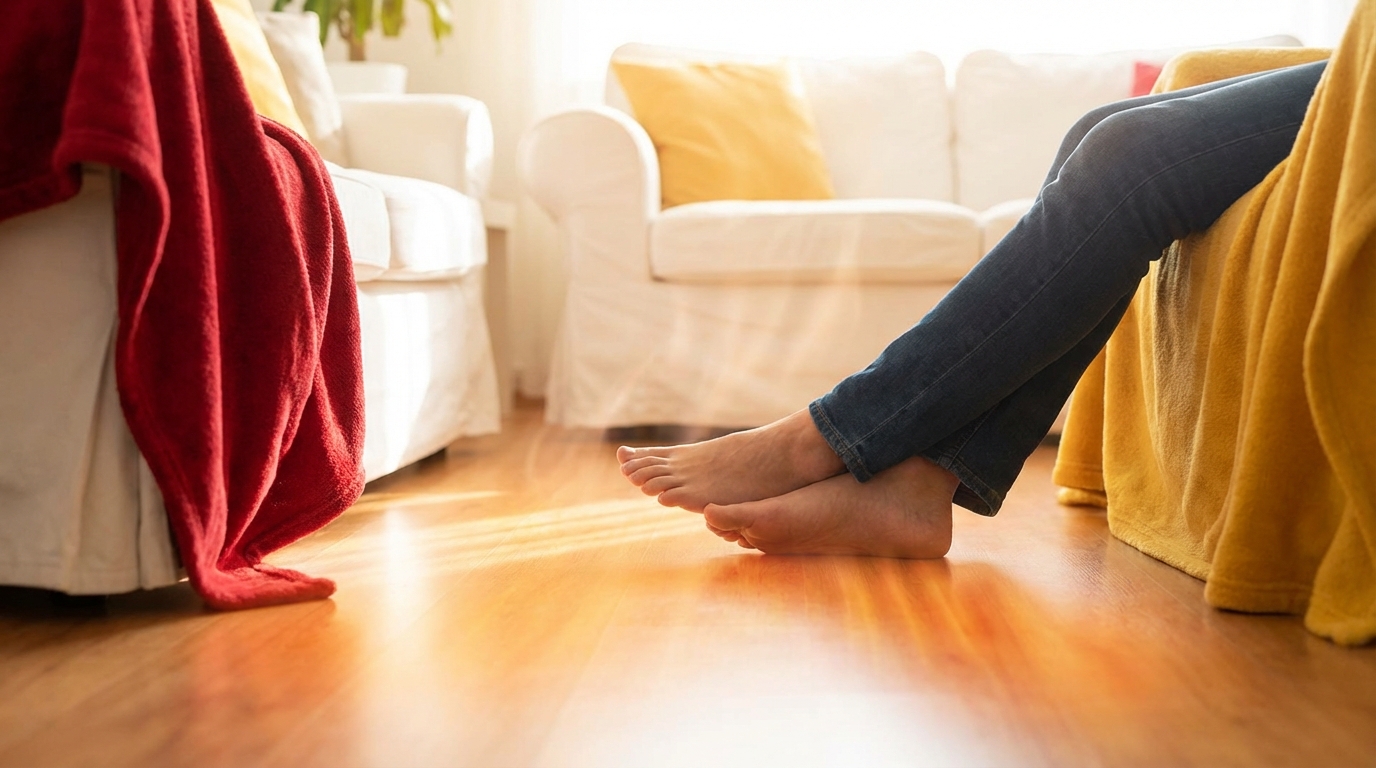
It is hard to watch someone you love struggle to take those first few steps in the morning, or to see them tense up because every move sends a jolt of pain through their joints. Many of us who care for an older parent, a spouse, or who live with arthritis ourselves, know that cold floors can turn a simple trip to the bathroom or kitchen into something we almost dread.
The short answer is that underfloor heating can be very gentle and comforting for people with arthritis and poor circulation. Warm, evenly heated floors may help ease morning stiffness, support blood flow, lower the risk of slips from shivering and rushing, and make the home feel safer and more welcoming. It is not a cure, and it will not replace medical treatment, but it can be a practical way to reduce discomfort and daily strain.
How Warm Floors Support Arthritic Joints
When we talk about underfloor heating and arthritis, we are really talking about warmth, consistency, and safety. Those three things together can make a real difference for aching joints and tired muscles.
- Warmth can relax tight muscles and tendons around stiff joints.
- Gentle, even heat avoids the harsh “hot-cold” swings that can trigger more soreness.
- A warm floor reduces the shock and guarding that happens when a tender foot hits a cold surface.
Why warmth often feels good on arthritic joints
Many people with arthritis say that their joints feel worse in the cold, especially in the early morning or in damp weather. The science is still evolving, but we have some clear ideas:
| Effect of warmth | How it can help arthritis |
|---|---|
| Improves local blood flow | Brings oxygen and nutrients to joint tissues, removes waste products that can irritate nerves. |
| Relaxes muscles | Reduces muscle guarding and spasms that increase pain around already inflamed joints. |
| Softens connective tissue | Makes tendons and ligaments slightly more flexible, which may ease stiffness. |
| Soothes pain signals | Heat can calm the nerves that transmit pain, giving a gentle “soothing” effect. |
We often see people using hot packs, warm baths, or heated blankets to get this effect. Underfloor heating brings that same idea into the background of daily life, so the person is not always chasing warmth; it is simply there when they stand, walk, and move through the home.
Warm, steady background heat is kinder to arthritic joints than sudden blasts of high heat or the shock of chilled surfaces.
The benefit of avoiding “cold shock” to the feet
Cold floors can create a sharp contrast for someone whose nerves and joints are already on high alert. This can cause:
- Instant tensing of the calf and foot muscles.
- More guarding and stiffness in the knees and hips.
- A higher risk of shuffling, grabbing furniture, or rushing to get off the cold surface.
Underfloor heating provides a warm, consistent surface so the first step out of bed, or off a chair, feels less like a shock and more like a gentle invitation to move. This matters most in:
- Bathrooms, where tile floors can be icy and slippery.
- Hallways during the night, when someone might be less steady and more sleepy.
- Kitchens, where people often stand for longer and may already be fatigued.
For some, this alone reduces that early-morning dread that can feed into anxiety and avoidance of movement.
Supporting regular movement, not just comfort
One of the most caring things we can do for someone with arthritis is to help them move in safe, gentle ways throughout the day. Movement is not only for strength; it helps keep joints nourished and less stiff.
Warm floors can support:
- Short, frequent walks at home, instead of sitting still to “avoid getting cold.”
- Simple home exercises that require standing, such as heel raises or gentle stretches.
- More even weight-bearing through the feet, because the person is not pulling away from cold spots.
Anything that makes it easier and more pleasant to move from bedroom to bathroom to kitchen can add up to better joint health over time.
This is where underfloor heating starts to feel like more than a luxury. It quietly encourages a bit more movement, especially for those who might already feel hesitant or fearful of pain.
Underfloor Heating and Circulation: How Warm Floors Help Blood Flow
For people with poor circulation, Raynaud’s, diabetes, or those who just always seem to have cold hands and feet, the idea of stepping onto a warm floor can feel like a relief even before it is installed.
What warmth does for circulation
When the body senses warmth at the skin:
- Blood vessels near the surface widen.
- Blood flow to the skin and soft tissues increases.
- The body does not need to tighten small arteries to conserve heat.
For someone with circulation problems, or who takes medications that affect blood flow, this gentle warming of the feet and lower legs can:
| Area of benefit | Possible effect of warm floors |
|---|---|
| Feet and toes | Less numbness and tingling, warmer skin, less color change from white/blue to red. |
| Lower legs | Reduced tightness from cold-induced muscle tension. |
| Whole body comfort | Feeling generally warmer, which may reduce shivering and teeth chattering. |
For many people, keeping the feet comfortably warm can calm the whole body and reduce the sense of “always feeling chilled.”
Why underfloor heat is often gentler than space heaters
To warm a room, we often reach for a portable heater or a very hot radiator. These have some risks, especially for older adults and those with neuropathy:
- Very hot surfaces can cause burns if someone leans or falls against them.
- Dry, blowing air can irritate the skin and airways.
- Heat is uneven, leaving some spots stifling and others still cold.
Underfloor heating is usually set to a lower surface temperature than a radiator, but it spreads that warmth over a much larger area. The result is:
- Moderate, steady heat instead of sharp hot spots.
- No exposed coil or heater body to bump into.
- A more natural feeling of warmth that comes from the ground up.
For someone with diabetic foot disease or reduced sensation, avoiding direct contact with very hot devices is especially important. A correctly designed underfloor system can be safer, because the surface never reaches “burn” temperatures.
Special note for people with diabetes or neuropathy
This is an area where we need to be careful and honest. Warm floors can feel wonderful, but for people who do not feel heat properly in their feet, there is also a risk.
If you care for someone with diabetes, peripheral neuropathy, or severe vascular disease, consider these points:
- Set floor temperatures conservatively. The goal is gentle warmth, not “toasty hot.”
- Check the skin regularly for redness, blisters, or color changes.
- Encourage wearing a thin sock rather than standing barefoot for long periods.
- Talk with the person’s doctor or podiatrist before installing heating in areas where they sit or stand for extended time.
Warmth can be healing, but only when the person can sense it and move away if it is too much.
Types of Underfloor Heating and What They Feel Like Day to Day
When we say “underfloor heating,” we are usually referring to two main systems: electric and hydronic (water-based). Each has its own pros and cons for a caregiving or home accessibility situation.
Electric underfloor heating
Electric systems use heating cables or mats laid under the floor surface.
- Common in bathrooms, small kitchens, or single rooms.
- Often easier to add during a renovation of one area.
- Heats up more quickly, which can suit morning routines.
From a comfort and caregiving point of view:
- They can be set on timers to warm the bathroom before the person gets up.
- Temperature controls are usually simple wall thermostats.
- A well-installed system gives an even warmth, but quality of installation matters.
Electric systems can be more costly to run in large spaces. For targeted areas that matter most for arthritis and circulation, like the bathroom or a main hallway, they can be very practical.
Hydronic (water-based) underfloor heating
Hydronic systems use warm water that circulates through pipes under the floor.
- Often connected to a boiler, heat pump, or other central heating unit.
- Better suited to whole-house or large-area heating.
- Slower to heat up, but tends to maintain very steady temperatures.
For arthritis and circulation:
- The slow, constant warmth can be especially kind to stiff joints.
- Because the surface temperature is quite moderate, it can feel gentle and safe.
- When paired with good insulation, it can make the whole home more evenly warm.
Hydronic systems usually require more planning and may be easier to install in new builds or major remodels than in small, quick projects.
Floor finishes and their effect on comfort
The floor covering you choose affects both how well the system works and how it feels for the person walking on it.
| Floor type | How it works with underfloor heating | Comfort notes for arthritis & circulation |
|---|---|---|
| Tile or stone | Excellent heat transfer, great for bathrooms and kitchens. | Feels very warm when system is on, but very cold when off. Hard surface can be tough on joints; consider cushioned mats where safe. |
| Vinyl / luxury vinyl planks | Generally suitable with proper product choice. | Softer underfoot than tile, easier on knees and hips while still passing warmth. |
| Laminate | Some types work well; always check manufacturer guidance. | Moderately warm feeling, smoother to walk on than bare tile. |
| Engineered wood | Selected products can pair with underfloor heating. | Natural feel underfoot; warmth can help but surface is still fairly firm. |
| Carpet | Only suitable if low tog / thin and approved for use over heating. | Softer, more forgiving for painful joints, but can reduce heat transfer. |
For someone with both arthritis and circulation issues, a thoughtful mix can work well: heated tile or vinyl in the bathroom, cushioned but heating-compatible flooring in living areas, and non-slip mats in key standing spots.
Comfort, Safety, and Independence in Daily Routines
Underfloor heating touches many everyday moments: getting out of bed, using the toilet, taking a shower, walking to the kitchen, and doing small chores. For a person living with pain or weakness, each of these moments can feel like a small challenge. Warm floors can smooth some of those rough edges.
Morning routines: getting out of bed without dread
The first steps in the morning are often the hardest for people with arthritis. Joints are stiff, muscles are tight, and circulation has slowed overnight.
Underfloor heating can help if:
- The bedroom or at least the path to the bathroom has gently warmed floors.
- The bathroom itself feels inviting rather than icy, especially around the toilet and sink.
- A timed system turns on before the person usually wakes up, so the warmth is already in place.
When the floor feels welcoming instead of punishing, people are less likely to delay getting up, which can feed a cycle of stiffness and inactivity.
As caregivers, we often see that when morning goes more smoothly, the mood for the rest of the day improves as well.
Bathroom safety and dignity
The bathroom is a common place for falls, and it can also be a place of embarrassment and frustration. Cold tile often makes people hurry, which is the opposite of what we want.
Heated bathroom floors can support:
- Less rushing during toileting or washing, because the person is not shivering or eager to escape the cold.
- More willingness to use grab bars and sit on a shower seat, rather than “quick in and out” patterns that increase fall risk.
- Drying of small amounts of water on the floor, which may reduce slippery spots (though proper mats and non-slip surfaces are still necessary).
Combining underfloor heating with other aids such as:
- Raised toilet seats or comfort height toilets.
- Non-slip shower mats or textured tiles.
- Grab bars placed near the shower, bath, and toilet.
- Good lighting for nighttime trips.
can make the bathroom far safer and more comfortable for a person with arthritis and circulation problems.
Standing activities: kitchen and laundry
Cooking, washing dishes, and doing laundry require time on the feet. For someone with aching knees, hips, or swollen ankles, every minute counts.
Warm floors may:
- Reduce the discomfort that comes with standing in one place on a cold, hard surface.
- Help the person stand with better posture, because they are not hunching or shifting to avoid cold spots.
- Lower the urge to rush through tasks, which can lead to accidents or forgotten steps.
Pairing underfloor heating with:
- Cushioned anti-fatigue mats where safe and non-slip.
- Chairs or perching stools so tasks can be done sitting when needed.
- Well-organized storage to avoid excessive bending or reaching.
creates a kitchen or laundry space that respects the person’s energy and comfort.
Energy, Cost, and Practical Considerations
Many families worry that underfloor heating is too expensive or wasteful. It is wise to look closely at this, especially if we are balancing medical bills and other care costs.
Comparing underfloor heating with traditional radiators
From a comfort and health perspective, underfloor systems offer some features that can matter in caregiving:
| Aspect | Underfloor heating | Radiators / space heaters |
|---|---|---|
| Heat distribution | Even, floor to ceiling; fewer cold corners. | Warm near the unit, cooler further away, hot and cold patches. |
| Dust movement | Less air movement; can be gentler for those with asthma or allergies. | More convection currents that stir dust, especially with fan heaters. |
| Contact risk | No sharp, hot object sticking out from walls. | Risk of bumping or burning on hot surfaces or knocking over portable heaters. |
| Comfort for feet and legs | Direct gentle warmth to feet and lower limbs. | Feet may remain cold even when air is warm. |
For arthritis and circulation, those last two rows are often the most meaningful.
Energy use and controls
Energy use depends on many factors, such as insulation, floor type, climate, and how the system is operated. Some ways to keep things reasonable:
- Use programmable thermostats to warm key areas for the times they are most used.
- Set modest target temperatures; warm enough for comfort, not “tropical.”
- Insulate properly under the heating layer, so heat goes up into the room, not down into the ground.
- Use underfloor heating mainly in the spaces where it brings the most health benefit, such as the bathroom and main living paths.
A carefully controlled, well-insulated system can offer comfort without turning into a burden on the household budget.
It can help to speak with a trusted installer who understands both the technical side and your care needs, and to ask plain questions about running costs in your situation.
Who Might Benefit Most, and Who Should Be Careful
Not every home and not every person will benefit from underfloor heating in the same way. Some conditions make it more attractive, while others require extra caution.
People who often benefit
Underfloor heating tends to be especially helpful for:
- Older adults with osteoarthritis of the knees, hips, or feet.
- People with inflammatory arthritis (such as rheumatoid arthritis) who feel worse in the cold.
- Those with Raynaud’s phenomenon or chronically cold feet and hands.
- People who wake during the night to use the bathroom and feel unstable on their feet.
- Anyone with chronic pain who is sensitive to draughts and temperature swings.
Family caregivers often notice that the person:
- Moves more freely in warm, even temperatures.
- Is less anxious about using the bathroom or shower.
- Complains less about cold floors and the “shock” of getting up.
Situations that call for caution or medical advice
There are also groups where we should slow down and seek professional guidance before making changes:
- People with severe peripheral neuropathy who may not feel heat or pain in their feet.
- Those with advanced peripheral arterial disease, where too much heat on the legs may be risky.
- Anyone with open ulcers or wounds on the lower legs or feet.
- People with conditions where doctors have given specific instructions about avoiding heat (for example some forms of multiple sclerosis during flare-ups).
For these individuals, gentle underfloor heating may still be possible, but:
- Floor surface temperatures should be kept lower.
- Socks or slippers may be needed as a barrier.
- Regular skin checks and medical follow-up become even more important.
Practical Planning for Caregivers and Families
When we care about someone, we often think in terms of medication lists, appointments, and equipment. Heating can feel like a side issue, but it shapes every moment they are at home.
Deciding where underfloor heating matters most
You may not need or be able to heat the whole home from the floor. It can help to prioritize:
- Bathroom: usually the highest value space for warmth and safety.
- Main bedroom: especially around the bed and path to the door.
- Key hallway: that connects bedroom, bathroom, and living area.
- Kitchen: if the person spends long periods standing to cook or clean.
Some families choose a “route of warmth” that covers the important paths the person walks many times per day.
Combining underfloor heating with other warmth strategies
Underfloor heating does not need to act alone. Gentle, arthritis-friendly warmth can come from:
- Layered clothing that is easy to put on and take off.
- Soft, warm socks with good grip on the soles.
- Heated throws or blankets for resting areas, used with care.
- Warm drinks and soups, especially on cold days.
When the basic environment (room temperature and floor warmth) is supportive, these extra touches work better and feel more comforting.
Involving the person in choices
If the person living with arthritis or poor circulation is able to share their views, involving them in choices can increase comfort and dignity. You might talk together about:
- Which rooms feel “worst” in winter or early morning.
- Where they feel most afraid of slipping or falling.
- What temperature range feels comfortable for them.
- How much they value warm floors compared with other changes, such as a new recliner, better lighting, or bathroom rails.
Homes that support comfort and independence often come from shared decisions, not from caregivers deciding alone what is “best.”
Sometimes, simply being heard about where and when pain feels worst can relieve some of the emotional burden the person carries.
What Underfloor Heating Cannot Do
It can be tempting to hope that warm floors will fix everything: the stiffness, the pain, the fear of falling. Warmth helps, but it has limits, and being honest about those limits is a form of respect.
Not a replacement for medical treatment
Underfloor heating does not:
- Reverse joint damage from arthritis.
- Replace medications prescribed by a doctor.
- Correct problems with blood vessels or heart function.
- Take the place of physical therapy or gentle exercise.
It is better to see it as one piece of a care plan that may include:
- Medications to control pain and inflammation.
- Exercises to strengthen muscles and protect joints.
- Weight management, if advised by the medical team.
- Mobility aids such as canes, walkers, or braces.
Not a complete solution for falls
Warm floors may reduce certain risks, such as rushing and shivering. They do not remove other fall risks, such as:
- Poor lighting.
- Loose rugs or clutter on the floor.
- Footwear that does not grip properly.
- Sudden drops in blood pressure when standing.
Underfloor heating works best alongside:
- Good home lighting, especially at night.
- Decluttering and removal of tripping hazards.
- Sturdy, well-fitting shoes or slippers indoors.
- Regular medical review of blood pressure and medications that cause dizziness.
Not right for every budget or building
Some homes are difficult or costly to retrofit with underfloor heating, particularly older buildings with limited floor depth or poor insulation. In such cases, other steps can still make a meaningful difference:
- High quality, non-slip rugs or mats that feel warmer underfoot.
- Insulated slippers and socks designed for people with poor circulation.
- Improved overall heating and draught-proofing of windows and doors.
- Small heated bathroom floor mats that are safe and medically approved, if full underfloor installation is not possible.
If you find yourself feeling guilty that you cannot afford or install underfloor heating, it may help to remember that care is made up of many small, thoughtful choices, not one single gadget or system.
Bringing It Together: Warmth as Part of a Caring Home
Underfloor heating can play a quiet but strong role in helping people with arthritis and circulation problems feel more at ease in their own homes. By:
- Offering gentle, even warmth to sensitive joints and cold feet.
- Reducing the shock and tension that cold floors create.
- Supporting steady movement from room to room.
- Making key spaces like bathrooms and kitchens feel safe and welcoming.
it can support both physical comfort and emotional wellbeing.
As caregivers, family members, and community supporters, we know that small changes in the environment can add up to big changes in daily life. Whether underfloor heating becomes part of your home or not, the questions it raises are helpful ones: Where does cold make life harder? Where could warmth ease pain and fear? How can the home itself share the work of caring for the person we love?
When warmth lives quietly in the floor beneath us, every step can feel a little less heavy and every room can feel a little more like a place of rest, rather than a place of struggle.