
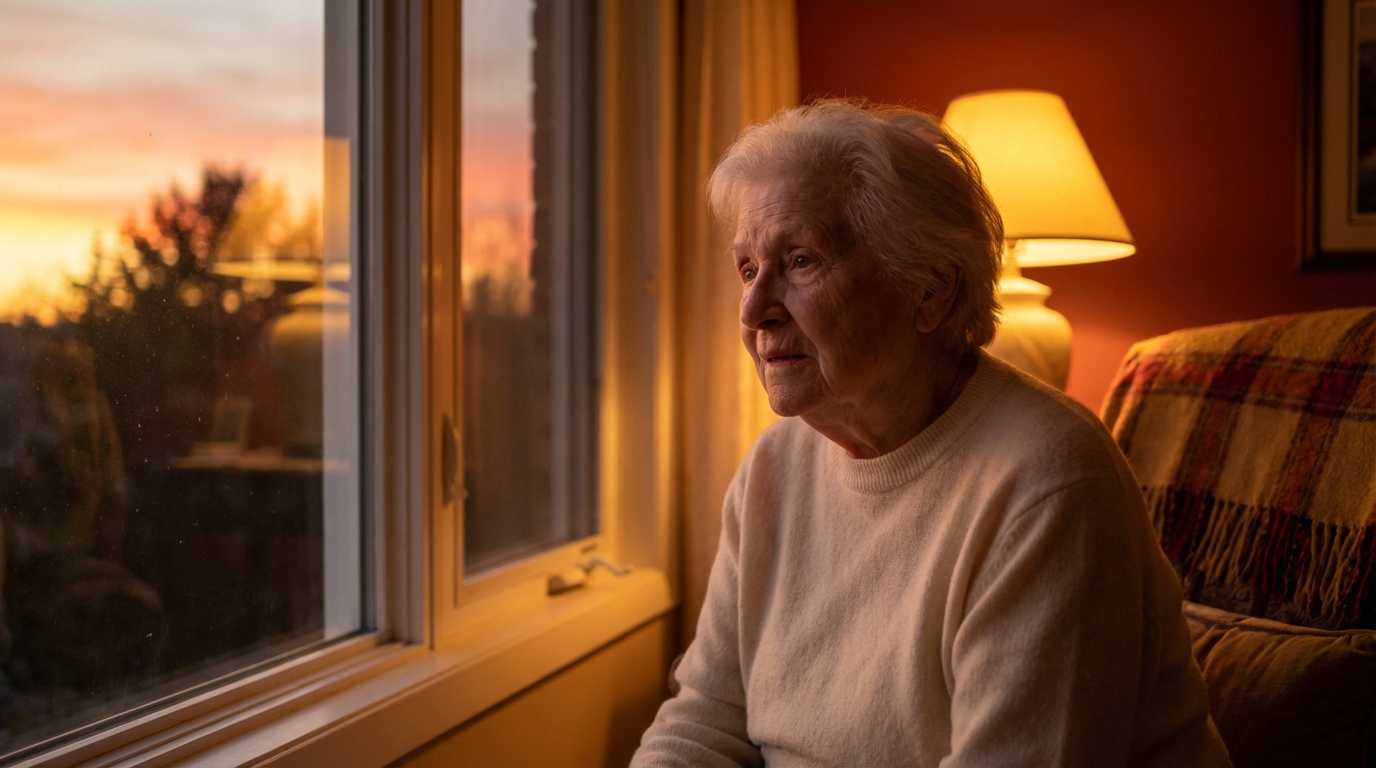
It is very hard to watch the person we love change as the day goes on. Many of us have felt that quiet dread as late afternoon approaches, wondering if this evening will bring confusion, anger, or wandering again. If you are noticing that your loved one with dementia seems worse or very different later in the day, you are not alone, and you are not doing anything wrong.
In simple terms, “sundowning” is when a person with dementia becomes more confused, restless, anxious, or upset in the late afternoon, evening, or during the night. It is not your fault, it is not them “acting out,” and it usually reflects how tired and overwhelmed their brain feels later in the day. While there is no quick cure, gentle routines, good lighting, calm communication, and careful attention to basic needs can soften these episodes and sometimes reduce how often they happen.
What “sundowning” really is
Many caregivers describe the same pattern: mornings feel calmer, the person might be able to follow a conversation or a simple activity, and then as the sun starts to go down, everything shifts. Confusion deepens, mood changes, or new behaviors appear that were not present earlier in the day.
Some common things we see with sundowning include:
- Increased confusion or disorientation as evening approaches
- More agitation, pacing, or restlessness at the end of the day
- Suspicion, fear, or accusing others late in the day
- Seeing or hearing things that are not there
- Insisting on “going home” even when already at home
- Staying awake at night or waking often, thinking it is daytime
Sundowning is not a separate disease. It is a pattern of behavior and symptoms that often shows up in people who already have dementia.
How sundowning shows up in daily life
We can better support someone when we have a clear picture of what this looks like in real life. The signs of sundowning can vary from person to person, and from day to day. Some patterns that many caregivers notice are:
- Changes in mood: The person may become more irritable, tearful, or anxious. They might say things like “I need to go home,” “You are keeping me here,” or “Something is wrong.”
- Changes in behavior: Pace, fidget, pick at things, or repeatedly get up and sit down. They might start opening and closing drawers, trying doors, or re-checking the same rooms.
- Changes in thinking: Become more confused about time, place, or who people are. They may mix up day and night, or think they have to “go to work” or “pick up the children.”
- Sleep problems: Have trouble falling asleep, wake during the night, or sleep in short bursts. Some people are calm but wide awake, while others are restless and agitated.
Many caregivers say, “It is like a switch flips around 4 or 5 p.m.” Noticing that pattern is actually a helpful first step in caring for both your loved one and yourself.
Why sundowning happens
Sundowning does not have one single cause. Instead, it seems to come from a mix of brain changes, body rhythms, and the environment. It can help to think of the brain as already working very hard to process the world. By late afternoon, that same brain is tired, light is changing, and signals are less clear.
Changes in the brain and body clock
In dementia, the parts of the brain that handle time, sleep, and alertness can be damaged. The “body clock,” often called the circadian rhythm, does not work as smoothly. This means:
- The person may not feel sleepy at night, even when tired.
- They may mix up days and nights.
- The shift from daylight to evening may feel confusing and unsafe.
The brain also has a harder time handling many sights and sounds at once. By late in the day, the person has taken in a lot of information. Their brain is worn out, and that can show up as frustration, confusion, or fear.
Fatigue and “decision overload”
Think of how you feel on a very long day: you are more short-tempered, less patient, and small problems feel bigger. Many people with dementia live in that state often, especially later in the day. They may have spent hours trying to follow conversations, find words, recognize faces, and remember where things are.
That constant mental effort wears them down. When the brain becomes tired, behaviors that were under control earlier may show. This can look like:
- Shouting or using harsh words
- Refusing care or meals
- Becoming clingy or very suspicious
Sundowning often appears when someone is mentally or physically exhausted, even if they have done “very little” from our point of view.
Light, shadows, and sensory changes
As the sun goes down, light in the home changes, and shadows appear. For a person with dementia:
| Change | Possible effect |
|---|---|
| Dim light | Rooms feel unfamiliar or threatening |
| Shadows on walls or floors | May be mistaken for people, animals, or holes |
| Reflections in windows | Person might think there are strangers outside or inside |
| Louder evening TV or household noise | Overstimulation, fear, or confusion |
Vision and hearing can also be weaker. A person may not see clearly, or may mishear words. This can lead to misunderstanding, suspicion, or fear.
Underlying medical or physical triggers
Sundowning can worsen when other health issues are present. Some common triggers include:
- Pain: Arthritis, back pain, or other aches that feel worse as the day goes on.
- Infections: Urinary tract infections or other illnesses can sharply increase confusion.
- Medication side effects: Some medicines cause drowsiness, restlessness, or confusion, especially as they wear off or build up.
- Hunger or thirst: Not eating or drinking enough during the day can add to agitation.
- Constipation: Often missed, but can cause a lot of discomfort and restlessness.
Any sudden, severe change in behavior, especially if it is new, should be treated as a possible medical problem first, not just “more dementia.”
How sundowning feels for the person with dementia
It is easy to focus only on the behavior we see, especially when we are worn out and just trying to get through the evening. Taking a moment to imagine how the world might feel inside their mind can soften our approach and help us respond with more patience.
Many people with dementia cannot explain what is wrong. Still, based on what they say and what we observe, sundowning may feel like:
- Being dropped into an unfamiliar place without warning
- Feeling that something bad is about to happen, but not knowing what
- Not recognizing one’s own home, or even one’s own family
- Needing to “go home” because where they are does not feel safe
- Feeling that others are hiding something or lying
They might not have the words “I am scared” or “I feel lost.” Instead, the fear comes out as anger, repeated questions, arguments, or trying to leave.
When we see the fear behind the behavior, our response shifts from “How do I stop this?” to “How can I help them feel safe right now?”
The emotional weight on caregivers
Sundowning does not only affect the person with dementia. It affects all of us who love and care for them. Many caregivers describe:
- Dreading the late afternoon and evening
- Feeling guilty, as if they are doing something wrong
- Physical exhaustion from pacing with the person or calming them again and again
- Loneliness, especially when others do not see what evenings are really like
Your feelings of frustration, sadness, or even anger do not make you a bad caregiver. They are signs that this situation is very hard, and that you deserve support and rest as well.
Common signs and patterns to look for
Keeping track of what happens can give you a sense of control and help your health care team understand what your loved one is going through. Sundowning does not always look the same, but there are some patterns that often repeat.
Behavioral signs
- Pacing back and forth, or walking the same path repeatedly
- Refusing care: Saying “no” to bathing, changing clothes, or going to bed, even if they accept help earlier in the day
- Being “on guard”: Acting as if someone might break in or harm them
- Trying to leave: Heading for the door, packing bags, or insisting on going somewhere
Mood and communication changes
- More frequent arguments or irritability
- Increased worry, tearfulness, or asking for long-deceased relatives
- Repeating the same questions about time, place, or plans
- Using harsh language that is out of character
Sleep and night-time behavior
- Not wanting to go to bed or “fighting” bedtime
- Waking up and getting fully dressed in the middle of the night
- Roaming the house at night, opening doors or closets
- Calling out, moaning, or appearing fearful in the dark
A simple way to track these patterns is to note the time, what was happening right before the behavior, and how long it lasted. Over a week or two, this can reveal helpful clues.
Practical ways to ease sundowning at home
There is no single solution that works for everyone, and that can feel discouraging. Still, many families find that small, steady changes in the routine, environment, and communication add up to quieter evenings over time.
Creating a calming daily rhythm
The brain with dementia often responds well to gentle, predictable structure. Routines provide a sense of “I know what happens next,” which can lower anxiety.
You might find it helpful to:
- Keep wake-up and bedtime consistent. Try to have the person wake and go to bed at roughly the same times each day.
- Plan tiring activities earlier in the day. Schedule bathing, appointments, or visitors in the morning or early afternoon, not late afternoon or evening.
- Limit long naps late in the day. Short rest breaks can be helpful, but long naps after 3 p.m. may worsen night-time wakefulness.
- Offer meals at steady times. Regular, smaller meals and snacks can prevent hunger or low blood sugar, which may add to agitation.
Using light to support the body clock
Light has a strong effect on our internal clock. For a person with dementia, lighting can either increase confusion or give gentle cues about day and night.
Some families find it helpful to:
- Increase light in the morning. Open curtains, sit near a window, or spend some time outside in daylight if possible.
- Avoid very dim rooms in the late afternoon. Turn on lights before the sun fully sets, so the room does not move suddenly from bright to dark.
- Use warm, even lighting in the evening. Soft lamps can reduce harsh shadows and reflections.
- Reduce glare and reflections. Close curtains when it is dark outside so windows do not show reflections that might be mistaken for strangers.
Shaping a soothing environment
Small changes in the home can sometimes prevent or reduce triggers for sundowning. The goal is not a perfect setup, but a space that feels calmer and safer.
You might find it helpful to look at:
| Area | Helpful adjustments |
|---|---|
| Noise | Lower TV volume, turn off background news, use soft music instead of many sounds at once. |
| Clutter | Keep walkways clear, reduce piles of objects that can confuse or overstimulate. |
| Safety | Use night-lights in hallways and bathrooms, secure hazards, consider simple door alarms or bells. |
| Comfort | Offer a favorite blanket, chair, or familiar object that signals “this is my safe space.” |
Sometimes, simply sitting together in a familiar, quieter room with gentle lighting can prevent a mild episode from becoming a crisis.
Communication strategies that calm, not confront
How we speak and respond can greatly influence how the person with dementia feels. We cannot remove all distress, but we can avoid adding to it.
Some communication approaches that often help:
- Keep your voice calm and gentle. Speak slowly, with short, clear sentences.
- Offer reassurance before explanations. Start with “You are safe” or “I am here with you” before giving details.
- Avoid arguing about facts. If they say “I have to go home,” rather than “You are already home,” try “Tell me about your home” or “We will go a bit later; right now let us sit together.”
- Validate the feeling, even if the story is not accurate. You might say, “It sounds like you are worried,” or “You miss your parents very much.”
- Use distraction kindly. After acknowledging feelings, gently shift to a simple task, snack, or music.
Activities that can soothe late in the day
Light, familiar activities can give the mind something safe to focus on. Too much stimulation can make things worse, so the key is simple and gentle.
Some options include:
- Listening to favorite calm music or hymns
- Folding towels or simple laundry (even if not needed, the motion can be soothing)
- Looking at photo albums and telling short stories
- Shelling peas, sorting buttons, or matching socks
- Hand massage with lotion, if touch is welcome
- Short, slow walk indoors or outdoors, if it feels safe
Supporting basic needs: food, fluid, and comfort
Physical discomfort often shows up as behavior, especially in dementia. Checking the basics can sometimes ease sundowning or prevent it from becoming more intense.
Food and drink
- Offer regular small meals. Very large meals can be tiring or upsetting; smaller portions may be easier to manage.
- Watch caffeine and sugar late in the day. Coffee, tea, sodas, and sweet foods in the afternoon or evening can affect sleep and restlessness.
- Encourage gentle hydration. Offer sips of water, herbal teas, or other preferred drinks regularly, rather than large amounts at once.
Comfort, pain, and bathroom needs
Before assuming a behavior is “just sundowning,” it can help to ask:
- Is the person in an uncomfortable position or setting?
- Are clothes too tight, too warm, or too cold?
- Could they need the toilet but not know how to say it?
- Have they had known pain treated, such as arthritis?
Many caregivers find that offering a toilet visit, checking for constipation, or giving scheduled pain relief (as approved by their clinician) can ease agitation.
When to involve health professionals
There is a limit to what we can manage at home by ourselves. It is wise to involve the person’s medical team, not as a last resort, but as partners.
Red flags that need prompt attention
Some changes call for a quick phone call or visit with a health professional:
- Sudden, major increase in confusion, agitation, or sleepiness
- New incontinence, fever, or signs of infection (burning with urination, strong odor, cough)
- Hallucinations that are very frightening or constant
- New falls or sudden changes in walking
A rapid change in sundowning patterns may signal a medical problem like infection, medication reaction, or dehydration, rather than just progression of dementia.
Talking with the clinician about sundowning
When you speak with the doctor or nurse, it helps to bring:
- A brief log of when sundowning happens and what it looks like
- A list of all medications, including over-the-counter ones and supplements
- Any recent changes in health, appetite, sleep, or mobility
You can ask:
- Could any of these medications be worsening evening confusion?
- Should we check for infections, dehydration, or pain issues?
- Are there non-drug approaches you recommend for evenings?
- In our situation, are sleep or calming medications appropriate, and what are the risks?
Medication and sundowning
Medicine may help some people, but it is rarely the first step and needs careful weighing of risks and benefits. Sleep aids and drugs that calm behavior can sometimes:
- Increase falls, especially at night
- Worsen confusion during the day
- Interact with other medications
If medications are used, regular review is very important. What seems helpful now may not be needed later, or side effects may grow over time.
Keeping the home safer when sundowning leads to wandering
One of the greatest fears for many families is that their loved one will walk out into danger during a sundowning episode. We cannot remove every risk, but we can lower the chance of harm.
Preventing dangerous exits
Practical steps can include:
- Installing simple alarms or chimes on doors
- Placing locks higher or lower than eye level, where the person is less likely to look
- Keeping keys out of sight and reach
- Using signs like “Bathroom” or “Bedroom” on doors to keep the person inside, rather than exit signs that draw attention to outside doors
Identifying the person, just in case
Even with every precaution, wandering can still occur. Planning ahead can protect your loved one if they do get out.
You might find it helpful to:
- Provide a medical ID bracelet or necklace with their name and an emergency phone number
- Keep recent photos and a written description ready in case authorities need them
- Tell trusted neighbors that your loved one has memory problems and ask them to call you if they see the person outside alone at odd hours
Caring for yourself while caring for someone who sundowns
Sundowning can wear down even the most devoted caregiver. Many of us try to handle everything without help, and over time, this can harm both our health and the care we give.
Recognizing caregiver strain
You may be experiencing caregiver strain if you notice:
- Chronic exhaustion, even after resting
- Frequent headaches, stomach issues, or sleep problems
- Feeling easily irritated, hopeless, or numb
- Losing interest in activities you once enjoyed
These are not signs of weakness. They are signs that the load is too heavy to carry alone.
Practical steps to protect your own health
You might find it helpful to:
- Ask for help with specific tasks. For example, “Can you sit with Mom from 4 to 7 p.m. on Tuesdays?” instead of “Let me know if you can help.”
- Use respite care. Short-term breaks through adult day programs, in-home aides, or respite stays can give you time to rest and reset.
- Join a caregiver support group. Hearing others talk about sundowning can reduce the sense of isolation and offer practical ideas.
- Keep your own medical appointments. Your health supports their care. Treat your needs as real and valid.
You cannot pour from an empty cup. Protecting your own strength is part of caring for the person you love.
Working with the person, not against the behavior
Living with sundowning often means letting go of certain expectations and working with the reality in front of us, instead of trying to force the person to see things “our way.”
Joining their world
When someone with dementia is fixated on going home, going to work, or caring for children, it usually reflects memories from an earlier time in life. Arguing often makes fear worse.
Some responses that sometimes help:
- If they say, “I have to go home”:
You might reply, “You miss your home. Tell me what you liked about it,” while gently guiding them to sit or do a small task. - If they say, “The children need me”:
You could say, “You were such a caring parent. The children are safe for tonight. Let us have a cup of tea while we wait for them.” - If they say, “I need to go to work”:
You can respond, “You were very dedicated at work. They know you are off this evening. Can you help me with this small job here?”
This approach respects their emotional reality, rather than shaming or correcting them.
Letting go of “perfect” evenings
Many families have to reshape their picture of a “good” evening. Instead of trying to restore old routines that now cause distress, it may help to build new patterns that match the person’s current abilities and needs.
For instance:
- If formal family dinners cause agitation, a quieter, simpler meal at an earlier time might go more smoothly.
- If television dramas or news programs trigger fear or anger, gentle nature shows or music might be a better fit.
- If visitors in the evening upset the person, scheduling visits for earlier in the day may feel kinder to everyone.
When care at home may no longer be enough
There are times when sundowning becomes so intense or dangerous that caring at home, even with support, no longer feels safe. This does not mean you have failed. It often means the disease has progressed to a point where a different level of care is needed.
Signs that more structured care might be needed include:
- Frequent wandering that you cannot safely control
- Violence toward self or others that does not respond to medical or environmental changes
- Your own health breaking down from constant stress and lack of sleep
Talking with health professionals, social workers, and support groups can help you explore in-home support, memory care units, or other options. Each family’s path is different, and each choice deserves respect.
Choosing more help, or a different kind of care setting, is an act of care, not abandonment.
By understanding what sundowning is and why it happens, we give ourselves a little more room to breathe, and we give our loved ones a better chance at feeling safe and seen during some of the hardest hours of the day.